
This Earthquake-Resistant, 3D-Printed House Materializes In Just A Day
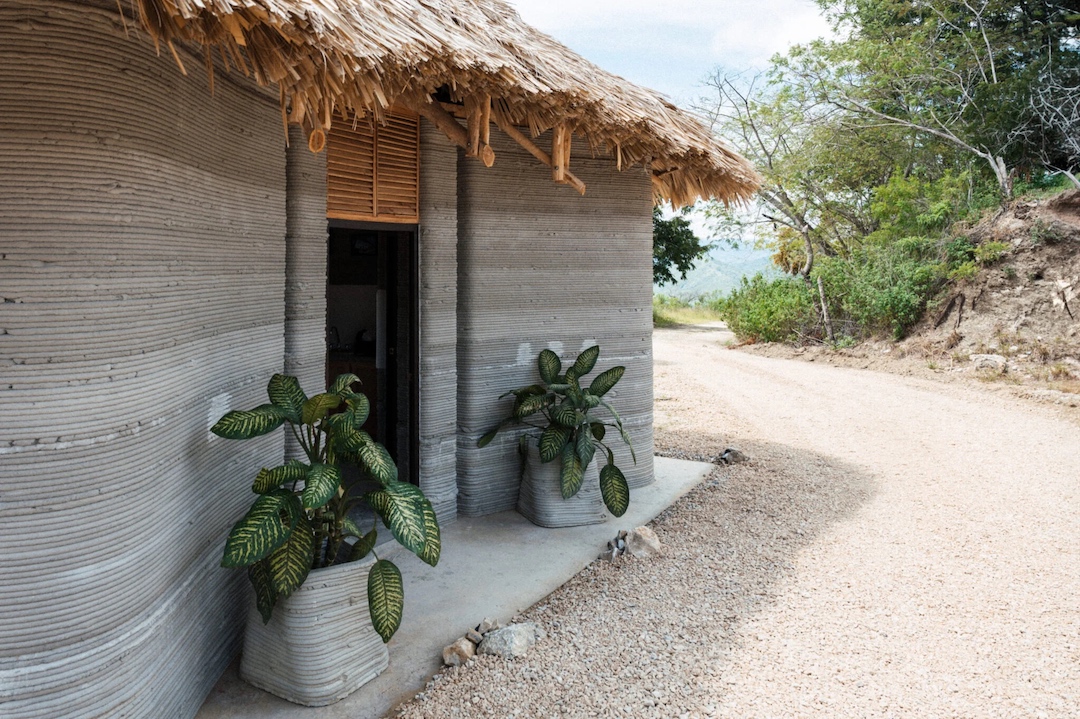
What if a house could sprout up next door overnight? That’s what cement company Progreso achieved in Guatemala when it recently constructed the country’s first-ever 3D-printed building. The highlight? The home is earthquake-proof, too.
This project marks a substantial step in confirming the structural viability of 3D printing in a region prone to seismic activity.
Despite featuring 3D-printed walls soaring to a height of nine feet, the building took just a mere 26 hours to complete, spread out over the course of seven days.

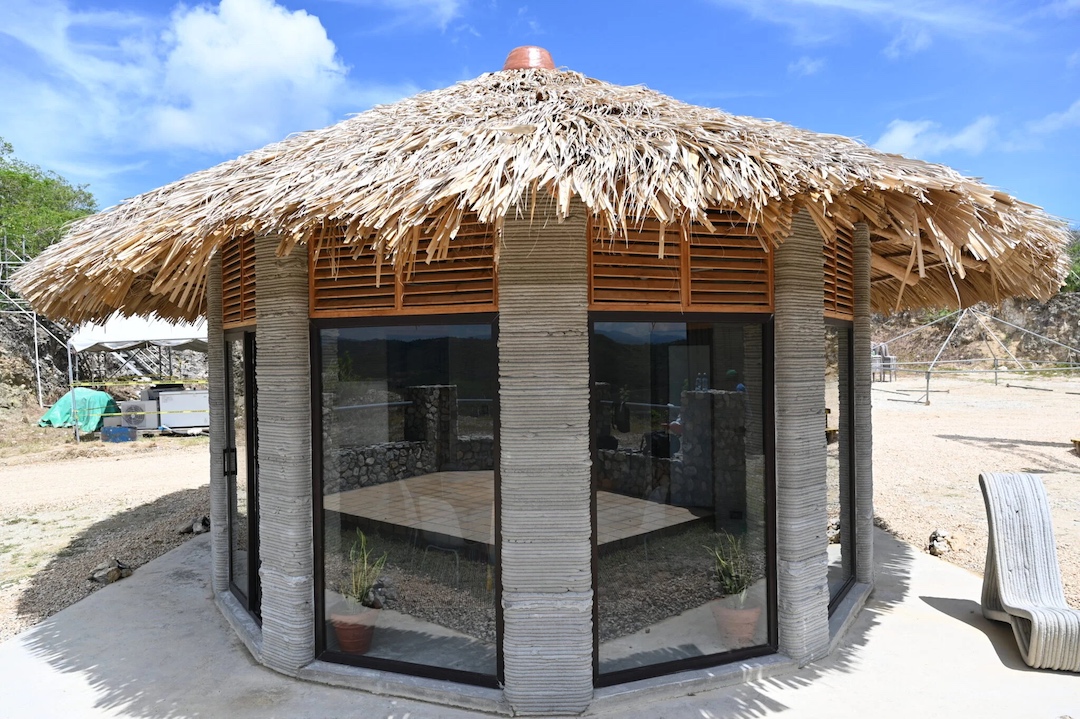
Notably, the building used 3D-printing technology to create walls with highly organic shapes. This offers an alternative to traditional concrete blocks, which would be prohibitively expensive in such creative iterations.
Complementing the innovative 3D-printed concrete walls is a roof made in the “Rancho” style, incorporating the local palm leaves.
According to the firm, this particular roofing has been a staple in Latin America for generations due to its cost-effectiveness, ability to provide thermal comfort, and suitability for regions prone to seismic activity, thanks to its flexible and lightweight nature.
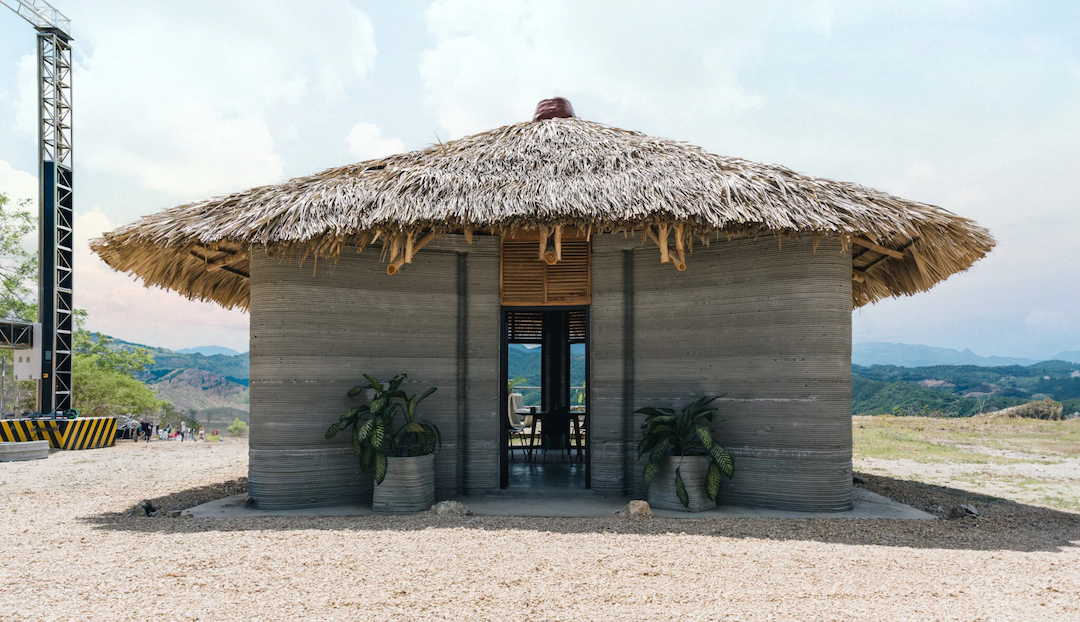
And it seems this house in Guatemala is just the beginning, as the partners involved in the project have agreed to launch several future collaborations. Could more 3D-printed houses serve as earthquake-protected refuges for locals in the future?
“The completion of Guatemala’s first 3D-printed house living up to all seismic requirements marks a significant milestone for construction 3D printing in Latin America,” said co-founder Philip Lund-Nielsen.
“We expect interesting new developments to happen shortly, including in Mexico, especially now that successful steps have been taken to verify the suitability of the printing technology in a seismic region.”
This article was crafted with assistance from an AI engine, and has been manually reviewed & edited.


