
Ancient Charcoal Drawings Likely From A Child Unearthed At Pompeii
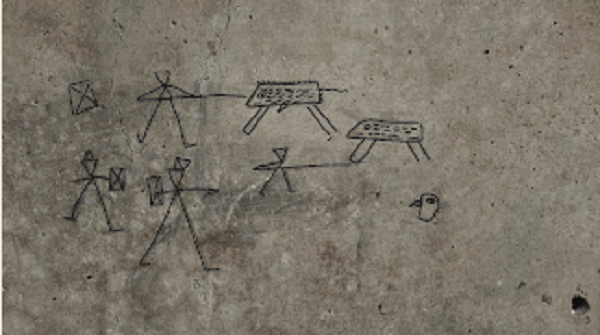
Image via Parco archeologico di Pompei
Recent excavations at Pompeii, the Roman city famously buried by ash from Mount Vesuvius in 79 AD, have unearthed a collection of charcoal drawings alongside more sophisticated frescoes. Archaeologists believe these rudimentary sketches were likely created by a child, offering a fascinating glimpse into the everyday life and imagination of the lost city’s inhabitants.
Discovered in the House of the Colonnaded Cenacle, the drawings depict a variety of subjects. Two gladiators locked in combat dominate one sketch, while another portrays a hunting scene. An eagle’s head, possibly a symbol of power or victory in Roman culture, completes the collection.
The simple style and childlike execution of the drawings contrast sharply with the more detailed frescoes found elsewhere in the house, which feature mythological figures like Venus and Apollo.
It is surmised that the sketches provide a unique window into the world of a Pompeian child. While grand frescoes were likely commissioned by the wealthy elite, these charcoal drawings offer a more intimate perspective. The subject matter itself is particularly intriguing. The gladiatorial combat scene hints at the child’s awareness of, and perhaps even fascination with, a brutal but popular form of entertainment in Roman society. The hunting scene could reflect stories heard from adults or even the illustrator’s own experience in the natural world surrounding Pompeii.
[via Gizmodo and Artnet News, cover image via Parco archeologico di Pompei]


