
A ‘Third Thumb’ Literally Handier Than AI Tools Promising To Simplify Life
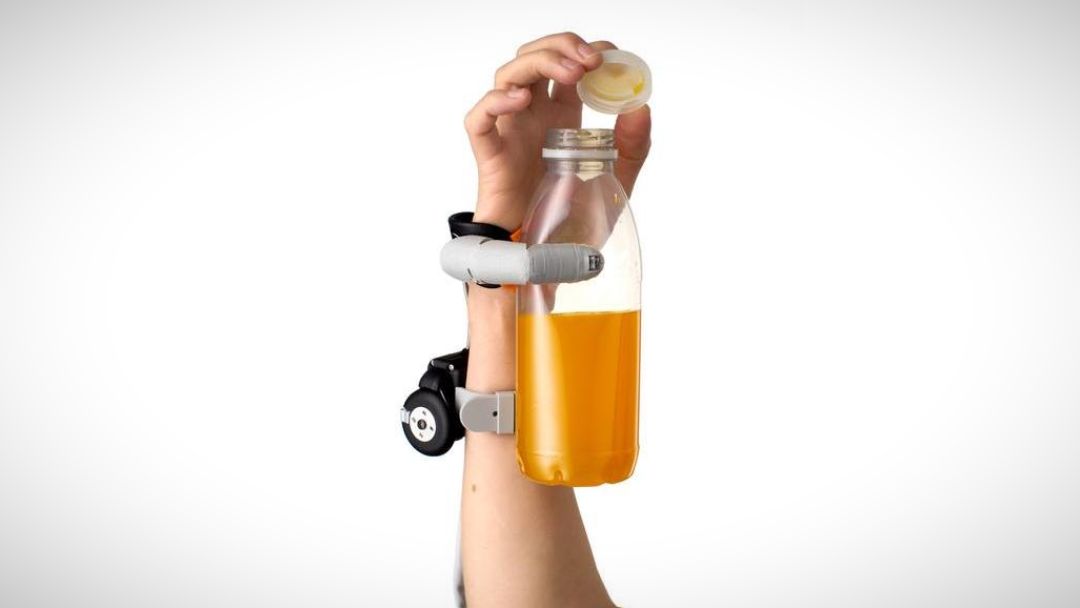
Image by Dani Clode Design / The Plasticity Lab via University of Cambridge / EurekAlert
“I want Al to do my laundry and dishes so that I can do art and writing, not for Al to do my art and writing so that I can do my laundry and dishes,” reads a statement from author Joanna Maciejewska that’s recently been making its rounds online. Researchers at the University of Cambridge have, incidentally, put its finger to the notion with a fascinating innovation: the Third Thumb.
Developed by Dani Clode in collaboration with Professor Tamar Makin’s lab, this wearable robotic device is designed to supercharge the human hand, making it easier for people to say, carry multiple grocery bags or manipulate surgical instruments with unprecedented precision. Crafted from flexible, 3D-printed material, the Third Thumb aims to enhance dexterity, grasping abilities, and carrying capacity.
Worn on the opposite side of the palm to the natural thumb, the Third Thumb is controlled by pressure sensors placed under each big toe or foot. The movement of the thumb is proportional to the pressure applied, returning to its original position when pressure is released. This innovative control mechanism allows users to perform tasks that are otherwise challenging with one hand or to tackle complex multi-handed tasks without coordinating with others.
The prosthetic was tested by nearly 600 participants in an early trial at the Royal Society Summer Science Exhibition in 2022, and it already showed promising results. 98% came into grips (literally) with the thumb, almost immediately, successfully manipulating objects within the first minute. The seamless adoption demonstrates how foolproof this extra digit would be in daily life.
The innovation wraps accessibility around its little finger, proving the potential of technology in improving the quality of life for the able-bodied, not just those with disabilities.
“Technology is changing our very definition of what it means to be human, with machines increasingly becoming a part of our everyday lives, and even our minds and bodies,” shares Professor Tamar Makin from the Medical Research Council (MRC) Cognition and Brain Sciences Unit at the University of Cambridge.
ðŸ‘🽠How easily could you get to grips with a Third Thumb?
— Cambridge University (@Cambridge_Uni) May 30, 2024
The @plasticity_lab @mrccbu team tested a new device by @daniclode at the @RoyalSociety Summer Science Exhibition, and found that the public took to it fairly easily.
Explore more 👉🽠https://t.co/SNHfbZi5bD pic.twitter.com/xyyUoJT3ED
Professor Makin further stresses the need to ensure that these inventions can help all people equally, especially marginalized communities who are often excluded from innovation research and development.
You can count the number of potential applications for the Third Thumb with more than one hand. Besides being able to aid in household tasks, its added dexterity could greatly benefit professions requiring intricate hand movements, like surgeons and artists. Additionally, individuals with hand limitations due to injury or disability might find the Third Thumb an invaluable tool for rehabilitation or assistance.
Although still in development, the successful user trials and broad range of potential uses suggest a promising future with two opposable thumbs, and an extra.
[via Yanko Design, SciTechDaily, Popular Science, cover image by Dani Clode Design / The Plasticity Lab via University of Cambridge / EurekAlert]


