
This Robot Is Controlled By Human Brain Cells To Perform Tasks & Handle Objects
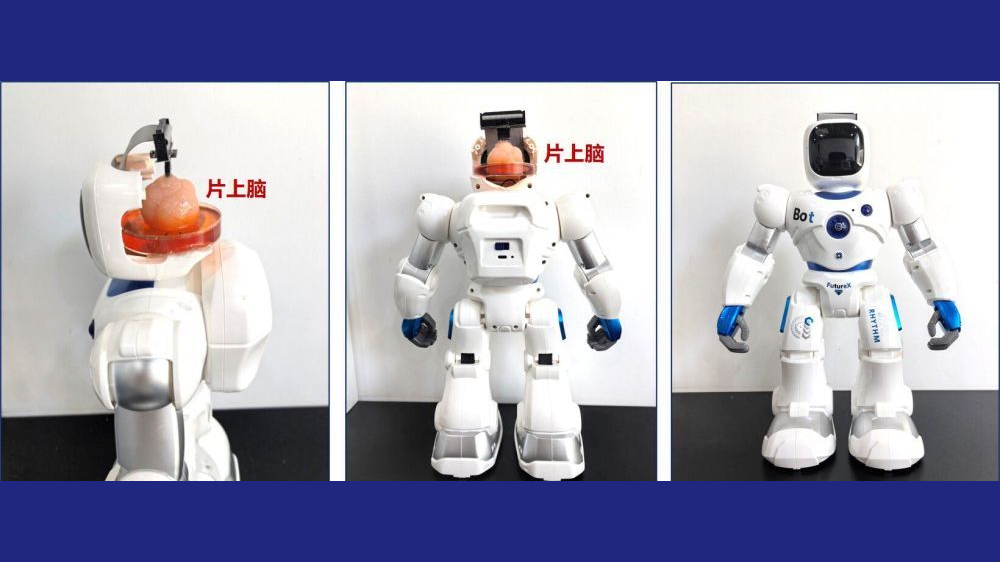
Image via Tianjin University
If you thought your brain had enough on its plate, wait until you hear about this new development. Researchers in China have successfully created a robot that takes its cues from human brain cells. Yes, you read that right—a bot partially controlled by brain cells grown in a lab. This novel advancement was recently detailed by scientists at Tianjin University and Southern University of Science and Technology.
Utilizing stem cells intended to become human brain tissue, these researchers fashioned what they’ve dubbed a “brain on a chip.” This tiny but mighty creation sends commands to a robotic arm through an intricate process involving electrical signals and sensory inputs, even though the robot itself doesn’t have eyes. It might not have the makings of a cyborg superhero, but it can certainly perform an array of tasks.
Central to this innovation is an open-source brain-computer interface (BCI) developed by the team. This interface works as a translator, converting the electrical signals from the brain cells into actions performed by the robotic arm. The brain organoids, each containing around 10,000 cells, were cultivated from human stem cells and coaxed into forming complex neural networks using low-intensity ultrasound.
The primary goal of this experiment was to enable the brain cells to direct the robot through an obstacle course and handle objects.
Interestingly, the robot’s brain-like appearance is merely cosmetic to create a visual connection. But the potential applications are profound. Researchers are already contemplating the possibility of using brain organoid transplants to repair cerebral cortex damage and reconstruct neural circuits. This breakthrough also echoes the efforts of Neuralink, Elon Musk’s venture, which is investigating the medical benefits of integrating chips with the human brain.
[via New York Post and South China Morning Post, cover image via Tianjin University]


