
Monotype Tracks How Each Generation Speaks Through Fonts—From Boomers To Zoomers
Image courtesy of Monotype, featured with permission
From mood-setting serifs to the emoji energy of bubble type, a new Monotype study reaffirms that typography dots the i’s of self-expression.
For its new Fonts, Feels, & Reels report, the type foundry surveyed more than 12,000 social media users across six countries to find out how Gen Z, Millennials, Gen X, and Boomers approach fonts in a world where every post counts as a first impression. Here are the takeaways.
1. Fonts aren’t background noise—they’re your digital voice
Fonts now carry the same weight handwriting once did. According to Monotype’s findings, 69% of people across generations said typefaces are important when crafting social posts, while Gen Z and Millennials were the most font-aware, viewing type choices as extensions of personality and credibility. In Brazil, that sentiment is especially strong—over 88% of respondents there said fonts help them get their message across clearly.
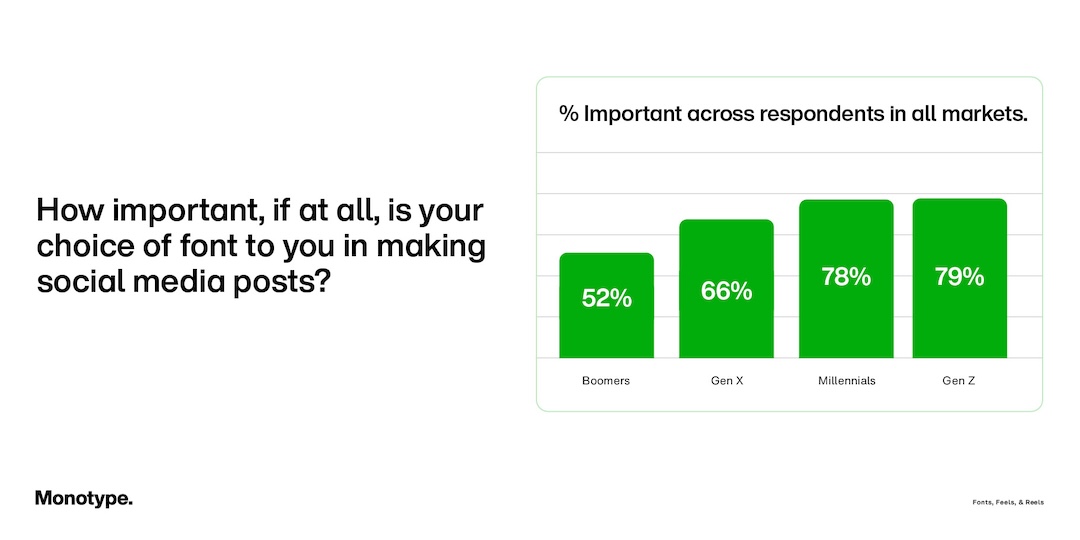
Image courtesy of Monotype, featured with permission
2. Typefaces are emotional translators
Think of fonts as the clothes your words wear. 65% of Gen Z and 67% of Millennials said their font choices directly shape their tone and online presence. Across all age groups, 60% said typography plays a major role in expressing personality, while 65% said it helps them say exactly what they mean. For younger users, fonts aren’t just decorative but emotional shorthand, setting the mood before a single word is read.

Image courtesy of Monotype, featured with permission
3. Good fonts = good engagement
78% of respondents agreed that distinct, well-matched fonts improve likes, shares, and comments. Among Gen Z, that jumps to 87%. The takeaway? Fonts influence how audiences react long before they decide to hit like. As Monotype’s senior creative director Graham Sturt (Gen X) put it, “A great font choice turns content into a brand moment,” likening it to “strategy” rather than mere style.
4. The font struggle is real
If you’ve ever grumbled about Instagram’s limited type options, you’re not alone. Over half of Gen Z and Millennials said they’re frustrated by the lack of fonts on social media platforms. In fact, 76% of Gen Z and 69% of Millennials often design their content off-platform using tools like Canva, Figma, or Adobe Express for more creative control. That extra step, often adding minutes to their posting process, shows how much younger creators care about getting the “look” right.
5. First impressions start with type
From brands to creators, typography has become a visual handshake. Around 70% of Gen Z and 66% of Millennials said a font choice shapes their impression of someone’s post, while over half agreed it affects how they perceive a brand’s authenticity and trustworthiness.
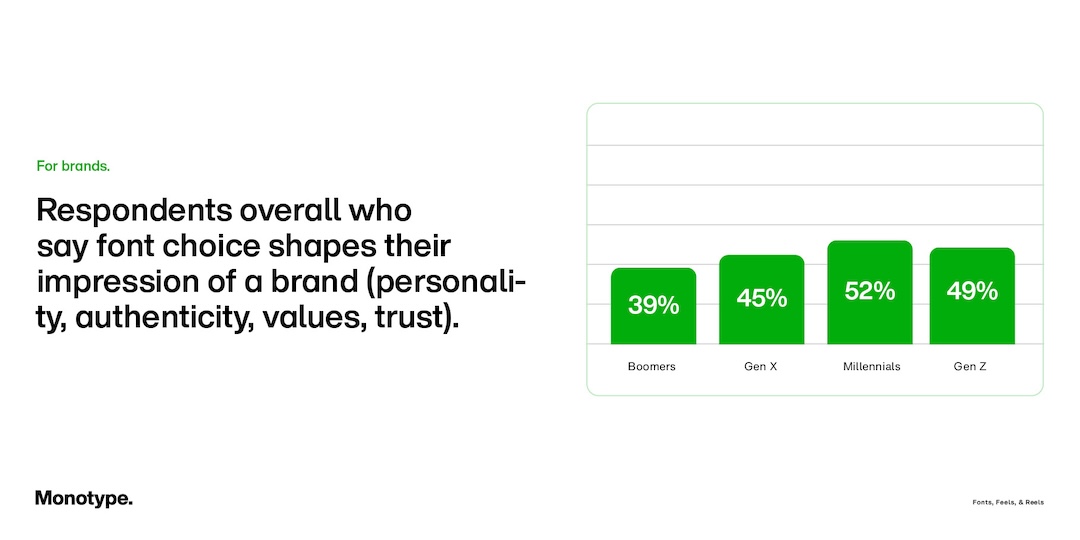
Image courtesy of Monotype, featured with permission

Image courtesy of Monotype, featured with permission
Across Generations

Image courtesy of Monotype, featured with permission
Boomers are “impulsive sharers.”
Boomers post frequently but treat fonts casually, focusing more on message than aesthetic.
Gen X are “the bridge generation.”
While Gen X users are less frustrated by font limits, they remain conscious of type’s impact on credibility.
Millennials are “expressive experimenters.”
Millennials see type as a core part of identity, blending creativity with nostalgia.
And Gen Z users are “creators at heart.”
Fonts are social currency to these born creators, who appear to judge others’ type choices as much as their own.
Across Countries
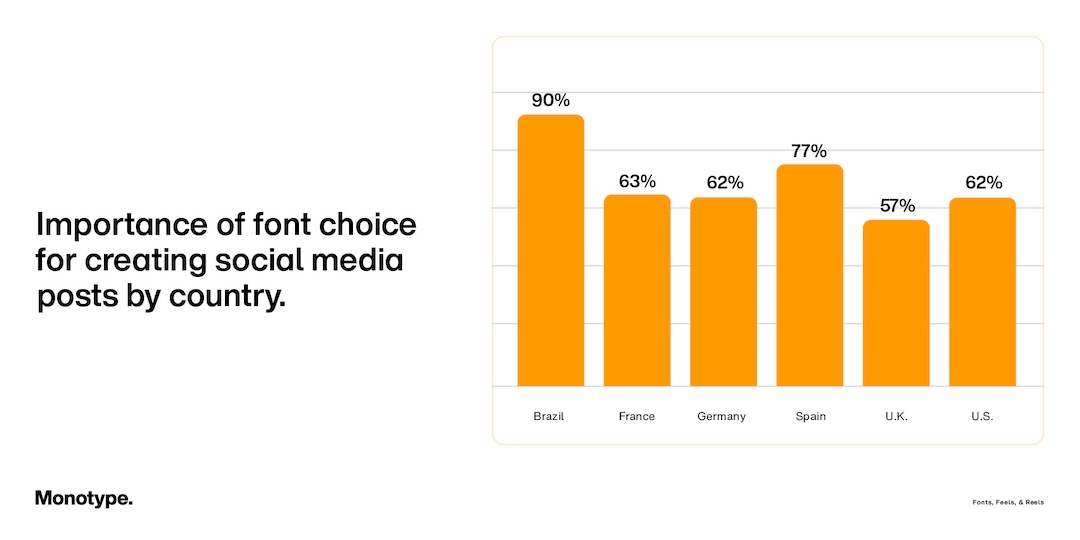
Image courtesy of Monotype, featured with permission
Brazil: The typography frontrunner, with 88% valuing font choice for clarity and 92% linking fonts to engagement.
Spain: Nearly three-quarters of respondents said fonts are vital for being understood online.
Germany: Though less vocal about frustration, Germans are among the most likely to critique poor font use.
US & UK: Generational divides are sharp—young users value expressive fonts, while older ones show lower awareness.
France: Mixed attitudes, though younger demographics align more with global digital-native trends.
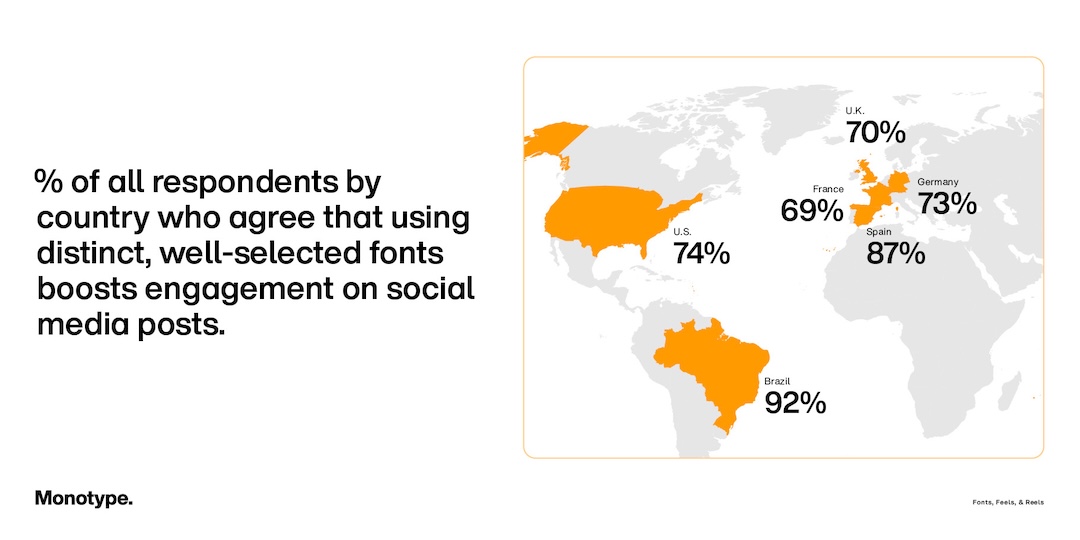
Image courtesy of Monotype, featured with permission
For influencers and creators, fonts are your visual voice. Intentional choices build credibility, boost engagement, and turn posts into personal brand statements.
For brands, treat typography as a core brand asset, not a finishing touch. Fonts shape trust, authenticity, and recognition across demographics.
As for digital platforms, expanding font libraries could be a winning move. Gen Z and Millennials want personalization and are willing to switch platforms to get it.
As Monotype’s executive creative director Tom Foley notes, fonts have moved beyond function. They’re identity tools that define how people connect, communicate, and create online.
Younger generations “have never known a time before social media,” Foley adds, so for them, font choice is more of a declaration than just design. As such, authenticity is written in type. In short: choose wisely, as what you pick might suggest more than your caption does.
[via Monotype, images courtesy and featured with permission]


