
NASA & Lockheed Martin Creating Spacecraft To Cut Travel Time To Mars By Half
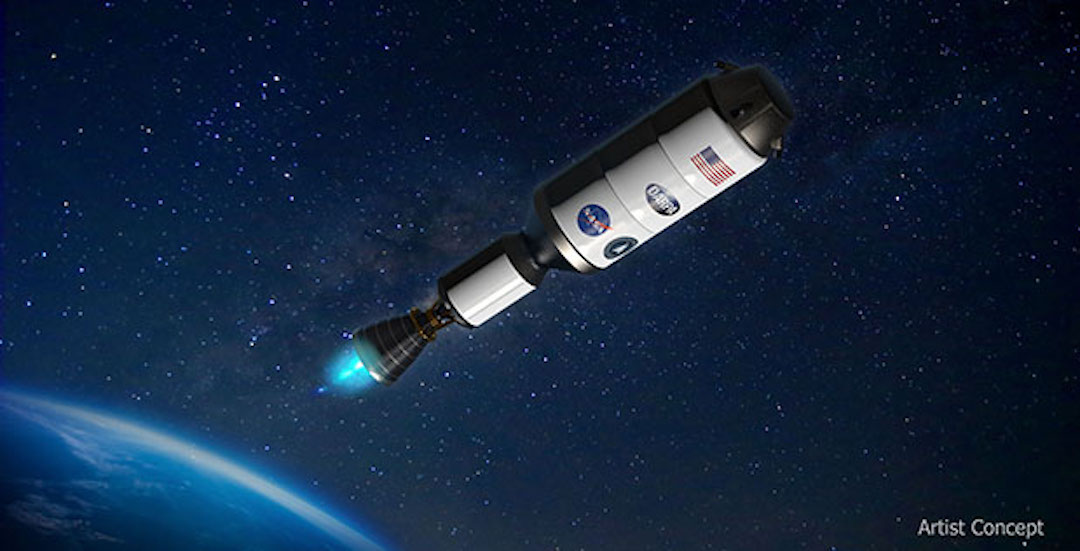
NASA and the Defense Advanced Research Projects Agency (DARPA) have partnered with Lockheed Martin and BWX Technologies to embark on an ambitious project that could revolutionize space travel: developing a nuclear thermal rocket (NTR). The collaborative effort, known as the DRACO program, aims to potentially cut future travels to Mars by half the time.
According to The New York Times, every 26 months, Mars and Earth are close enough for a shorter trip to be made. However, it would still take about seven to nine months to get between the planets, and during most of that time, the spacecraft will be coasting.
The ultimate objective is to expedite travel to Mars by implementing continuous acceleration and deceleration, discarding traditional coasting methods. Current combustion-based rocket engines lack the efficiency to carry sufficient fuel for the entire journey on the planned X-NTRV spacecraft.
The DRACO program builds upon previous investments in nuclear thermal technology, mainly drawing from the NERVA program—a prior experiment also dedicated to nuclear thermal engines—in the 1970s.
In order to reduce potential hazards, the fission reactor will be kept inactive until the intended orbit has been reached. The U.S. Space Force will also contribute to the launch vehicle, while the Department of Energy will supply the crucial HALEU metal for fuel production.
Anticipation is high as the launch of the X-NTRV is slated for 2027. If successful, the DRACO program could mark a pivotal moment in space exploration, propelling humanity toward a new era of interplanetary travel and unlocking the vast mysteries of the cosmos.
[via The New York Times and GeekWire, cover image via DARPA]


