
Slave’s Remains Are The Best-Ever To Be Preserved Of A Human In Pompeii
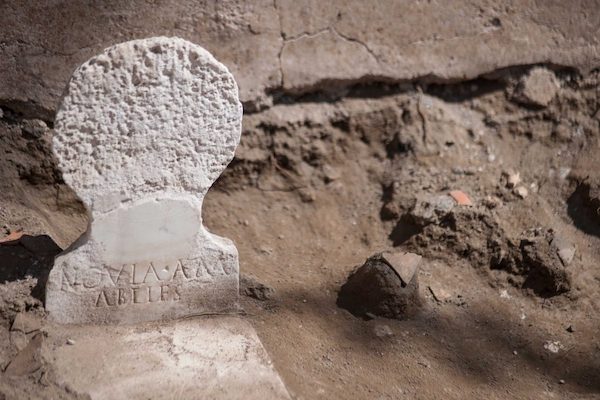
Image via Pompeii Sites
The best-preserved human remains ever found in Pompeii have surfaced, found during excavation in the Porta Sarno Necropolis area in Italy.
Mummified remains, alongside hair, bones, and a partial ear were discovered in an ancient tomb, a marble slab on its pediment marking Marcus Venerius Secundio as the individual who was found. Referencing old records, it was discovered that Secundio was a slave, as well as a custodian at the Temple of Venus.
After he was freed, he reached a “certain social and economic status” before passing away at around the age of 60, the statement writes, which can be deduced by his grand tomb. The team was able to deduce a decorative painting of plants on a blue background on its façade.
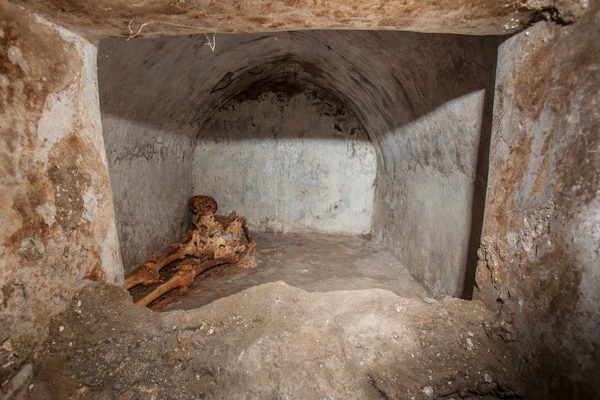
Image via Pompeii Sites
Interestingly, the inscription on the tomb states that he “gave Greek and Latin ludi for the duration of four days.” Ludi graeci were performances carried out in the Greek language, which is a fresh discovery as it has never been recorded in Pompeii before.
“That performances in Greek were organized is evidence of the lively and open cultural climate which characterized ancient Pompeii,” says Gabriel Zuchtriegel, Director of the Archaeological Park of Pompeii.
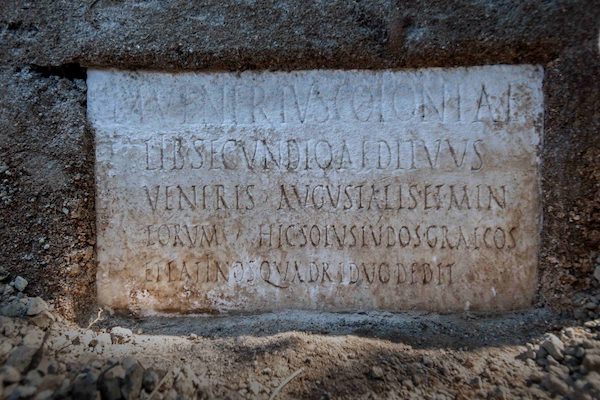
Image via Pompeii Sites
Along with the remains of Secundio, two cinerary urns were discovered. During the Roman period, cremation was a usual part of funerary rites, and only small children received burial.
For Secundio to have been not only buried, but also preserved in a burial chamber that allowed for an “exceptional state” of preservation, is therefore unusual, and may hint to his high status. However, the reason remains unproven.
“Pompeii never ceases to amaze,” marvels the Minister of Culture, Dario Franceschini. He describes the findings of archaeological professionals to be “a source of pride for Italy.”
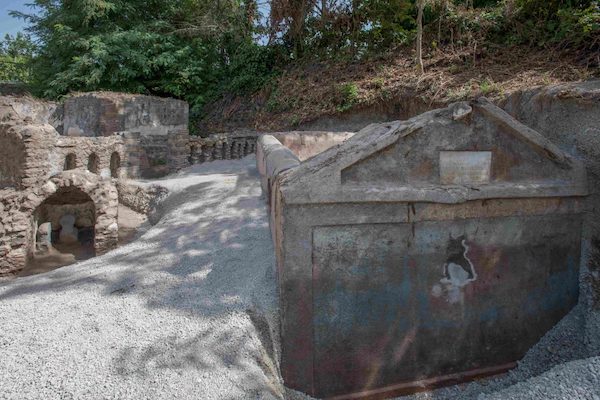
Image via Pompeii Sites
[via The Guardian, images via Pompeii Sites]
Also check out these recent news


