
IBM & Samsung Tease Powerful Phone Battery That Lasts A Whole Week
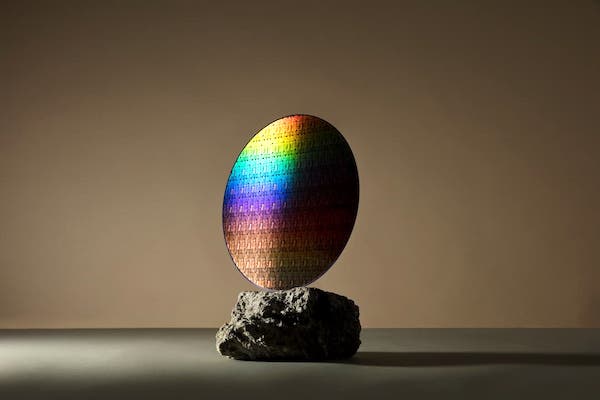
Image via IBM
While smartphones have become an indispensable part of our daily lives, having to charge them every day (or even twice daily!) is somewhat of a chore.
A new breakthrough invention by researchers at IBM and Samsung could potentially alter the trajectory of mobile phones worldwide, by creating a semiconductor with battery life to last a whole week.
Known as the Vertical-Transport Nanosheet Field Effect Transitor (VTFET), the new chip could possibly cut energy use by up to 85% or double the performance of existing models. At the moment, most chips used in electronic devices are based on lateral-transport field effect transistors (FETs), which are a type of fin field effect transistor (finFET).
According to SlashGear, FinFETs work by placing transistors across a wafer’s surface, but the new design of VTFETs lay down transistors in layers perpendicular to the wafer instead. The difference in layout results in a new current flow that surpasses existing limitations on contact size and transistor gate strength, which then can be optimized to reduce energy consumption in a device.
IBM stated the invention displays the potential for “scaling beyond nanosheet,” and that the pioneering vertical arrangement “focuses on a whole new dimension.”
Should the technology come to fruition on a mass scale, consumer devices will benefit from the breakthrough, such as having smartphone batteries that can run for an entire week before needing a recharge.
It could also cut the amount of energy currently being used to mine cryptocurrency, hence addressing climate concerns surrounding the rapidly-growing industry.

Image via IBM
[via SlashGear, images via IBM]
Also check out these recent news


