
Scientists Invent ‘Slightly Sweaty’ Living Skin For Robots Using Human Cells
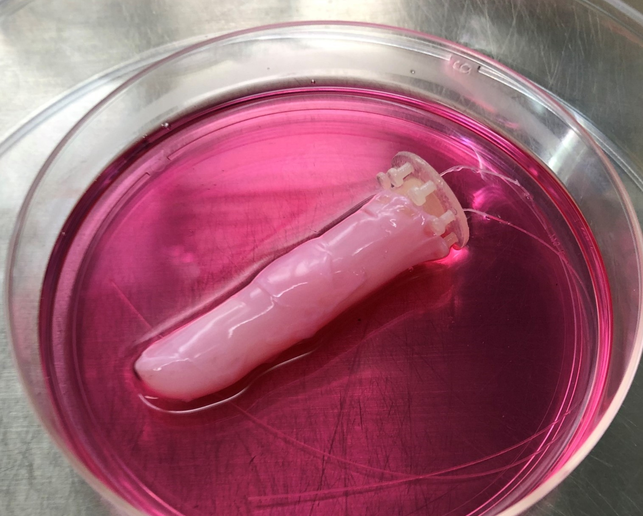
Image via Shoji Takeuchi / Eurekalert (CC BY-SA)
Scientists at the University of Tokyo think they have put a finger—literally and figuratively—on the secret to making robots more relatable and welcomed by society.
The answer might lie in living skin, which is skin made from real human cells.
So far, humanoid bots are wrapped in silicone to give off the appearance of human skin, but the synthetic nature of this rubbery material hinders them from moving beyond Uncanny Valley.
For a more realistic touch (no pun intended), scientists have now developed a robotic finger coated with a water-repellent sheet that not only looks like human skin but feels like it and can self-heal after being wounded too. They’ve documented their research in the Matter scientific journal.
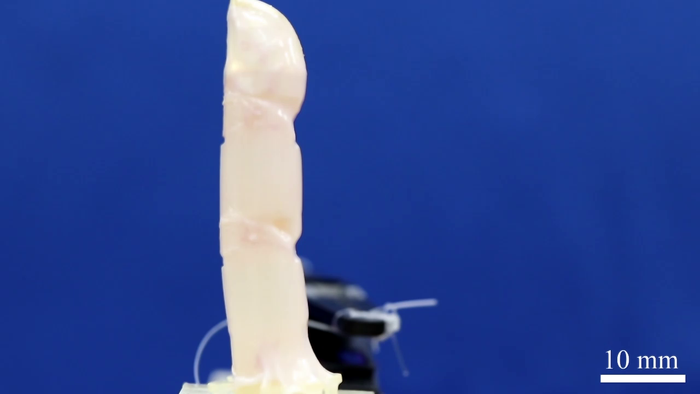
Video screenshot via Matter/Kawai et al / Eurekalert (CC BY-SA)
To create this skin, the team submerged a robotic finger into a cylinder filled with the two most integral components in the skin’s connective tissues. There’s collagen, which makes skin elastic and supple, and human dermal fibroblast skin cells. The solution formed sort of a paint primer for the skin.
Next, the scientists covered the finger in an outer layer of collagen and human epidermal keratinocytes, the latter of which form about 90% of our epidermis (the outer layer of our skin).
Once this step was done, the robot grew skin similar to a human’s. The finger even looked “slightly sweaty” out of the solution, says Shoji Takeuchi, one of the study’s authors.
When the finger was bent, it developed humanlike wrinkles on the knuckles. When it sustained a cut, it could heal itself.
The healing process, however, wasn’t as effective nor took place as independently as human skin. The robot skin wasn’t quite as hardy and still required a separate collagen bandage to heal from cuts or scrapes.
When the technology evolves, though, the team foresees the material being turned into hair follicles and nails too, paving the way for a future where our robot companions can resemble us.
[via CNET and The Guardian, images via Matter / Eurekalert (CC BY-SA)]


