
This Little Crab Is The ‘World’s Smallest’ Remote-Controlled Walking Robot
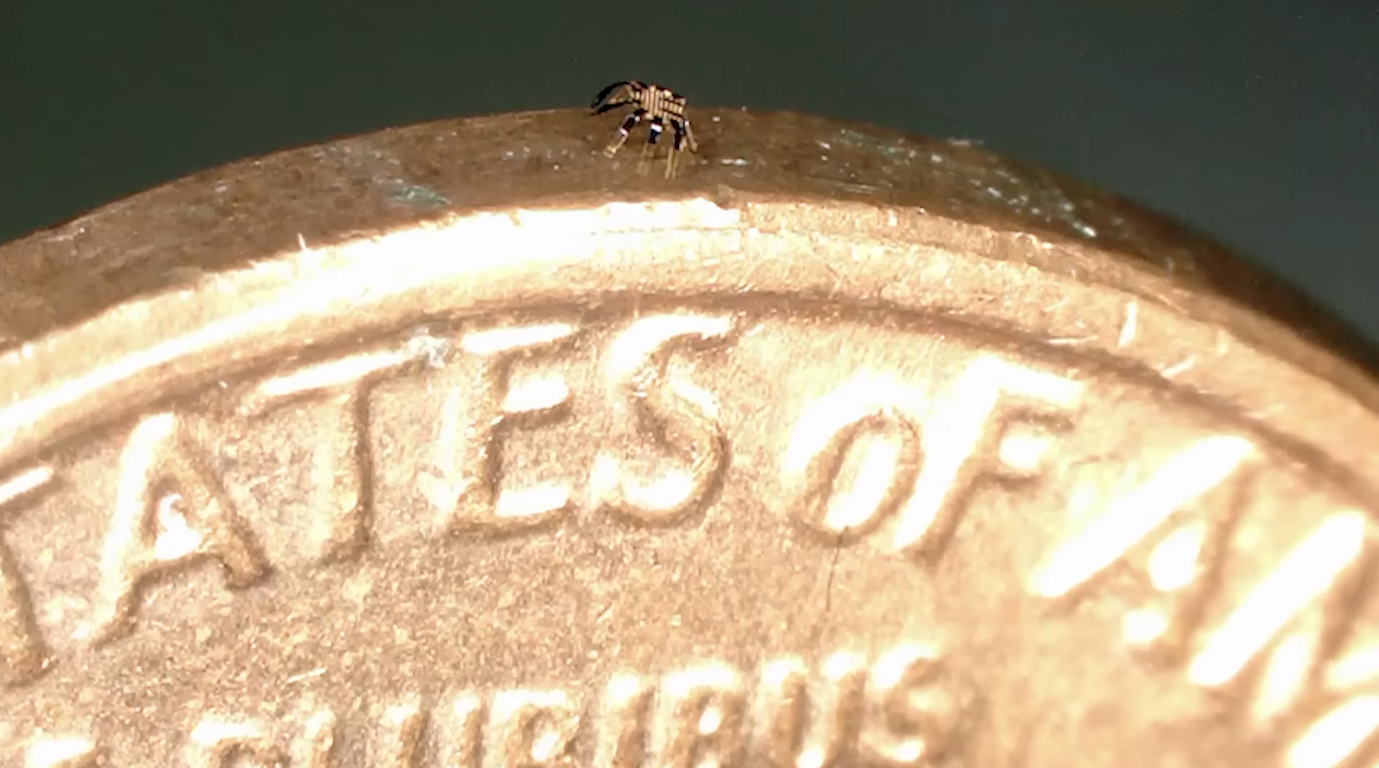
Say hi to this army of tiny crab-like robots, said to be the smallest remote-controlled walking robots in the world, overtaking the title held by origami birds. A team at Northwestern University was the brains behind the miniature machines that, for scale, are smaller than the size of an average flea. The experiment was first reported in Science Robotics.
The teeny crustacean robots can be controlled remotely to walk, twist, bend, and even jump. The project is still going through trials but once completed, the engineers behind it believe that it will be highly useful in tasks that need to be performed in extremely small places.
According to John A. Rodgers, who led the experiment, the robots will be used to repair or assemble things in tiny areas and can also be used in the medical field where the robots will be sent into arteries to stop bleeding and even get rid of cancerous tumors.
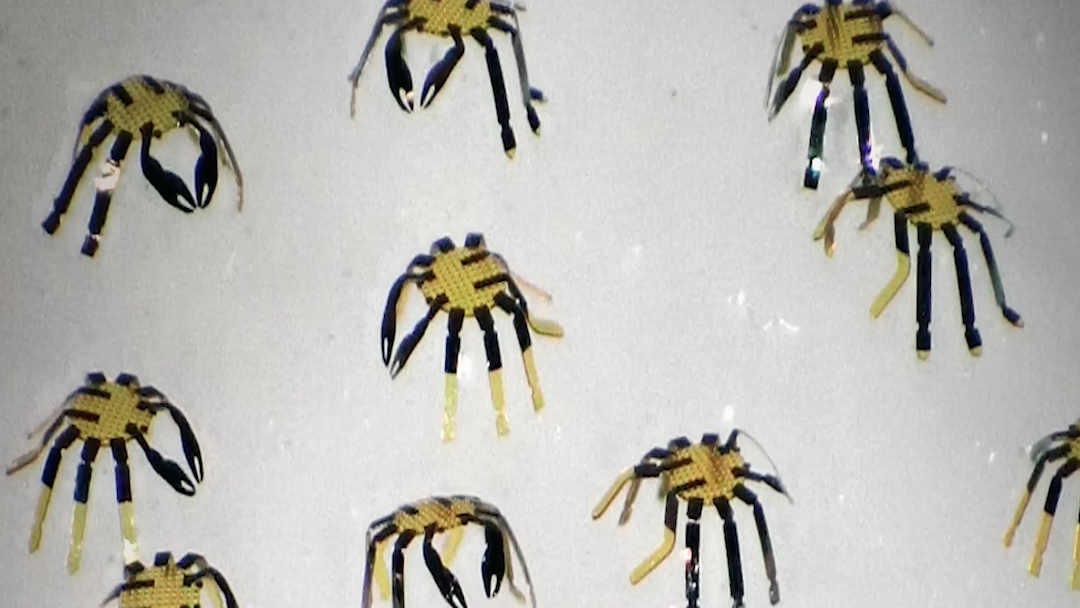
Researchers used a shape-memory alloy to make up the body of the robot. They heated certain parts of it with a laser beam during its creation to mold it into shape. Once cooled, a thin layer of glass was applied to reshape the distorted area.
This process continues over and over, having the robots move in an out of a deformed state until they can achieve a range of motions. The laser is then used to remotely control the robot and where it walks.
The robots were not created with hydraulics or any unique technology. Their simplicity shrinks them down to around a millimeter in size while providing the flexibility needed to perform complex tasks.
Interestingly, the inspiration behind the creation of the robots was from a children’s pop-up book. The way the images bounce up from the pages and can be folded back in sparked a thought in Rodgers and fellow teammate Huang’s minds. The crabs were first designed on a flat surface before a stretched rubber substrate was used to bond their components together. A controlled buckling process was applied once the rubber substrate was cooled which allowed for the crabs to spring into a 3D form.
[via SciTechDaily and Dezeen, cover image via Northwestern University]


