
NASA Chooses Lunar Sites Where Next Man & Woman On Moon Will Land
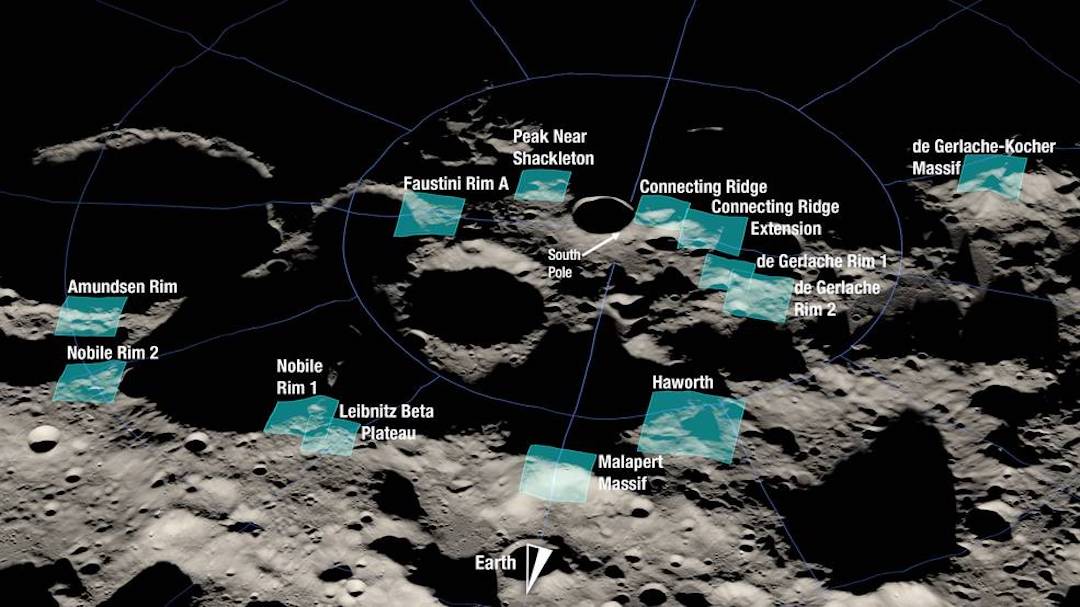
As part of NASA’s preparations to send humans to the Moon with the upcoming Artemis III mission, the space agency has announced that it has identified 13 lunar landing sites which could be touchdown points for astronauts heading there soon. NASA intends to land one man as well as the first woman on the Moon on the surface during this expedition.
“Selecting these regions means we are one giant leap closer to returning humans to the Moon for the first time since Apollo,” explains Mark Kirsch, Deputy Associate Administrator for the Artemis Campaign Development Division.
“When we do, it will be unlike any mission that’s come before as astronauts venture into dark areas previously unexplored by humans and lay the groundwork for future long-term stays,” he adds.
Each of the chosen sites lies within six degrees of latitude of the Moon’s South Pole, though it varies in terms of geological features. By selecting a variety of landing options, the team is ensuring the astronauts can make the trip anytime during the year, as specific sites are closely tied to the timing of the launch.
Apart from the launch window, scientists and engineers considered the suitability of the locations depending on their ability to accommodate a safe landing—including each site’s terrain slope, ease of communications with Earth, and lighting conditions.
Special consideration was given to the landing spots’ proximity to the lunar South Pole, which contains regions covered by shadows and remains unexplored by humans thus far. The scientists took care to pick sites with continuous access to sunlight during the mission, to serve as the astronaut’s power source and to minimize steep changes in temperature.
As we inch closer to the launch date, NASA will continue discussing the viability of the 13 sites with the science and engineering communities to further assess the merits of each region, before selecting specific spots within the regions once the mission’s launch dates are confirmed.


