
NASA’s Juno Spacecraft Snaps Closest Images Of Jupiter’s Moon Yet
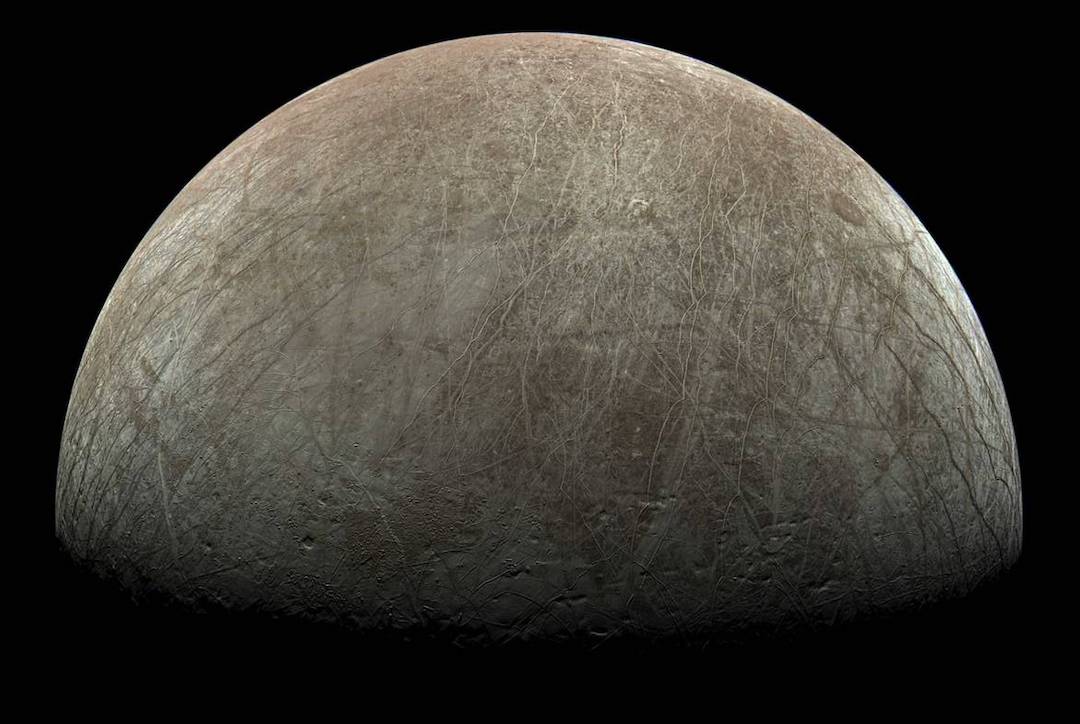
NASA’s Juno mission craft has just completed a flyby of one of Jupiter’s 80 moons, Europa, and has sent back some of the most detailed and closeup images.
The space agency has just published what it is claiming as the highest-resolution renders of an icy surface that seems to be encircling Europa.
The pictures capture a section of the moon known as Annwn Regio, which is 93 x 125-miles wide, and presents the first look at an incredibly fractured and cracked upper layer. Tons of ridges and grooves grace its surface as scientists believe these long parallel lines indicate elevated features in the ice.
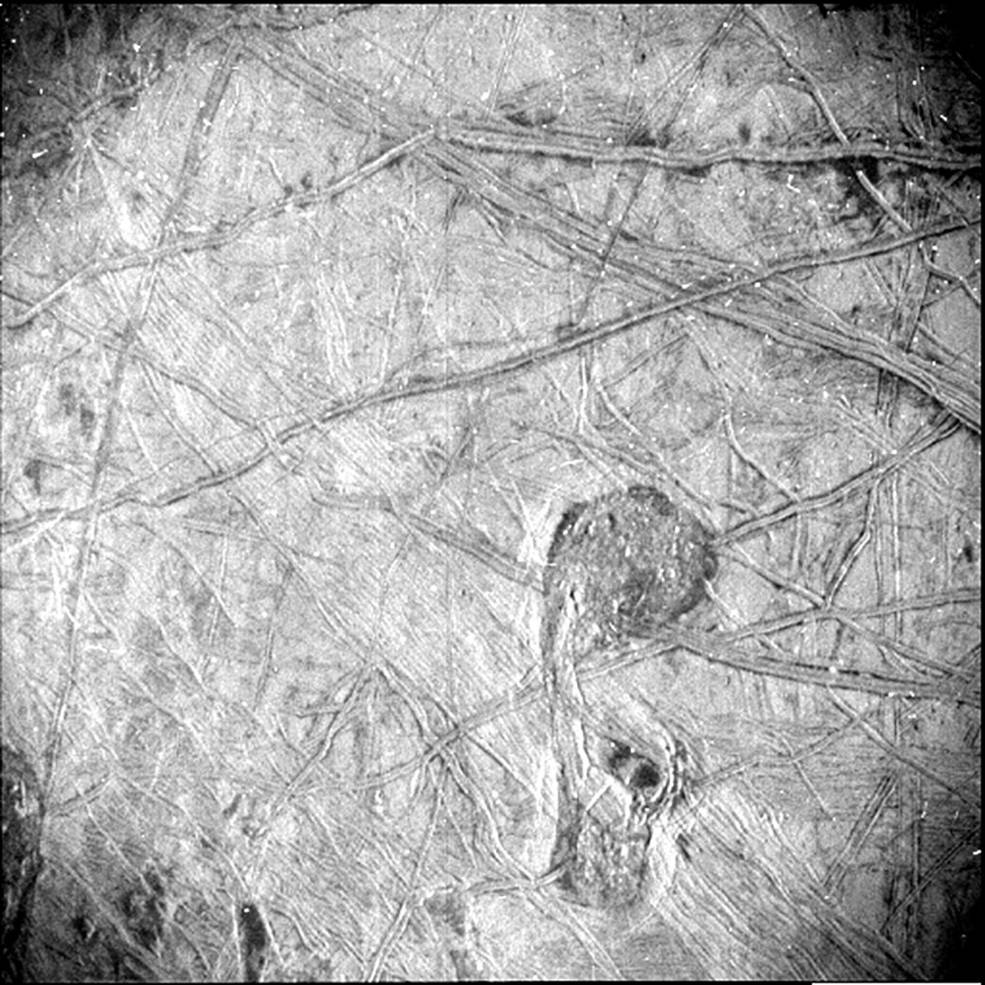
Juno’s Stellar Reference Unit (SRU) camera, which had been fitted onto the craft, caught the pictures at a distance of 256 miles during the planet’s nighttime, while Juno was zooming past at a speed of 15 miles per second. This specific zone, however, was lit up by what is called ‘Jupiter shine’—or the sun’s rays bouncing off the top of Jupiter’s clouds.
To properly align itself, Juno uses a star-tracking device to calibrate its position, and its camera was designed for low-light conditions, hence why it took images of Europa at night and not during Jupiter’s daytime.
While the original images that were sent back were black and white, a citizen scientist has taken the time to artistically enhance the renders to look just like how the moon would have appeared if you were standing from Jupiter and staring into the sky.
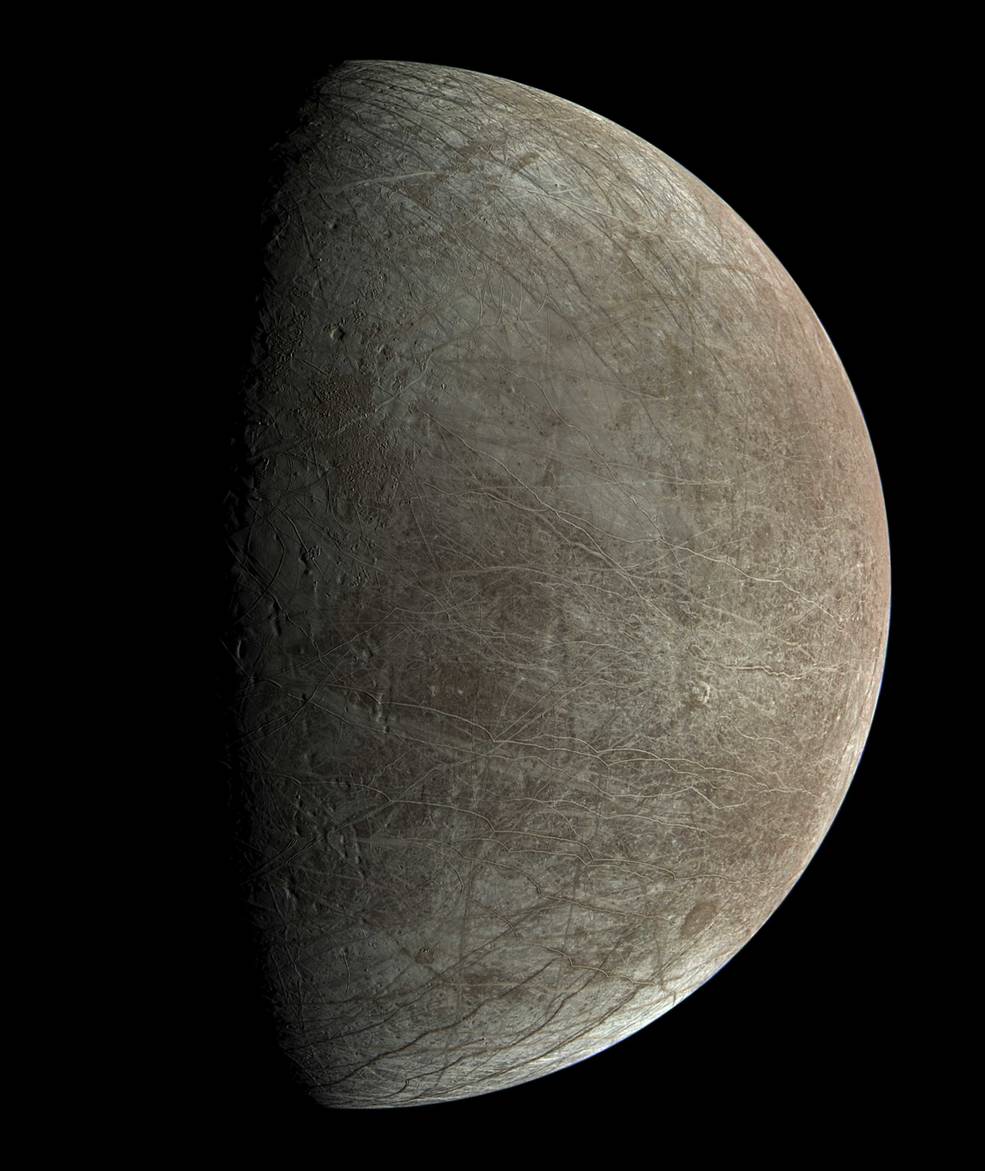
Europa is about the size of our own moon and is the sixth-largest in our solar system. Researchers at NASA speculate that just below this icy sheet covering its surface is a salty ocean, which can only beg the question of whether there is life within its seas.
Now that Juno has captured astounding images of Europa, it is setting its sights on the next moon on its list, Io.
[via DIY Photography and NASA, images via various sources]


