
Falcon-Lookalike Robots Are Better At Scaring Birds Away To Avoid Plane Strikes
The proliferation of airplanes has made the skies unsafe for birds to roam freely. Many get sucked into jet engines or hit by propellers. In addition, these mishaps also damage blades and fuselage of aircrafts, leading to unimaginable disasters.
To reduce the likelihood of such tragedies, the University of Groningen, the University of Tuscia, Roflight, Lemselobrink, and the Royal Netherlands Air Force have teamed up to create a new device to distance the feathered beings away from their mechanical counterparts. The study was published in the Journal of the Royal Society.
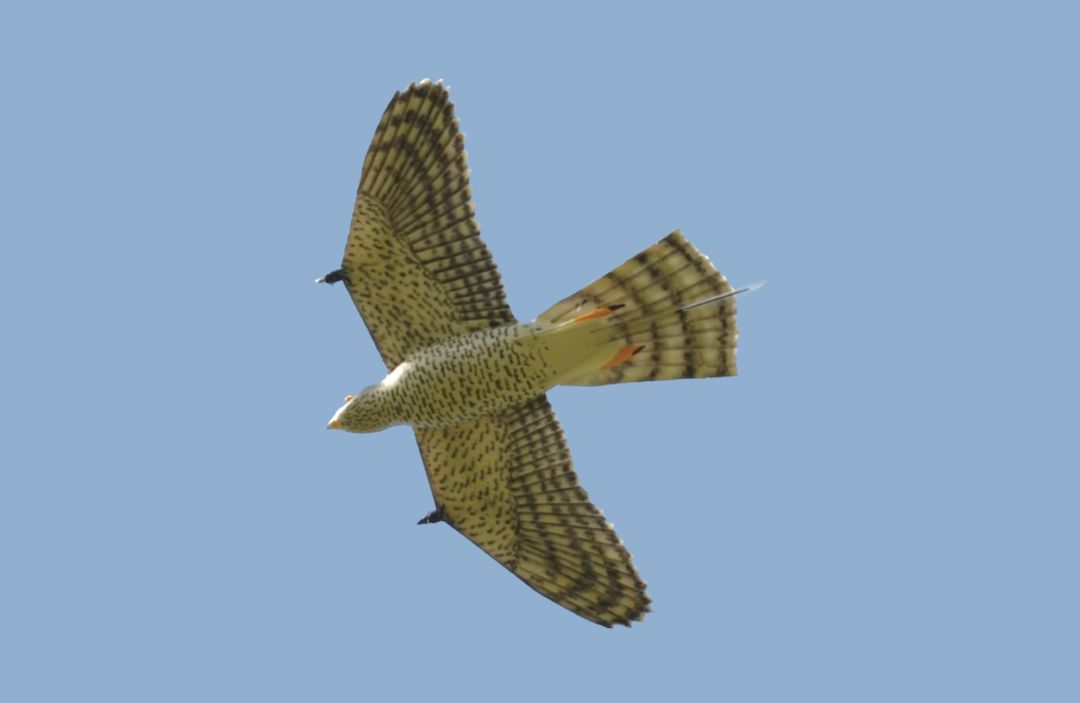
‘RobotFalcon’ was inspired after, as the name suggests, a peregrine falcon, as the team believed it would be the most successful in scaring away little birds.
The robot is built with fiberglass and polypropylene composite material, and two propellers are mounted onto each wing to help it take flight. Within the flying droid is an internal engine that powers the device up. It only weighs 0.15 lbs compared to traditional drones, which would weigh much more.
It was painted to mimic genuine falcons to make it as realistic as possible. Additionally, researchers took the time to investigate the animal’s flight characteristics before creating their own artificial version.
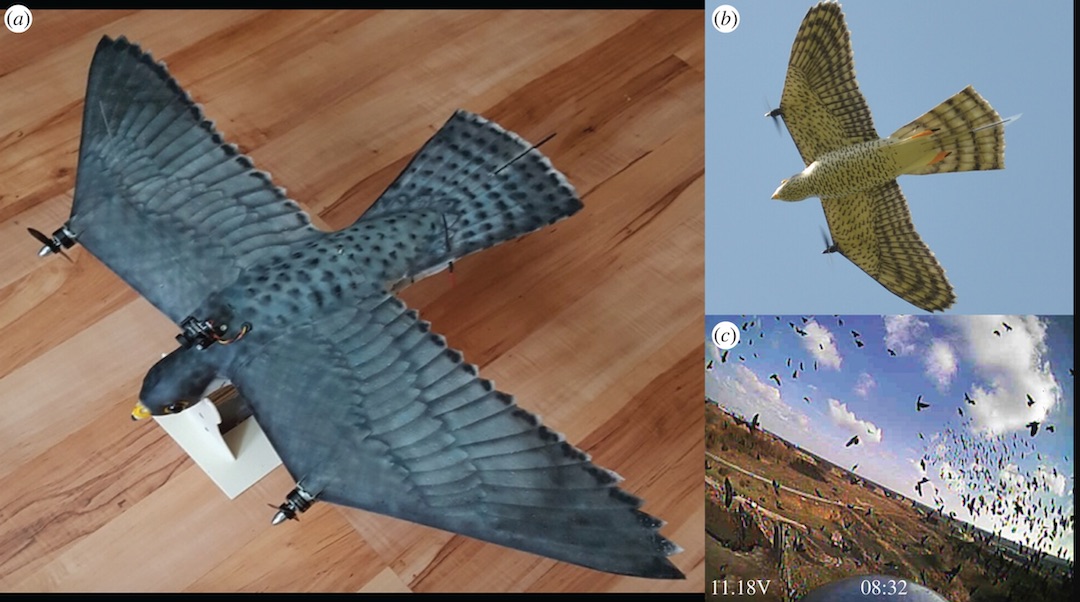
RobotFalcon was unleashed onto a field during its trial to see if other birds would be frightened by its presence. The scientists were proved right when, within 70 seconds, the area was cleared of large flocks.
The scientists released the robot to the same flock over the next three months and discovered that they were still terrified every time they saw it. This presents airport wildlife management teams with an ethical way to disperse them without endangering any.
In some events, bird strikes can cause delays, flight cancellations, and even danger, like putting passengers’ lives at risk depending on the impact on the plane parts the animals have caused.
However, it does have its downsides.
For starters, it cannot be left unattended and must be controlled by a qualified drone pilot from the ground. In addition, it only has a battery life of 15 minutes and cannot maneuver through severe weather.
Nevertheless, the idea offers a win-win situation for both the aviation industry and wildlife, as RobotFalcon may save both airplanes and birds from demise.
[via CNN and Interesting Engineering, images via Rolf F. Storms et. al./Journal of the Royal Society (CC BY 4.0)]


