
New Wireless Charging Technology Puts London Buses On Track To Zero Emissions
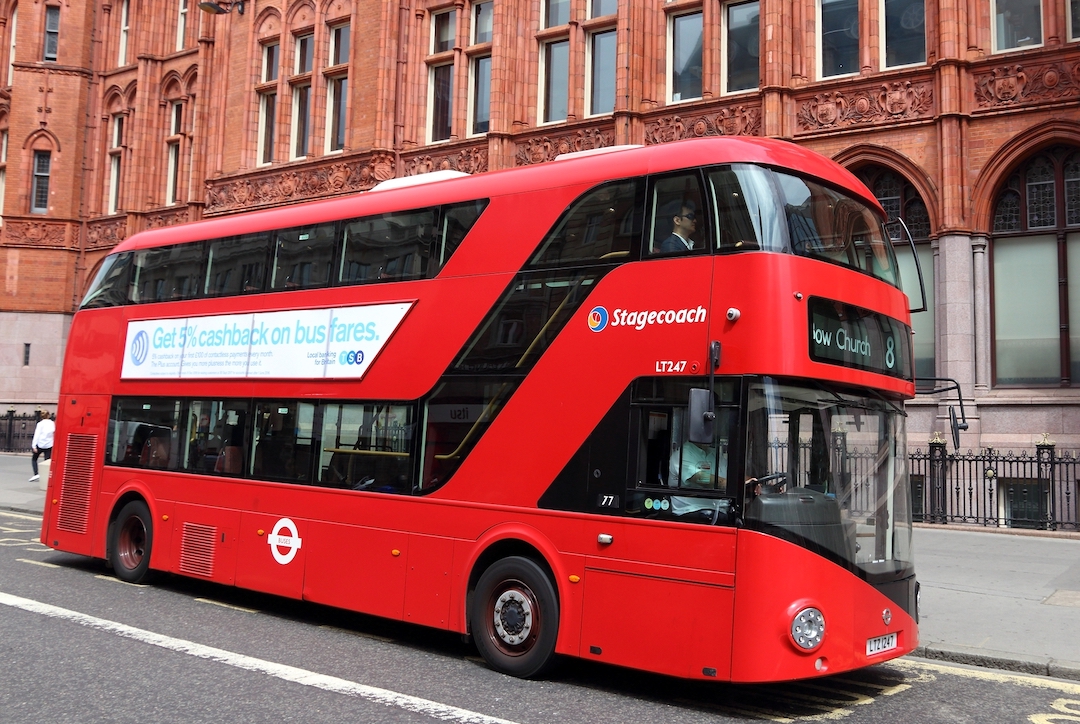
In a bid to transform its entire bus fleet into an all-electric one by 2034, Transport For London has introduced
a new way to keep the vehicles juiced up on their daily routes.
Currently, over 850 zero-emission buses are operating within the capital, most of which are only charged in garages overnight. To make it more convenient for drivers on the go, new rapid, wireless bus charging technology has been introduced on one of its routes.
The new system uses a pantograph, an arm-like structure, to attach itself to the vehicle’s roof to give it a quick, high-power charge. Buses communicate with the gadget through wireless RFID technology and get powered up multiple times a day when a boost is needed.
Each charging session only takes 10 minutes and prolongs how far the bus can travel on its commute, allowing more passengers to be served with fewer vehicles on the road.
Starting next year, Transport For London will expand this system to locate the pantographs at each end of a bus route. This will prove handy for longer trips, such as the 15 miles between Crystal Palace and Orpington, allowing the bus to get quick charges at the halfway point to sustain it for the whole journey.
“The introduction of the pantograph builds on the progress we have already made to run a cleaner and greener bus service. Transforming London’s bus fleet is an important part of the Mayor’s target of getting London to net zero by 2030, and his aim to build a better London—a fairer, greener, and more prosperous city for all,” remarked Deputy Mayor for Transport Seb Dance.
🚌⚡Introducing rapid, wireless bus charging on route 132
— Transport for London (@TfL) October 26, 2022
Pantograph technology provides this quick, high power top up, keeping buses on the road for longer, meaning the same service runs with fewer buses!
Who's excited for a zero-emission bus fleet future? pic.twitter.com/y9EklO1AOx
[via CBW Magazine and Transport For London, cover image via Tupungato | Dreamstime.com]


