
Microsoft Now Lets You Choose Bing’s Personality When Answering Questions
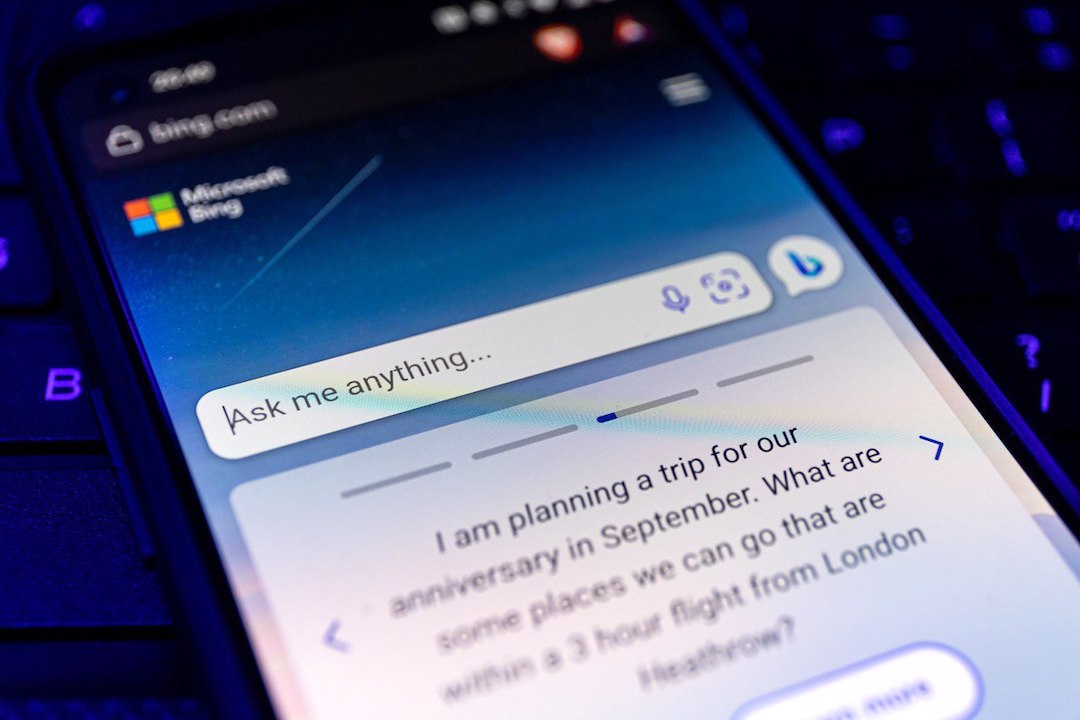
No matter if you preferred Bing’s artificially-intelligent chatbot when it was first introduced or its recent composed, toned-down version—Microsoft has a solution for you. The technology giant has updated the feature to allow users to select the software’s personality when replying.
Depending on the desired length and creativity of the answers, users can choose between three options on the chat landing page: ‘More Creative’, ‘More Balanced’, or ‘More Precise’. As the names imply, the selections will range from imaginative and entertaining to short and factual.
We’ve been hard at work tweaking dials so you can chat with the new Bing however you’d like. Starting today, some users will see the ability to choose a style that is more Precise ðŸ“, Balanced 🧘♂ï¸, or Creative 🧪.
— Mike Davidson (@mikeindustries) February 24, 2023
Let us know what you think by using the 👠& 👎 in each response. pic.twitter.com/OyCI2y3eT6
According to the description, ‘More Creative’ will give users responses that are “original and imaginative, creating surprise and entertainment,” whereas ‘More Balanced’ will come up with answers that “are reasonable and coherent, balancing accuracy and creativity.”
Last but not least, ‘More Precise’ will churn out conversation that’s “factual and concise, prioritizing accuracy and relevancy.”
the new bing "creative," "balanced," and "precise" conversation options just popped up for me pic.twitter.com/8RAvtYChzh
— Parker Ortolani (@ParkerOrtolani) March 1, 2023
When Mashable tested the update, writer Cecily Mauran received the longest response from the first option, though the ‘Balanced’ mode seemed to have the most personality among the three. As expected, ‘Precise’ only offered up a literal answer with no additional commentary.
Of course, no one can be sure how these options adjust the personality of the Bing chatbot, it does seem inherently useful to allow users to select the type of answers they wish to receive for different questions and scenarios.
How Bing AI chat answers the same question with different tone - balanced in blue, creative in purple and precise in teal... pic.twitter.com/BhaUiTKbmW
— Barry Schwartz (@rustybrick) March 1, 2023
There’s new options in Bing AI to pick precise, balanced or creative mode (I suspect that this adjusts the temperature, or randomness, of results)
— Ethan Mollick (@emollick) March 1, 2023
I think it shows the value of creative hallucination in useful AI. And the results don’t quite work like you might think. Example👇 pic.twitter.com/MXSTYlYZuY
Playing with the creative mode of Bing chat:
— Pablo (@IamPablo) March 2, 2023
"Draw a portrait of me in ASCII"
Bing chat:
,,,,
(o o)
/ V \
( (_) )
\_____/
|||
|||
|||
|||
|||
/|||\
/|||||\
/|||||||\
I hope you like it. 😊
LMAO pic.twitter.com/HkBosaEtHc
[via Gizmodo and Mashable, cover image via Rokas Tenys | Dreamstime.com]


