
Grammarly Introduces Generative AI Assistant That Writes Your Messages For You
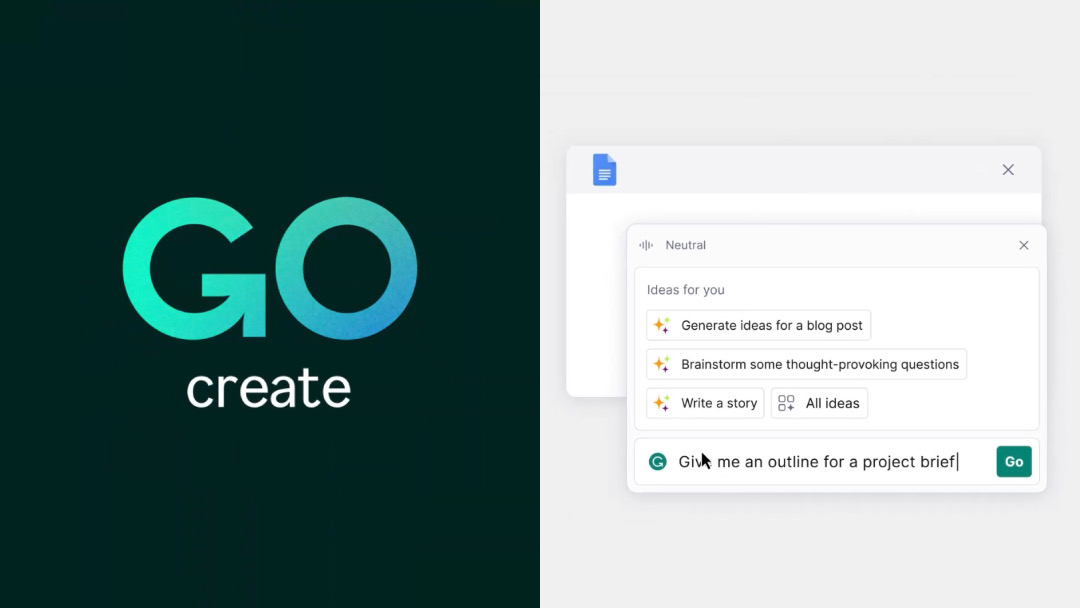
Video screenshots via Grammarly
Well, it just seemed like the natural next step. Not long after OpenAI’s ChatGPT artificial intelligence literally changed up the way the world commmunicates, Grammarly—a powerful writing app that has been assisting in typing for years—has introduced its own generative AI tool.
‘GrammarlyGO’, coming to most users in April, goes beyond proofreading with auto-composition capabilities that claim to match the voice of a company or the context. The tool can take on more ambitious tasks like composing full lengths of text from a single prompt and crafting email replies, or it can continue working as a partner to humans by rewriting existing texts to adopt a desired tone, or by shortening passages.
Alternatively, as some artists have done with text-to-image generators like DALL-E and Midjourney, GrammarlyGO’s results can also be used as a guide for ideation or to help you overcome writer’s block.
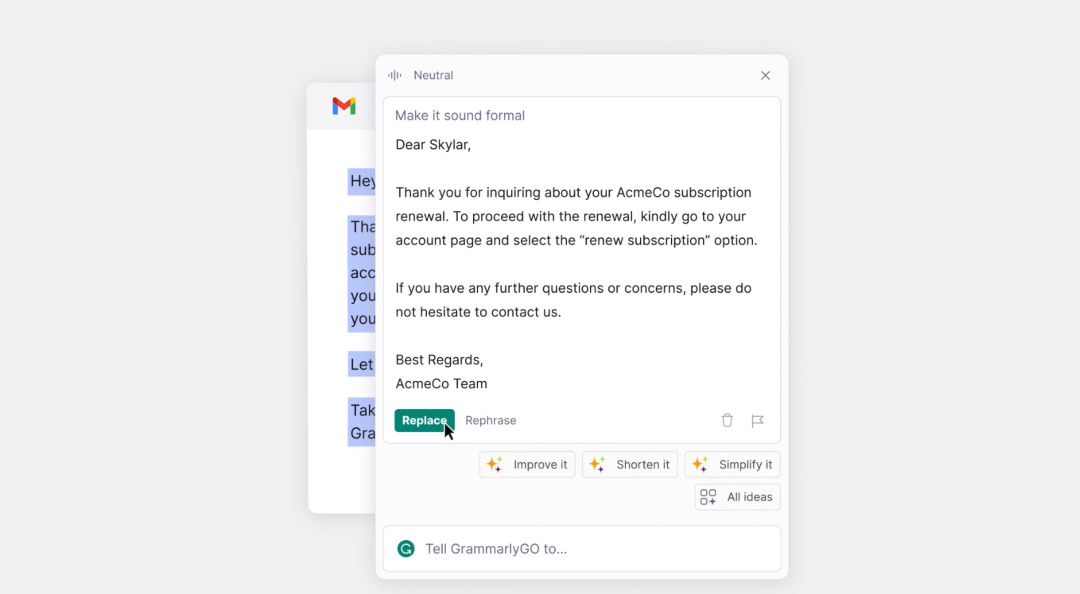
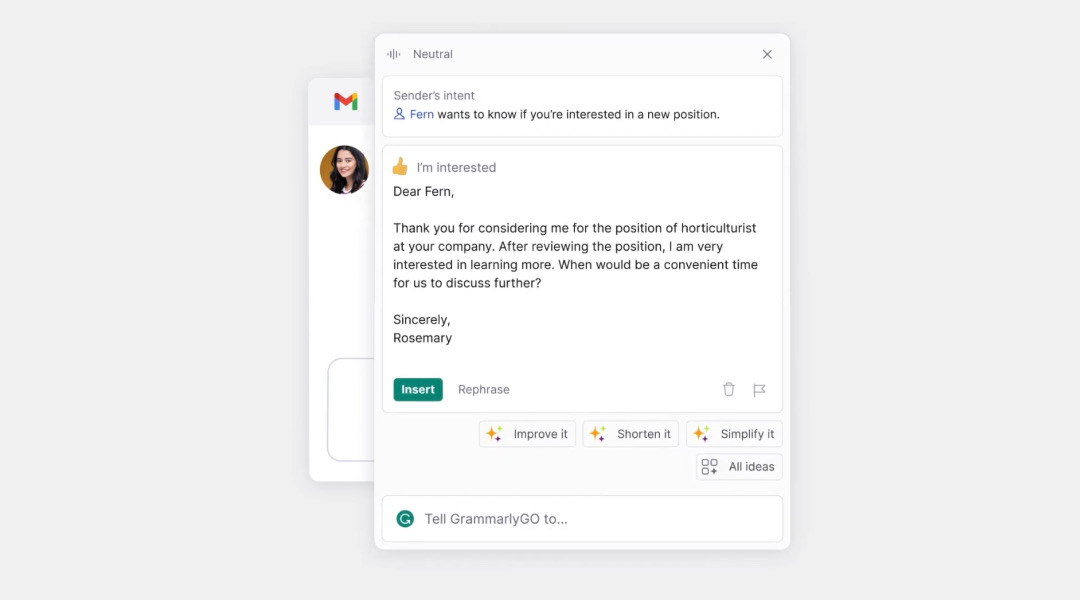
With the feature on, users could, for instance, generate email responses by clicking on a button that tells the bot if they’re “interested” or “not interested” in attending a conference, prompting the AI to write a full email in a casual or formal voice, or in whatever tone the sender wants.

They could also enter the phrase, “make this shorter,” to get the AI to make a body of text more succinct, or even have the tool create a full job description, as shown in Grammarly’s demo.


“Poor communication is draining business productivity and performance,” details Rahul Roy-Chowdhury, Grammarly’s global head of product. “GrammarlyGO will address this problem by quickly generating highly relevant text with an understanding of personal voice and brand style, context, and intent—saving people and businesses time while accounting for their unique needs.”
GrammarlyGO will be available at no cost to users on the Free, Premium, Business, Education, and Developer plans, and the beta version should be ready next month.
Which begs the question: In a world where an entire thought process can be manufactured in an instant, what use are human brains?


