
OpenAI Is Taking On Google With ‘SearchGPT’, Its Experimental Search Engine
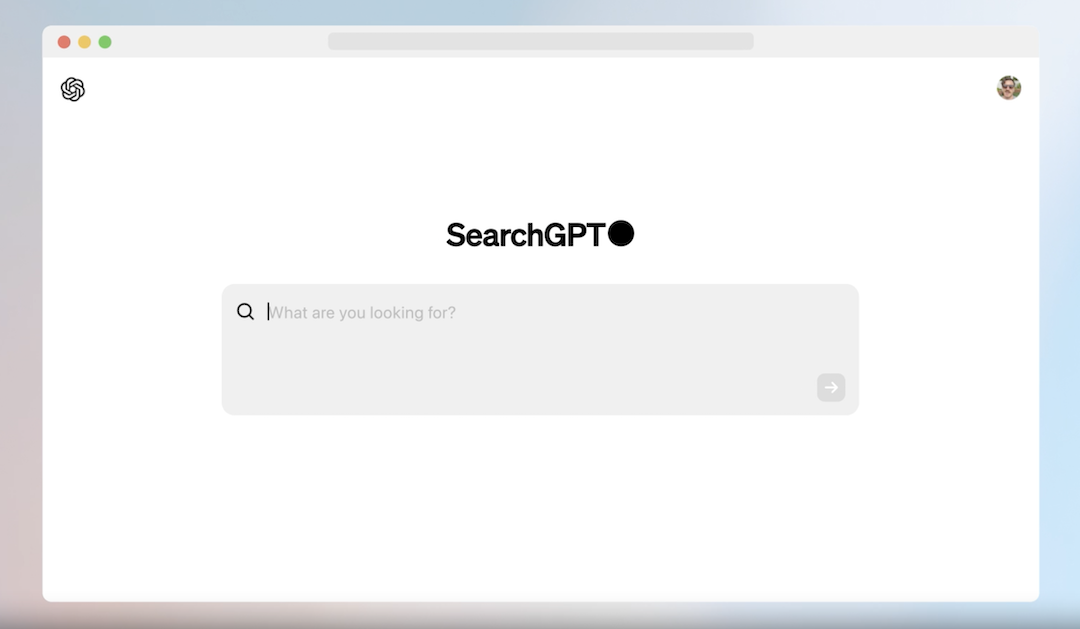
Video screenshot via OpenAI
OpenAI plans to give Google and its ilk a run for their money with the introduction of its own search engine, SearchGPT. This prototype, currently in the hands of a select group of users, aims to revolutionize the way we find information online. With the promise of enhanced conversational capabilities and real-time web data integration, SearchGPT is positioning itself as a formidable competitor to Google’s dominance.
With SearchGPT, the organization aspires to make search faster, more accurate, and more intuitive. “We believe that by enhancing the conversational capabilities of our models with real-time information from the web, finding what you’re looking for can be faster and easier,” it explains in a recent blog post announcing the feature.
Video via OpenAI
Instead of burying users in a sea of search results, SearchGPT takes a different approach from traditional search engines. It summarizes answers directly, providing clear links to relevant sources. You can then continue conversing with the chatbot for further context.
Video via OpenAI
OpenAI says it’s working closely with publishers to make this happen, in addition to seeking feedback from them to give them more control over how they appear. Search results will include in-line attributions and links to not only let visitors know where the information came from but also drive traffic to publisher sites.
Video via OpenAI
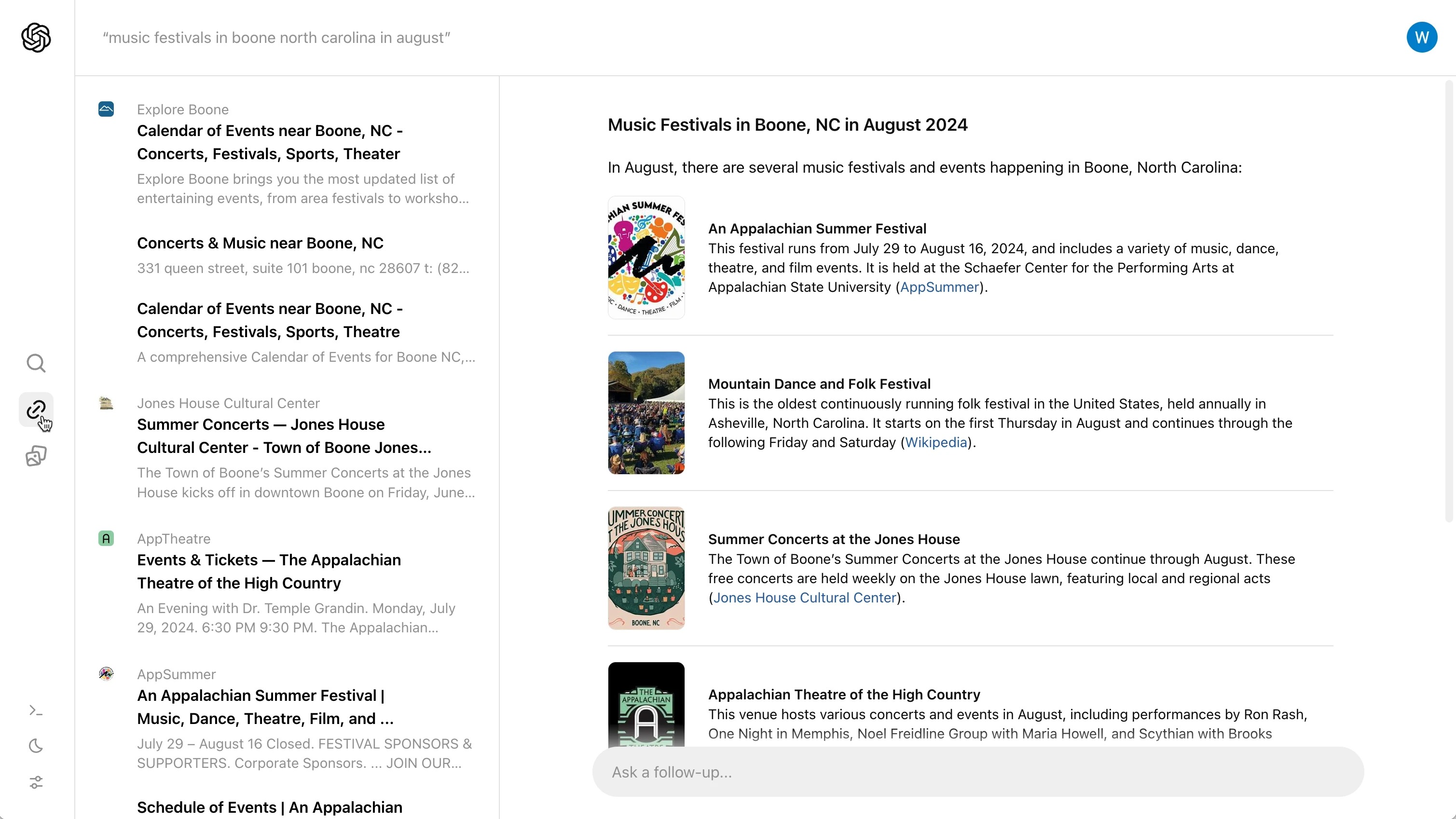
Image via OpenAI
While SearchGPT is currently in prototype mode, OpenAI has big plans. The waitlist is open for curious users eager to test its capabilities. Importantly, SearchGPT operates independently from the generative AI foundation models, ensuring that even sites opting out of generative AI training can still appear in search results.
The concept is only “temporary,” the organization stresses, and it intends to “integrate the best of these features directly into ChatGPT in the future.”
[via Reuters, CNBC, The Guardian, videos and images via OpenAI]


