
Frank Gehry, Famed Architect Who Made Buildings ‘Move,’ Passes Away At 96
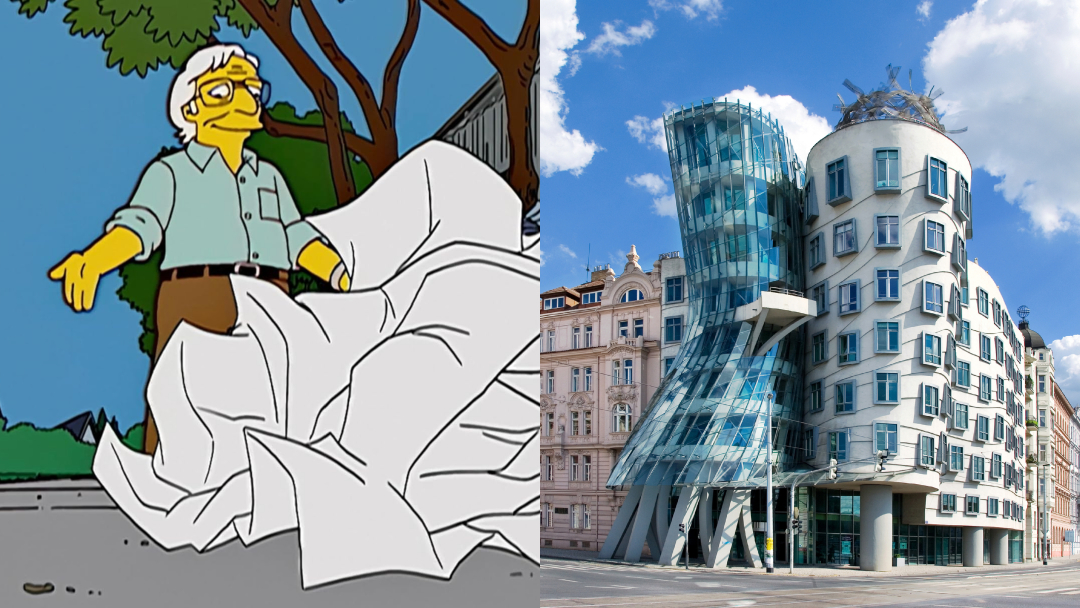
Images via IMDb / Kaprik | Dreamstime.com
The architect who reshaped skylines and expectations in dramatic measure has died at 96, leaving behind a body of work that refused to sit still, stylistically or culturally. Frank Gehry’s designs often looked like they had been caught mid-gesture, and that restless energy defined both his reputation and his legacy.
The Canadian-born American architect died on December 5, 2025, at his home in Santa Monica after a brief respiratory illness. His death was confirmed by his chief of staff, Meaghan Lloyd, who said he was surrounded by family and close friends. Over more than six decades, Gehry became one of the most recognizable figures in contemporary architecture, known for buildings that resisted symmetry, embraced complexity, and often divided opinion.
Frank Gehry (1929–2025)
— ParametricArchitecture (@parametricarch) December 5, 2025
Today, the architectural world loses one of its most fearless innovators. Frank Gehry’s work reshaped skylines and redefined how we think about form, movement, and material, long before digital experimentation became part of our daily practice.
His… pic.twitter.com/9jb9EFc25Y
Born Frank Goldberg in Toronto on February 28, 1929, he moved with his family to Los Angeles in the 1940s and began practicing architecture in the early 1960s. Long before his name was synonymous with global landmarks, Gehry tested ideas through modest projects and unconventional materials. His renovation of his own Santa Monica home, built using corrugated metal, plywood, and chain-link fencing, signaled an early rejection of polished modernism and hinted at an approach he once described as “cheapskate architecture.”
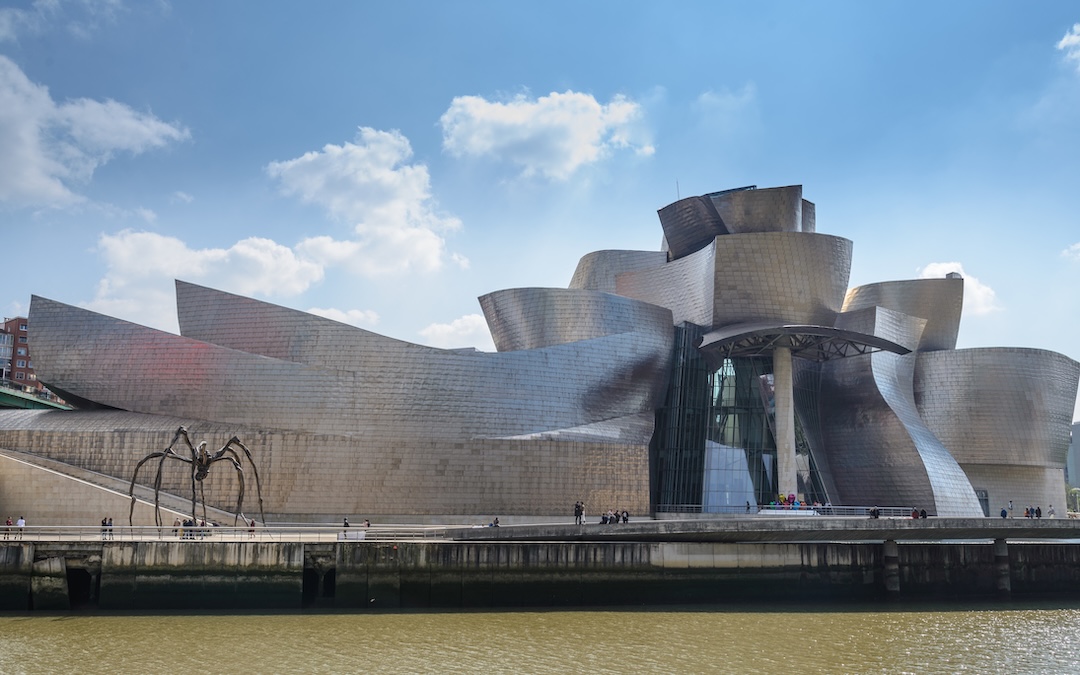
The Guggenheim Museum Bilbao, Spain, designed by Frank Gehry. Photo 145111964 © gurb101088 | Dreamstime.com
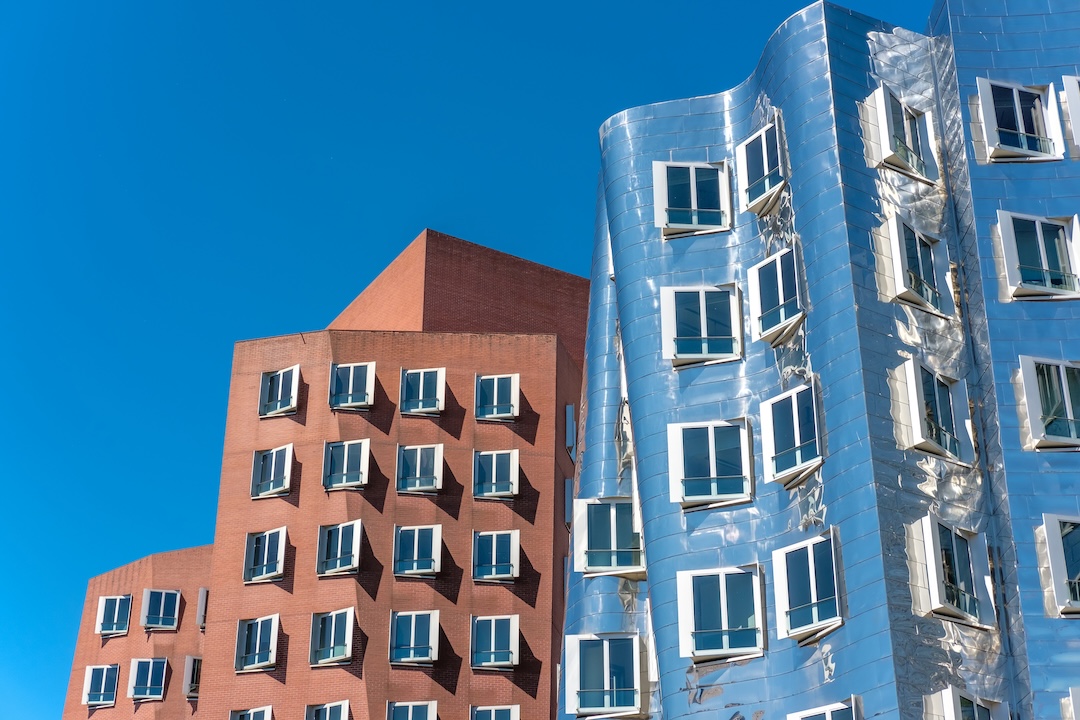
Neuer Zollhof (The New Zollhof), Dusseldorf, Germany, designed by Frank Gehry. Photo 96562844 © Haveseen | Dreamstime.com
International recognition arrived with projects that turned cities into case studies. The Guggenheim Museum Bilbao, completed in 1997, wrapped its galleries in flowing titanium curves and helped propel the Spanish city into the global spotlight, later inspiring the term “Bilbao effect.” In Los Angeles, the Walt Disney Concert Hall transformed a long-delayed civic dream into a complex of stainless-steel forms that doubled as both performance venue and urban landmark. These buildings established Gehry’s reputation for making architecture feel sculptural and emotionally charged.

The Walt Disney Concert Hall at 111 South Grand Avenue in Downtown of Los Angeles, California, designed by Frank Gehry. Photo 40934030 © Starforeman | Dreamstime.com
RIP Frank Gehry, you were every engineer’s nightmare. pic.twitter.com/wGdNFq0Kvg
— N (@dearvotion) December 6, 2025
His influence expanded further with major commissions across continents. Among them was the Fondation Louis Vuitton in Paris, which opened in 2014 on the edge of the Bois de Boulogne. Commissioned by LVMH chairman Bernard Arnault, the structure resembles billowing glass sails layered over white blocks, housing galleries, auditoriums, and public spaces beneath sweeping curves.
"I am profoundly saddened by the passing of Frank Gehry, in whom I lose a very dear friend and for whom I shall forever retain boundless admiration. I owe to him one of the longest, most intense, and most ambitious creative partnerships I have ever had the privilege to… pic.twitter.com/sLdP2k7Fn8
— LVMH (@LVMH) December 5, 2025
Campaign images from the 2014 Frank Gehry x Louis Vuitton handbag collection. pic.twitter.com/GJFH2iuO23
— ð•Šð•¡ð•–ð•Ÿð•”ð•–ð•£, directed by Pablo Larraín (@TheS_Squared) December 7, 2025
The Solomon R. Guggenheim Foundation and its constellation of museums mourn the loss of Frank Gehry, whose visionary architecture reshaped our institution and changed cities around the world.
— Guggenheim New York (@Guggenheim) December 5, 2025
From Bilbao to Abu Dhabi, Frank’s genius magnified the Guggenheim’s mission and showed… pic.twitter.com/9erTVY4TMu
Gehry’s work was never universally embraced. Critics accused him of excess and impracticality, while admirers saw originality and freedom in his disregard for rigid form. He seemed unfazed by the debate. In 1989, those tensions were effectively underscored when he received the Pritzker Architecture Prize, the field’s highest honor, with the jury praising his originality and his willingness to challenge convention.
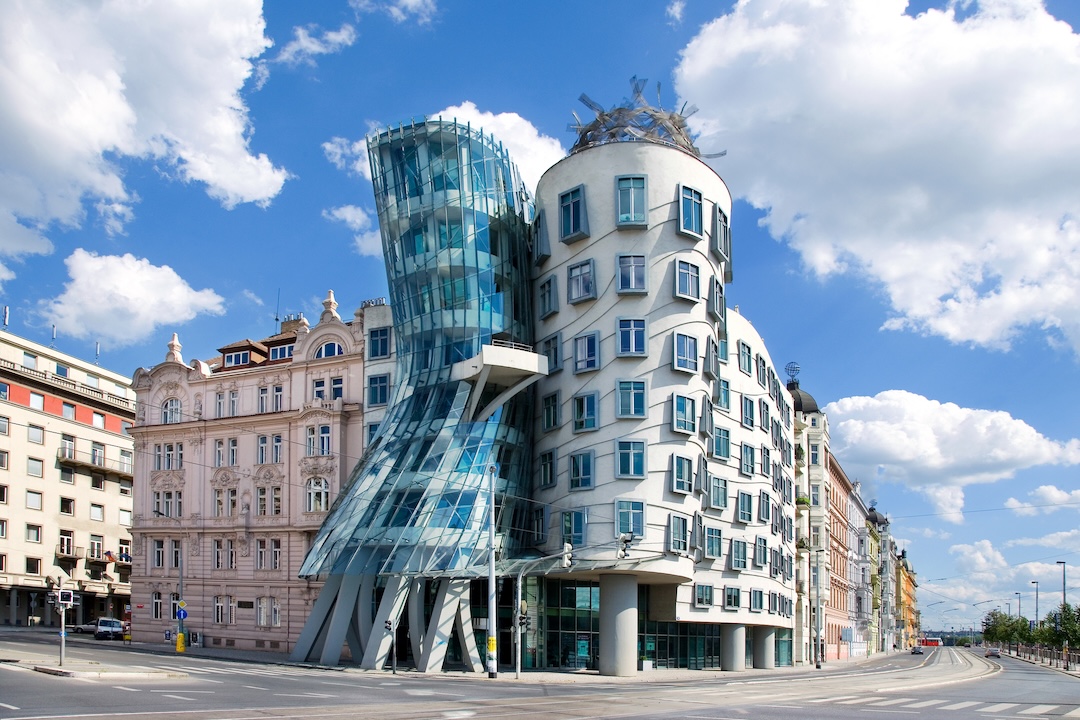
Dancing House, designed by Frank Gehry, in Prague, Czech Republic. Photo 62777129 © Kaprik | Dreamstime.com

The Museum of Pop Culture in Seattle, Washington, designed by Frank Gehry. Photo 202263729 © Tifonimages | Dreamstime.com
Beyond the drafting table, Gehry became a recognizable cultural figure. He appeared as himself on The Simpsons in the 1998 episode The Seven-Beer Snitch, where a tossed scrap of paper becomes the spark for a new design. Behind the scenes, he was also an early adopter of advanced digital modeling, helping shift how complex architectural forms could be translated from sketch into steel and stone.
Marge Simpson asking Canadian architect, Frank Gehry, to build them a concert hall. Gehry passed away today at 96. pic.twitter.com/FOMHo4bdBF
— Old Canada Series (@oldcanadaseries) December 5, 2025
Gehry’s buildings remain fixtures of skylines and debate alike. From Prague’s Dancing House to Sydney’s Dr Chau Chak Wing Building, his work blurred lines between architecture, sculpture, and spectacle. Loved, criticized, and endlessly discussed, his structures continue to provoke reaction, which may be the most faithful measure of his impact.
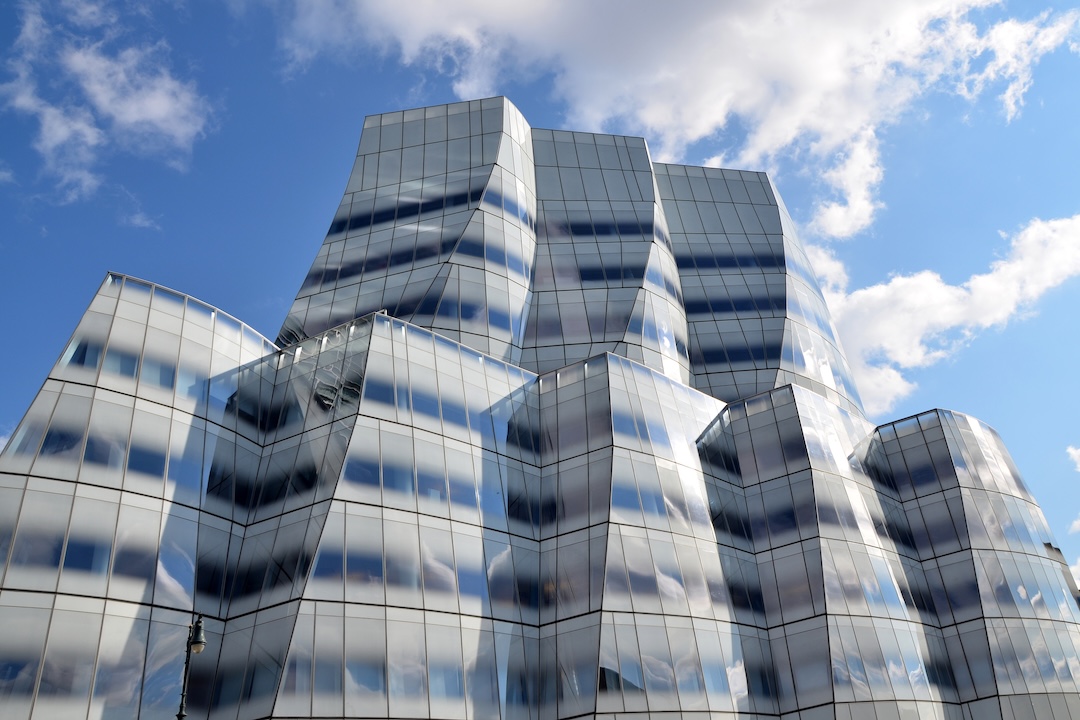
The IAC Building in Manhattan, New York City, designed by Frank Gehry. Photo 22139048 © Leungphotography | Dreamstime.com
Frank Gehry was a gentleman titan of architecture and a master communicator of the future. He recognized that architecture is not just designing a building – it is creating a work of art.
— Nancy Pelosi (@SpeakerPelosi) December 5, 2025
As an architect, Frank used his buildings to communicate and make novel impacts on our… pic.twitter.com/6uyeZm0Psu
rest in peace frank gehry 🩶 his house in santa monica (that made all his neighbors hate him) will forever be one of my favorites pic.twitter.com/y4inbRGXyn
— zoë (@zoeloveshouses) December 6, 2025
The death of Frank Gehry is the first public persona's death to hit me. I saw his work first at 14. for years afterwards i wanted to be an architect. He made everyday spaces feel special.
— viba â˜€ï¸ (@vibamohan_) December 8, 2025
I loved it then, I love it now. Truly Timeless pic.twitter.com/DQmlDRzjf2
[via ArchDaily and Associated Press, images via various sources]


