
Tesla Introduces ‘Crash Lab’ Where It Simulates Accidents Using Real-World Data
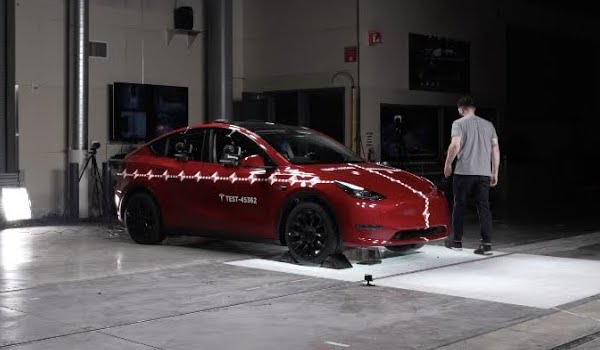
Video screenshot via Tesla
Previously, Tesla gave fans a sneak peek at how ‘Tesla Glass’ is made at its Glass Technology Center in Los Angeles, focusing on the incredible acoustics the specially-designed glass gave its vehicles. Now, it’s allowing yet another look behind the curtain, this time at the Tesla Crash Lab, where engineers test safety technology based on real-world data.
By acquiring different data points from the millions of Tesla vehicles worldwide, the team then recreates possible crash scenarios in the lab, allowing the company to beef up safety features on each car.
In the video, safety engineer Dan explains how Tesla makes use of crash data from its self-driving sensors to learn more about real-life incidents.
The company says such data allows it to detect within 10 milliseconds of a crash what type it is, and deploy the airbag for optimal safety. It could depend on the driver’s seating position, or where the steering wheel is.
Additionally, using simulations, engineers are able to better predict––down to the car’s position and speed––when exactly the airbags need to be launched. Tesla describes that the algorithm helps identify specific crashes and the amount of restraint needed for that particular incident.
The firm has moved on to the actual demonstration phase, taking note of what happens inside a Model Y when its hit by a pickup truck. The firm said such tests are “a world-first,” and that its results are a “homerun.”
[via Electrek, cover image via Tesla]
Also check out these recent news


