
Autonomous Cars Get X-Ray Vision With The Help Of Other Vehicles On The Road
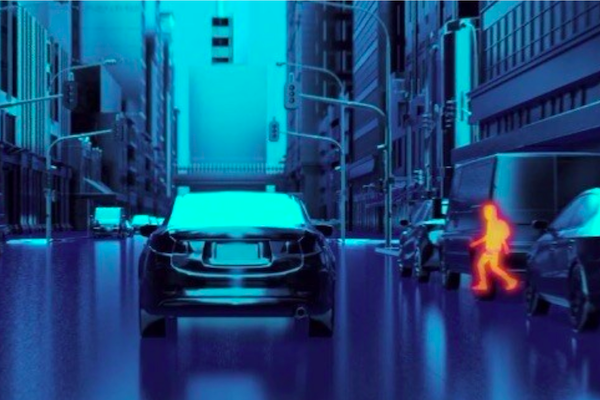
Image via Cohda Wireless
Intelligent transport systems, or ITS, are a rapidly developing sector. Most notably is Tesla’s attempt at developing Full Self-Driving , with Mercedes appearing to beat it at its own game.
Apart from this, many other companies have also begun to explore automating the transport of passengers and goods. Safety, however, has been a concern. The technology is still considered to be in early days, and there have been a few blunders so far.
New technology developed by Australian researchers could, however, alleviate this. Essentially giving these new smart cars X-ray vision, the tech would allow them to track and detect moving and “hidden” pedestrians, runners, and cyclists who may be hidden behind buildings or larger vehicles such as buses and trucks.
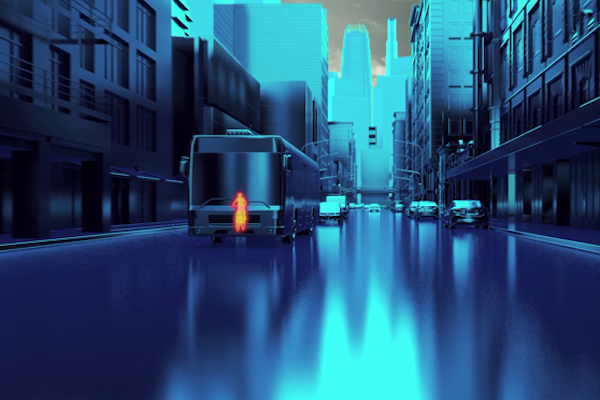
Image via Cohda Wireless
The technique—called cooperative or collective perception (CP)—was created by the University of Sydney’s Australian Centre for Field Robotics and vehicle solutions company Cohda Wireless, and funded by the iMOVE Cooperative Research Center. Results from three years of research into this tech were just released a couple of months prior.
Although it sounds like something out of a ludicrous sci-fi movie, the process is actually pretty simple. Roadside ITS information-sharing units (ITS stations) are used so that vehicles can share what their cameras can “see.”
With vehicle-to-X (V2X) communication, other vehicles will be able to tap into various viewpoints, significantly increasing their range of perception, as the team states in the news release.
CP allows for the autonomous cars to “break the physical and practical limitations of onboard perception sensors, and embrace improved perception quality and robustness,” describes Chief Technical Officer, Professor Paul Alexander, at Cohda Wireless.
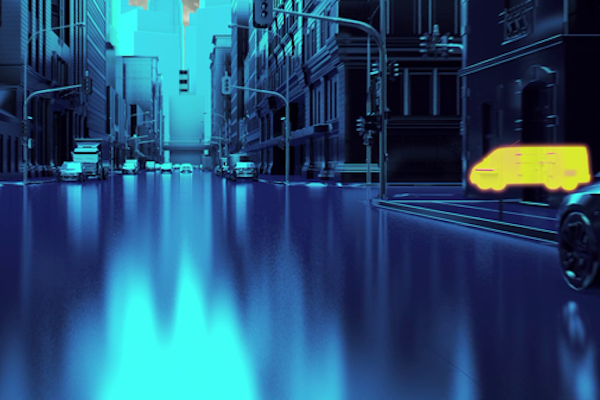
Image via Cohda Wireless
While perhaps being able to find the most use in autonomous systems, the research team has stated that all vehicles, manned or not, could benefit from CP, especially when interacting with walking pedestrians.
“Using the ITS system, the connected autonomous vehicle managed to take preemptive action: braking and stopping before the pedestrian crossing area based on the predicted movement of the pedestrian,” explains Professor Eduardo Nebot from the Australian Centre for Field Robotics.
“The pedestrian tracking, prediction, path planning and decision making were based on the perception information received from the ITS roadside stations.”
It’s like they always say—collaboration opens new doors. Even, it seems, in the context of a fleet of autonomous cars.
[via Tech Explorist, images via Cohda Wireless]
Also check out these recent news


