
‘Next-Gen’ Eco Batteries Could Outperform Their Traditional Lithium Counterparts
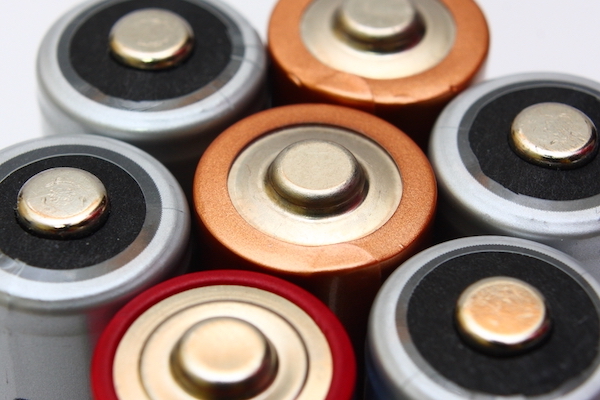
Image ID 15225702 © Boaz Yunior Wibowo | Dreamstime.com
Lithium-ion batteries are the most familiar type of energy storage we currently have. These are used in almost everything, from our smartphones to the up-and-coming electric vehicle (EV) industry of the near future.
However, these aren’t the most Earth-conscious product in widespread use, which, considering the otherwise environmentally-friendly nature of an EV, is rather ironic.
So scientists at the Bristol Composites Institute, England, have come up with new sodium- and potassium-ion batteries that will be able to take the strain off the environment if widely adopted, like lithium-ion is.
The new batteries, detailed in a paper published in the journal Advanced Functional Materials, are based on an ice-templating system. This yielded new materials, called aerogels, where nano-sized cellulose forms a porous structure using ice crystals, per CleanTechnica.
The crystals are grown, then sublimated, creating channels that can carry the sodium and potassium ions through.
In the past, the larger size of the sodium and potassium ions have hindered the performance of batteries using the materials, since they’re less able to move through the carbon electrodes in conventional batteries. This barrier is removed with the new aerogels.
Another plus point is the use of cellulose in the batteries, which is a sustainable material and much more environmentally friendly than a conventional battery. At its end-of-life, this also means that it’s easier to dispose of properly.
The innovation benefits “from the renewability of the precursor and scalability at relatively low cost in the environmentally benign synthesis process,” shares study lead author Jing Wang in a news release.
“This work could offer an appealing route to promote large-scale applications of sustainable electric vehicles and large-scale energy storage grids in the near future.”
According to the researchers, this also has the potential to outperform the conventional energy storage that we know today.
It has been reported by pv magazine that other uses for this new tech could include a wide variety of energy storage systems: things like zinc-, calcium-, and magnesium-ion batteries.
The researchers are hoping to take this into collaboration with different industries to develop the “next generation” of batteries.
[via CleanTechnica and pv magazine, image ID 15225702 © Boaz Yunior Wibowo | Dreamstime.com]


