
Modular Facade Can Help Older Buildings Cool Down & Warm Up With Solar Energy
Buildings’ heating systems are large consumers of energy, especially in large structures such as schools. Thankfully, architectural innovations nowadays are, often, developed with an eco-friendly edge to help lessen their burden on the environment, covering all areas—including the desert.
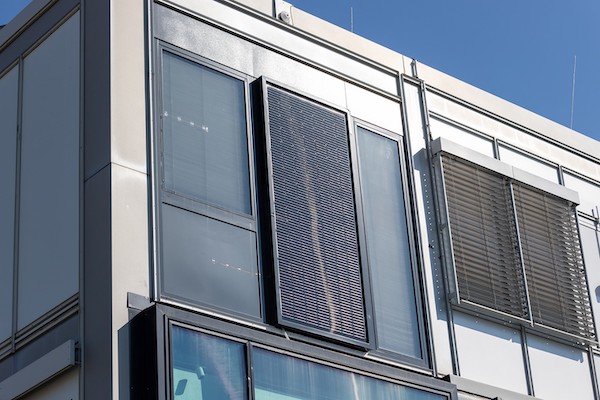
To help bolster the older buildings, which may not have similar technologies implemented, researchers at the Fraunhofer Institute, Germany, have developed a modular system that can be fitted onto existing buildings in a bid to make them eco-friendlier.
Powered by solar energy, this fitting will act as a heating or cooling system for the building. To bring warmth, fan coils are used to pump heat from the outside. And to cool things down, the system extracts the heat from indoors and releases it outside.
Additionally, a decentralized ventilation system will regulate the air exchange and heat recovery processes. Heat loss is avoided, too, with the use of vacuum insulation elements.
According to the researchers, the renewable energy (RE) modular facade is “best suited” for use in buildings like offices and schools that were built using the frame construction method, which was common from the 1950s to the 1970s.
Michael Eberl, a scientist at Fraunhofer who worked on the project, states that these buildings consume around 3200 gigawatt hours of electricity every year. But with the implementation of this innovation, that number could be brought down to 600 gigawatt hours.
By incorporating this invention onto the buildings, modern sustainability goals can be met without incurring huge renovation costs.
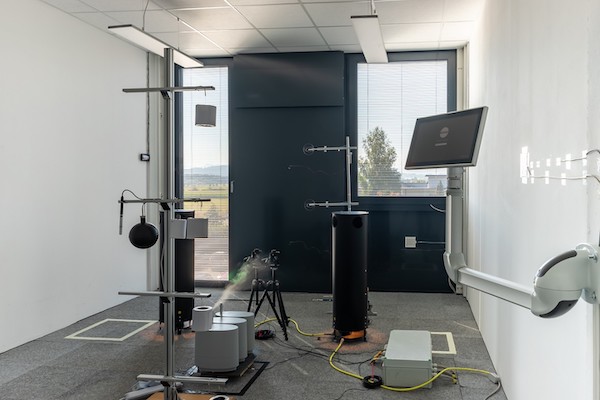
Currently, a demonstrative version of the facade is being tested on one of the Institute’s buildings.
[via The Optimist Daily and the Fraunhofer Institute, images via the Fraunhofer Institute]


