
Iceland Is Still Holding On To The Last-Surviving Big Mac As Historical Artifact
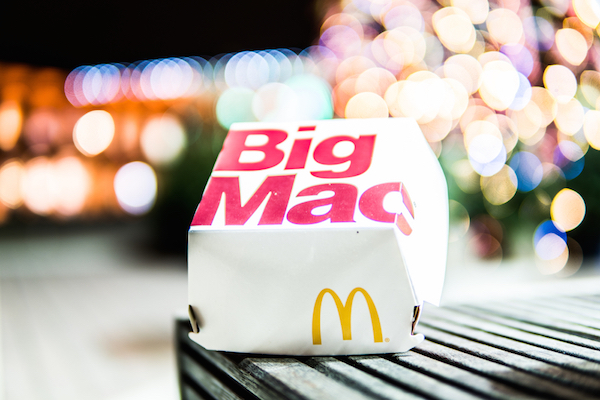
McDonald’s and its golden arches are easily recognizable symbols almost everywhere in the world—keyword being “almost.” Although it might seem that the fast-food giant has left no civilized corner of the planet untouched, there are indeed some places where it ceases to exist.
One such place is Iceland. There used to be three McDonald’s restaurants there, but the last one closed in 2009, deeming the brand and its products some form of far-flung history, which is exactly how the country is treating the iconic Big Mac.
A 12-year-old burger is preserved as a piece of history, having traversed museums in the country. What that says about the composition—and decomposition, or lack thereof—of McDonald’s food is another story.
Purchased on October 30, 2009, the day before the last McDonald’s in the country closed, the burger remained in Hjörtur Smárason’s garage for almost three years, untouched by mice who had chewed through everything except for it. He found the meal when he was moving out of his house.
Smárason recalled to Atlas Obscura that he was “reluctant” to open the bag, having had horrific flashbacks to a previous incident involving a decomposed sandwich in the bottom of his child’s bag. But he was in for a surprise when he did finally open it.
“It looked like I bought it just 15 minutes earlier,” he said. “And the same with the fries, it all looked almost new. Just turned cold on the way home.”
Staring at this immaculate three-year-old meal, Smárason realized its value as an artifact and acted accordingly. “And what do you do with a historical artifact? You put it in a museum.”
Since then, the burger has taken up residency at the National Museum of Iceland and the Bus Hostel Reykjavik before being transferred to the Snotra House, another hostel, for preservation and display.
“I don’t think not eating a hamburger is the most remarkable thing I have done, but if you do an image search for my name, you will mostly see pictures of an old hamburger,” Smárason reflects.
Apart from being just a Big Mac, the burger and its accompanying fries represent Iceland’s entrance into a modern and globalized world.
Unfortunately, the last outlet being closed in 2009 was due to the economic collapse the year prior, when the Icelandic króna lost half its value.
Because McDonald’s meals require imported ingredients, which were shipped from Germany, tariffs and import prices began to rise to unmanageable heights. If the fast food chain didn’t raise their prices, it wouldn’t be able to keep operating. So it had to close.
Although it has since been replaced by Metro, a chain that uses locally-sourced ingredients instead of relying on imports, it’s safe to say that McDonald’s still leaves a fond, albeit slightly greasy, mark on many hearts.
[via The Takeout and Atlas Obscura, image via Grzegorz Czapski / Shutterstock.com]


