
Japan To Build Artificial-Gravity Habitats & Cross-Planet Trains Next Century
Video screenshot via Earth & Planetary Env. Disaster Research Unit
In SpongeBob SquarePants, there’s a squirrel named Sandy Cheeks who is able to live among sea creatures as she protects her head from water in a spacesuit. Japanese researchers are bringing a version of this idea into what they deem is an unprecedented concept for space living.
You’ve probably already seen countless models for space habitats. A team at the SIC Human Spaceology Center at Kyoto University along with Tokyo construction firm Kajima Corp, however, are convinced theirs is the most sustainable yet. They believe gravity sits at the core of making homes on the Moon and Mars actually livable for humans, and they’re hoping to replicate it for when we eventually make the move.
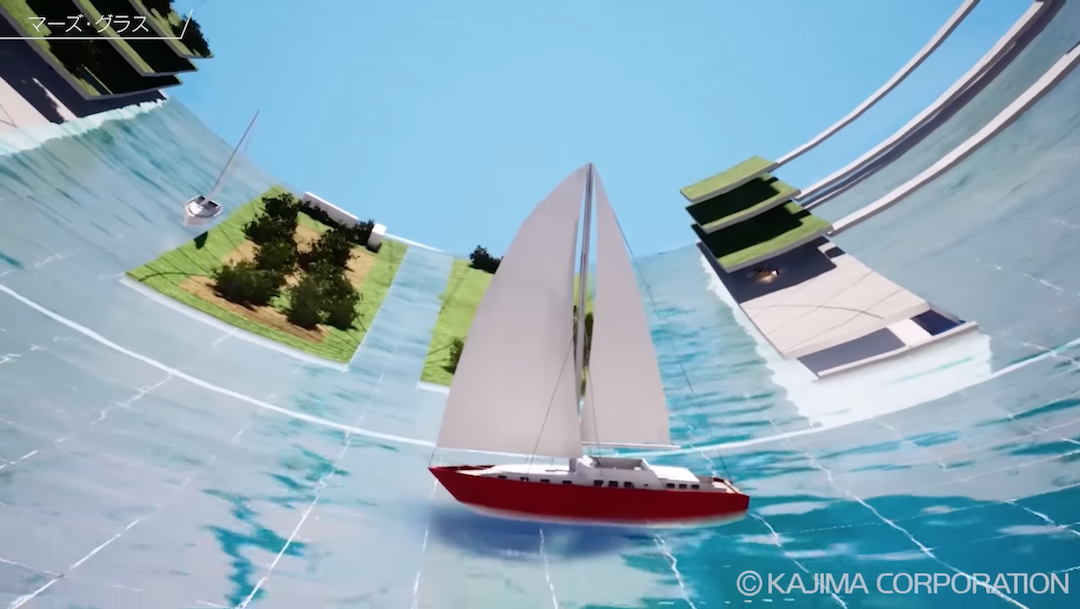
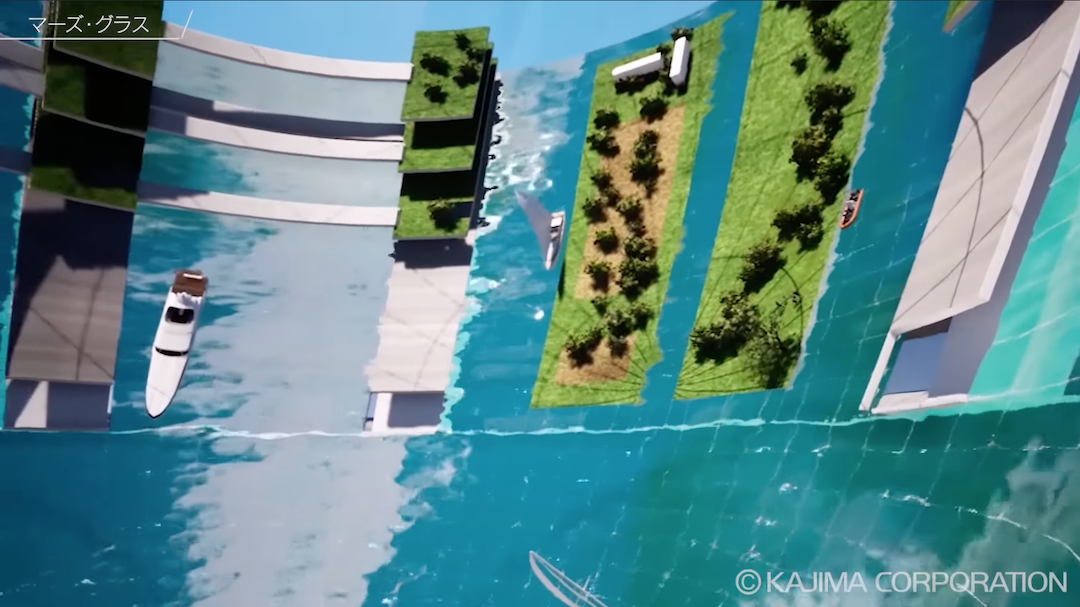
Renderings presented at a news conference on July 5 (via The Asahi Shimbun) bring this futuristic idea to light. The researchers visualize outbound habitats being supported by a giant, rotating 1,300-foot-tall structure called ‘The Glass’, which is envisioned to revolve every 20 seconds using centrifugal force. This mimics gravity on Earth, enabling migrants from this planet to feel much more at home.
The presence of Earth-like gravity shouldn’t be underestimated when it comes to living in space, the scientists posit. Messing up this orientation could bring complications to reproduction and development, they add. Further, the bodies of babies born in space might grow to look different from those of earthbound humans who have been allowed the luxury of weight.
Two variations of The Glass are expected—one for the Moon (‘Lunar Glass’) and one for the Red Planet (‘Mars Glass’).
Video screenshot via Earth & Planetary Env. Disaster Research Unit
The architecture won’t likely come to fruition in our lifetime, however. The scientists project that The Glass will only be developed in the next century, so your children and grandchildren would be the ones to reap the fruits of this research.
Expanding on their vision for an inhabitable life in space, the team has also dreamed up a transportation system that works similar to trains on Earth. These trains are a lot more special—they’ll be able to transport you between celestial “stations” on Earth, the Moon, and Mars.
To block out harmful exposure to cosmic rays, the trains’ cars are anticipated to be encased in hexagonal capsules.
While we’re still generations away from seeing The Glass in full force, the researchers are looking to build a simplified version on the Moon by 2050.
[via Asahi Shimbun and Interesting Engineering, videos and images via Earth & Planetary Env. Disaster Research Unit]


