
This Origami Moon Home Aims To Bring The Cozy Hygge Lifestyle To Space
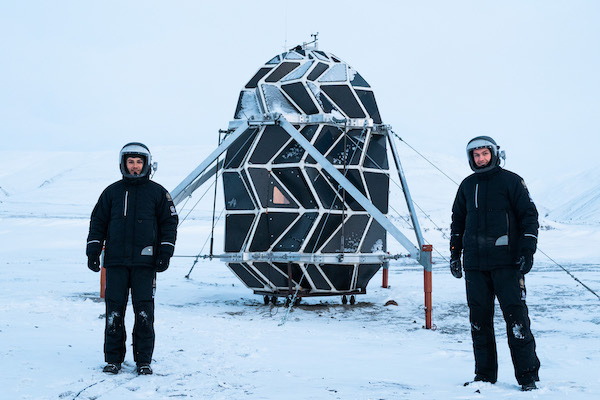
Image via SAGA
So if we’re all going to space, we’re going to need some form of infrastructure, right? Martian caves might be able to shield us from succumbing to radiation, but they might not quite cut it for anything else.
SAGA Space Architects, a Copenhagen-based firm, has got us covered. ‘Lunark’, its latest innovation, is a deployable, comfy moon habitat that comes in the form of a tent.
In transport, the housing has to be minimal to save space, but when deployed, it has to be able to maximize space in order to provide comfortable living. These two areas are solved, effectively, by its “algorithmically-optimized” origami setup.
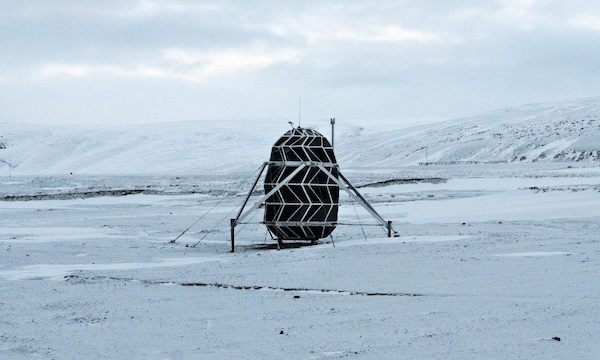
Image via SAGA
This design allows the structure to expand up to 750 times its size while withstanding conditions like meteor showers and harsh temperatures. While the former is still a mere possibility, the latter has already been tested: it was taken out on an expedition to Greenland by the architects themselves.
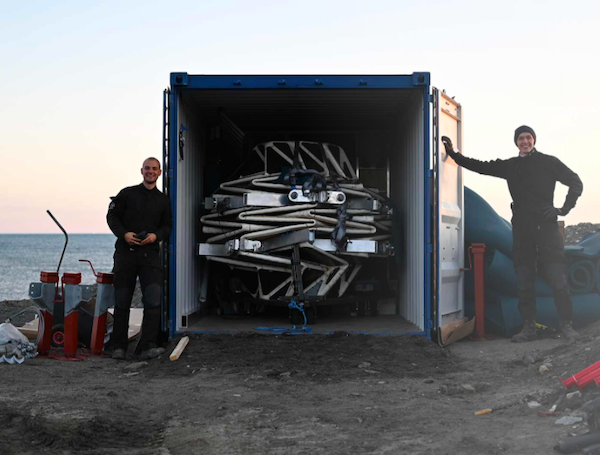
Image via SAGA
A black carbon fiber shell makes up the panels for the main exterior of this newfangled habitat, which utilizes a foam core for added insulation. Carbon fiber is ideal for this sort of project, since it’s strong while retaining a lightweight build. These panels are connected by composite rubber, while the main load-bearing structure takes the form of an aluminum frame.
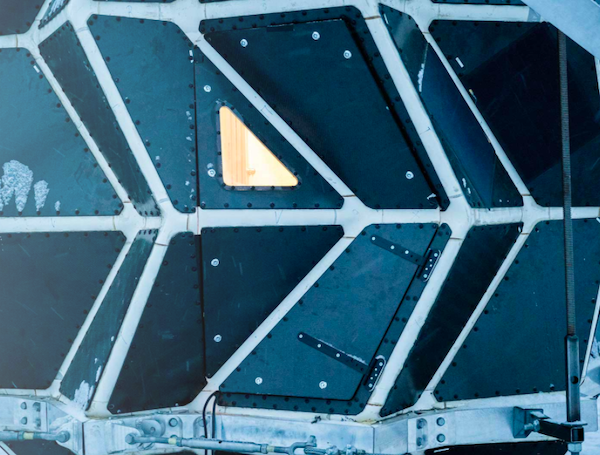
Image via SAGA
At its start, folded up neatly, Lunark can even be stowed away into the back of a lorry. But when unleashed, it’s capable of holding up to 17.2 square meters, or around 185 square feet. Two can fit comfortably inside. For something that started at around the size of a small car, that’s not bad at all.
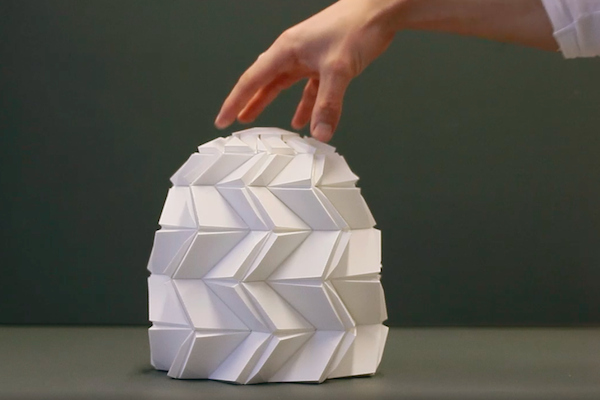
Image via SAGA

Image via SAGA
“The habitat worked beyond all expectations,” Sebastian Aristotelis, one of the architects on the 60-day expedition, told Yanko Design. “The unfolding was possible by just two people and no heavy machinery—and in the extreme cold of the arctic.”
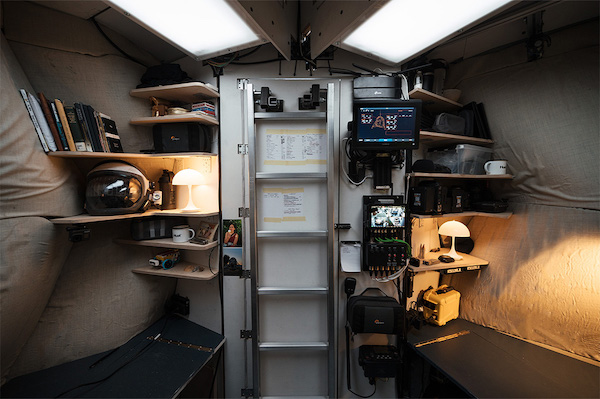
Image via SAGA
Considering the fact that neither of the duo were trained astronauts, Aristotelis explained that they’d recognized that their tolerance would be much lower. “So we needed a much more pleasant living environment. We wanted to create a home, not a survival machine—and the habitat really ended up feeling like home.”
In line with this, the architects included various interior design elements that would allow the tent’s inhabitants to not only survive, but thrive, especially if they’re going to be there for long.
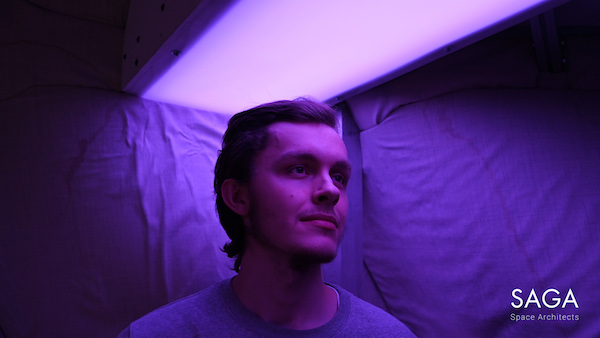
Image via SAGA
The principle of “hygge”—the Danish word for coziness—is clear to see sprinkled throughout the tent, Globetrender reports. “In space, every day is the same; the food, the smell, the temperature. Your senses become numb, your cognitive abilities deteriorate. You quickly start to lose your sense of time,” the team notes. It’s clear to see why astronauts will need to combat this encroaching sense of claustrophobia.
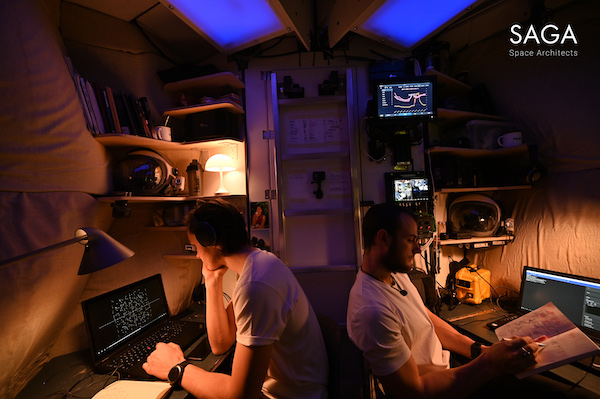
Image via SAGA
One such example comes in the form of colored, solar-powered circadian panels to replicate the light cycles on Earth, since the Moon doesn’t have a similar pattern. These were incorporated with the inhabitants’ sleep patterns, and, in turn, overall physical and mental well-being, in mind.
In addition, immersive soundscapes and a vertical algae farm were also thoughtfully included. When compared to the vast silence and monotonous emptiness of the outer surroundings, be it space or the arctic, these cozy elements are understandably much more favorable.
During the expedition, the habitat managed to consistently provide shelter and a comfortable living environment while enduring hurricane winds, snowstorms, and temperatures down to -22°F.
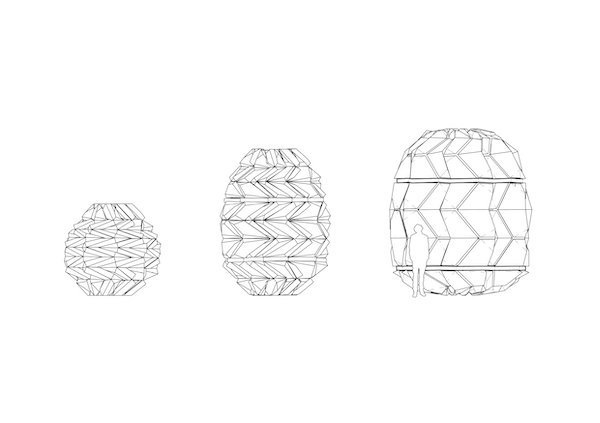
Image via SAGA
[via Yanko Design and Globetrender, all images via SAGA]
Also check out these recent news


