
Formula 1 Wants To Fully Switch To 100% Sustainable Fuel Even Road Cars Can Use
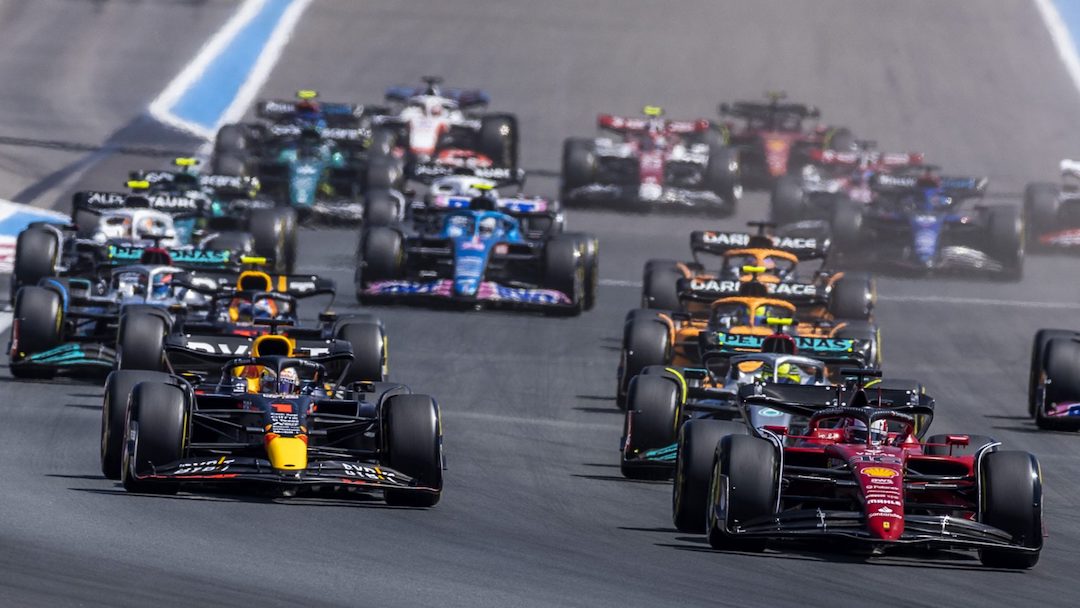
Last October, Formula 1 revealed that instead of going electric, it was planning to make races more eco-friendly by switching teams to 100% sustainable fuel.
Now, the world’s premier motorsport competition has announced that the entire sport is on course to run on the alternative source by 2026, paving way for a new era of greener, cleaner speed.
The organization noted that while the electric vehicle (EV) movement has certainly kicked off in recent years, it’s estimated that by 2030, only 8% of the two billion cars on the road will be fitted with batteries, hence the need for other solutions to help cut down on automotive carbon emissions.
As such, the sport plans to pioneer a ‘drop-in’ 100% sustainable fuel that can not only be used to power the fastest cars around the track, but can be used by most ordinary road cars worldwide.
“At the time I was first talking to people about this, no one knew what I was talking about, and to be honest I’m not sure I did really, so I’ve done an awful lot of research into it,” quipped F1’s Chief Technical Officer Pat Symonds, who is leading the charge.
The forthcoming alternative will build upon F1’s ‘E10’ fuel—a blend of 90% regular fuel and 10% ethanol—that has already been adopted by teams this year, with the sport confident its more sustainable successor will be ready in just over three years’ time.
“We’re working on an E fuel where the carbon circle is completely neutral so the carbon utilized to produce that fuel is the same quantity as the carbon emitted from the international combustion engine,” explained Ross Brawn, F1’s Managing Director of Motorsports.
“It means that the engines do not add anything to the carbon dioxide in the atmosphere. The great appeal is when we find this solution, you can use it in your road car, without making any changes to the engine,” he continued.
“We will have close to two billion internal combustion engines on the planet and whatever electric solution we find, whatever hydrogen solution we find, there’s still going to be two billion cars. There are parts of the world where those cars won’t change to electric.”
[via Sportsnaut and Formula 1, cover image via Formula 1]


