
Scientists Discover You Can Turn Your Clothes Into Battery To Charge Your Phone
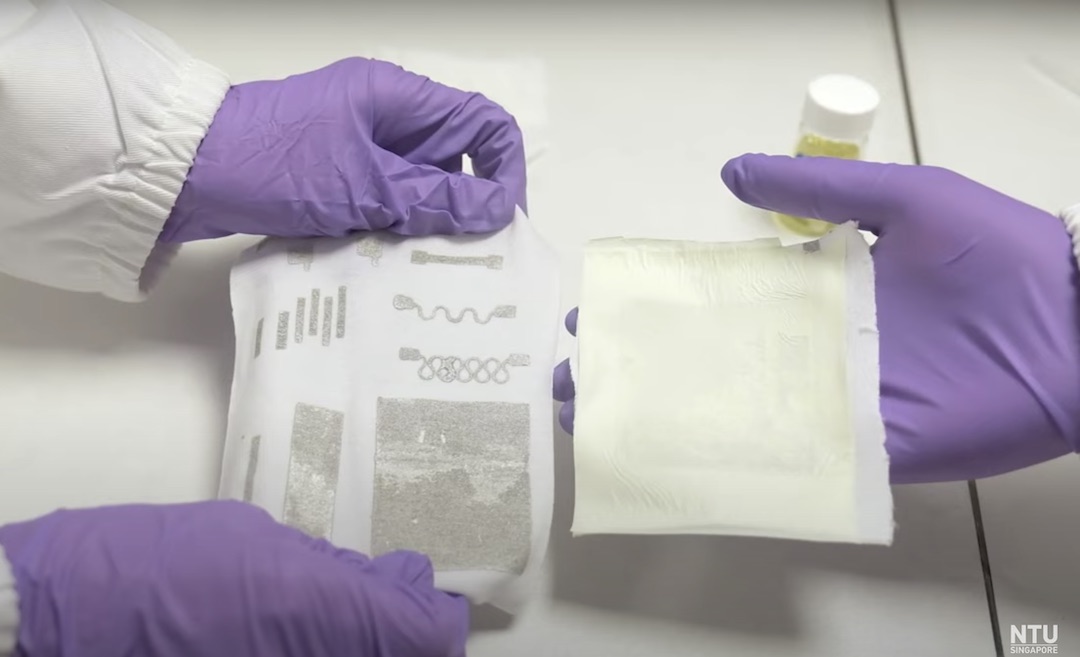
The hunt for alternative battery sources has sent scientists down some interesting routes; for example, batteries powered by sweat or created from wood. However, researchers at Singapore’s Nanyang Technological University have discovered a way to turn your clothes into a power source as well.
The study, published in Advanced Materials, was conducted to find a way to harness the energy humans naturally produce and convert it into electrical charges to power up digital devices or wearables.
The result was a six-inch by eight-inch piece of fabric that can generate energy. The fabric was able to sustain 100 LED lights.
This special fabric is a polymer that reacts to the stress acting on it. Whether it’s being pulled, squashed, or rubbed against something to generate friction—like human skin—it will turn that stress into electricity.
So, as you’re going about your day at work or running errands, it takes the motion of your body and the friction generated by your skin rubbing against your shirt-slash-battery and turns it into energy for your devices.
In order to test the durability of the fabric, it was washed and toyed with over and over again, and it still continued to work as well as it had for up to five months.
A big part of the reason it was able to last so long was due to the fact that it acts a lot like rubber, in that it is incredibly tough and waterproof as well.
For the actual battery portion of the device, the scientists printed an electrode pattern onto a hybrid material of silver and foam-like matter.
It is then attached to a nanofiber material made up of calcium titanium oxide minerals. These minerals are what is able to produce the electric charges when the fabric is manipulated.
As a whole, the prototype was able to generate 2.34 watts of electricity per square meter, keeping your digital devices and wearables juiced up through the day.
[via Popular Mechanics and Nanyang Technological University, cover image via Nanyang Technological University]


