
AI Art Can Mask Information In Plain Sight With New Encryption Method
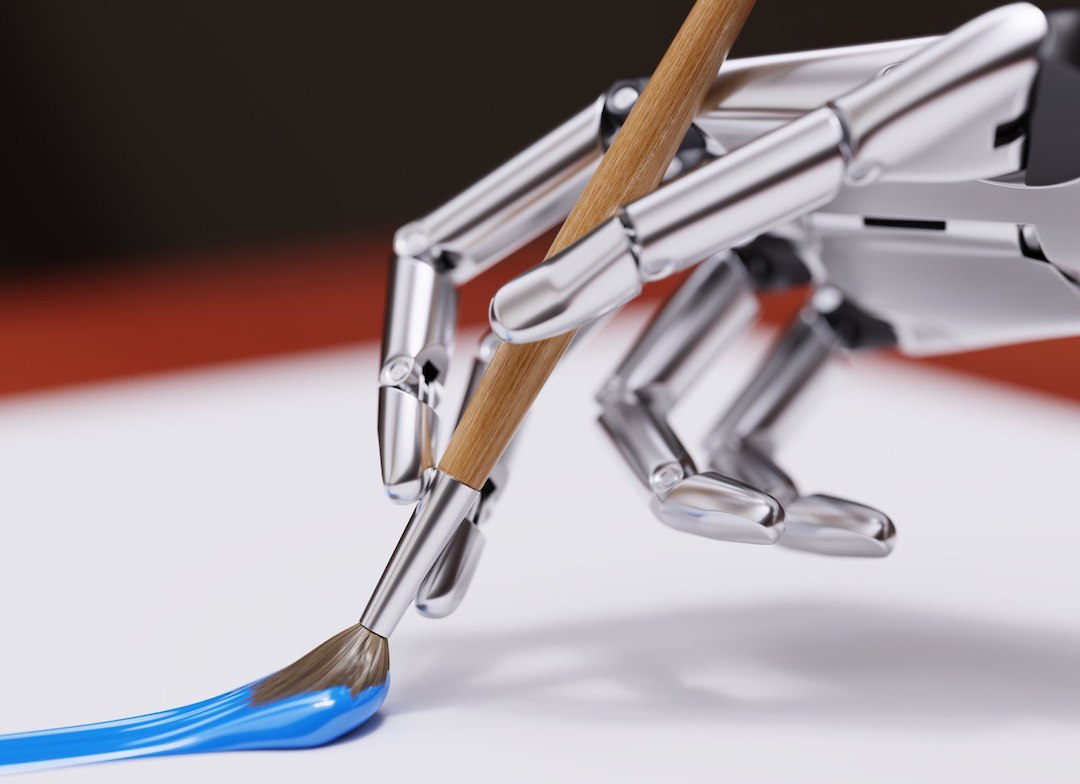
Steganography is the act of hiding information in messages and physical objects. With this, just about any form of media, such as text, images, videos, and audio, can conceal something within it and extract it later. However, it leaves a digital trail alerting others that it carries a secret encryption code.
A breakthrough from the University of Oxford and Carnegie Mellon University’s Machine Learning Department has discovered a way to use artificial intelligence to hide this digital trail and make it virtually impossible for people to detect inconspicuous data.
Firstly, let’s look at why steganography is important. Law enforcement and government operations use it to pass knowledge back and forth. The team also cites applications in vulnerable groups such as investigative journalists, humanitarian aid workers, and dissidents.
This new method uses minimum entropy, which maximizes the overlap between the distributed object and the information shrouded within. What this means is that the new algorithm can generate AI content that will create a veil over what is being hidden. And as there is an influx of generative tools for all types of outlets like art, politics, and tech, it can quickly fly under the radar.
Then once the data is ready to be extracted, all the other party would need is a key to unlock it.
“Our method can be applied to any software that automatically generates content, for instance, probabilistic video filters or meme generators,” comments co-lead author Dr. Christian Schroeder de Witt of Oxford’s Department of Engineering Science. “This could be very valuable, for instance, for journalists and aid workers in countries where the act of encryption is illegal. However, users still need to exercise precaution as any encryption technique may be vulnerable to side-channel attacks such as detecting a steganography app on the user’s phone.”
The encryption method is available now on GitHub as an open-source code. Suppose it does end up being patented at one point. In that case, the researchers will keep it open to the public via a third-party license so that humanitarian efforts and academic organizations can utilize it.
The study was first published on arXiv.
[via Interesting Engineering and University of Oxford, Photo 86369928 © Maxuser2 | Dreamstime.com]


