
High-Tech Bandage Doles Out Medication And Sends Notifications To Wearers

Chronic wounds such as diabetic ulcers can be challenging to cure, and may lead to severe complications if left untreated. The development of a “smart” bandage that releases medication for these types of impairments could be a game-changer in healing persistent injuries.
The technology behind this complex bandage was developed by a team from the California Institute of Technology. A study published in Science Advances details how a flexible biocompatible polymer substrate, voltage-modulated electrodes, and a layer of drug-loaded hydrogel all work together to aid patients. In addition, the dressing includes a battery, Bluetooth chip, and temperature sensor to detect inflammation and alert the wearer via their smartphone if any issues arise.
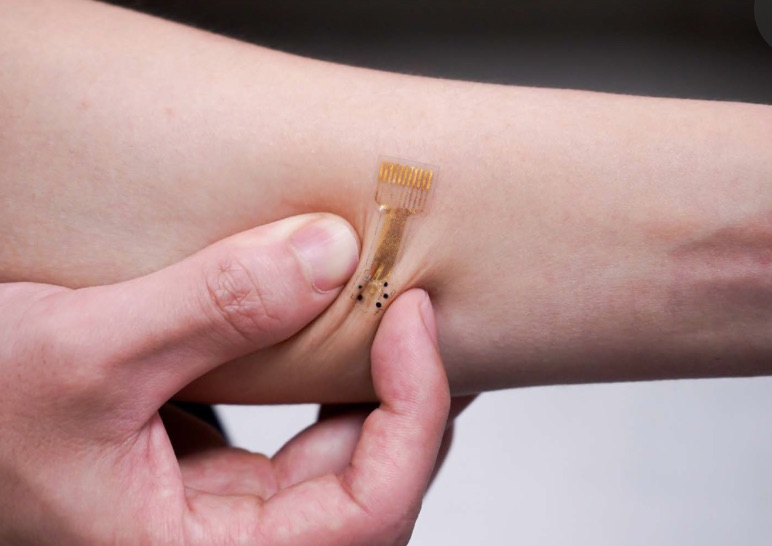
The bandage is designed to monitor the injuries and detect any changes in chemical concentrations that may indicate an infection or other complication. It then releases medication from the hydrogel layer to treat the problem while providing a low-voltage electrical current to stimulate tissue growth.
The testing on lab rats showed promising results, with the bandage successfully killing bacteria and increasing the speed of healing chronic wounds. However, further testing on humans is necessary to determine if the plaster will be effective in real-world situations.
If successful, the “smart” bandage could revolutionize wound care, particularly for individuals at higher risk for infections and slow healing. In addition, monitoring and treating injuries in real time could prevent complications and reduce the need for more invasive methods, such as surgery or amputation.
This isn’t the first time a device like this has been studied. Stanford University has also created its own version a while back as well.
[via New Atlas and Caltech, images via Ehsan Shirzaei Sani et. al., Caltech (CC BY 4.0)]


