
Physicians Could Soon Guide This Camera-Wielding Capsule Robot Through Your Body
Magnetic microrobots are all the rage in healthcare technology. Last year, engineers at the Massachusetts Institute of Technology (MIT) developed a robotic system that could help doctors treat patients suffering from a stroke or aneurysm remotely.
Then, scientists from the University of Pennsylvania came up with a series of tiny shape-shifting androids in the form of tiny bristles that could help take over the daily routine of rinsing, brushing, and flossing.
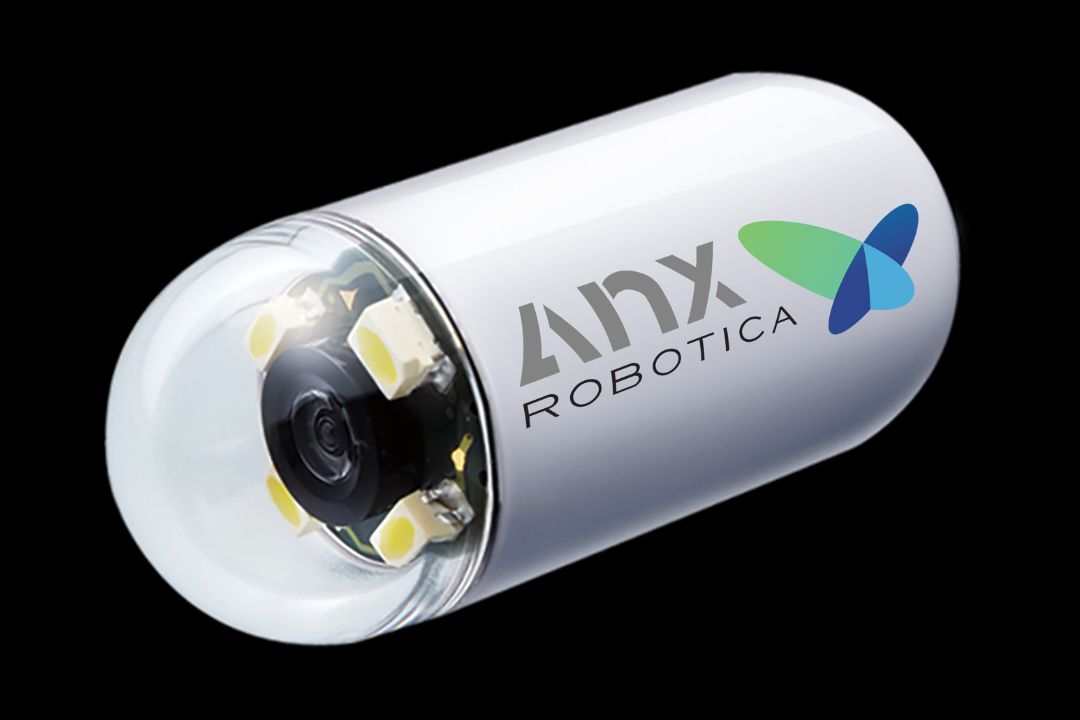
Now, researchers at George Washington University are throwing their hat in the ring by stretching the capabilities of camera-wielding capsule robots. While these minute, ingestible endoscopes aren’t new, they’re limited by the fact that doctors can’t control them once they’re in the body.
Once ingested, nothing can be done to determine the path the robot takes apart from gravity and the body’s natural digestive system. But with this new innovation, physicians will be able to remotely control the capsule to specific areas of the stomach to capture images within.
Intriguingly, as per the scientists, the new-fangled gadget works by using an external magnet and hand-held video game joysticks to direct its movement—allowing patients to undergo a procedure closer to that of traditional tube-based endoscopy.
Andrew Metzer, Professor of Emergency Medicine at the George Washington School of Medicine & Health Sciences, explained that traditional endoscopies are invasive procedures that can be costly due to the need for anesthesia.
“If larger studies can prove this method is sufficiently sensitive to detect high-risk lesions, magnetically controlled capsules could be used as a quick and easy way to screen for health problems,” he added.
With more than seven million traditional treatments performed every year in the US, the benefits of having a more affordable, less invasive option could be far-reaching, especially with many patients facing barriers to getting an outpatient endoscopy.
This study is making a foray into that possibility as the first to test a magnetically-controlled endoscopy in the country. Patients who report severe stomach pain will be able to swallow a capsule and receive a diagnosis on the spot, without needing to reschedule.
The external magnet connected to the camera allows the capsule to be “painlessly driven” within an individual’s anatomic areas of the stomach to record photographs and videos of any possible bleeding, inflammation, or lesions.
At the moment, while researchers still need to be trained on how to control the joystick, software in the works would enable artificial intelligence to “drive” the capsule without external input. Videos could also be transmitted off-site for a gastroenterologist to review if needed.
[via Autoevolution and Softonic, cover image via George Washington University]


