
Google’s Music AI Generator Can Transform Your Brain Scans Into Actual Songs
Back in May, Google made its text-to-music generator, MusicLM, available to the public—allowing users to turn short captions into personalized playlists. Each prompt results in two songs, from which an individual can choose the one they like best to award a “trophy” to.
Now, in a recent study published by the technology giant in collaboration with Japan’s Osaka University, it appears the artificial intelligence (AI) music generator could be hiding an intriguing function.
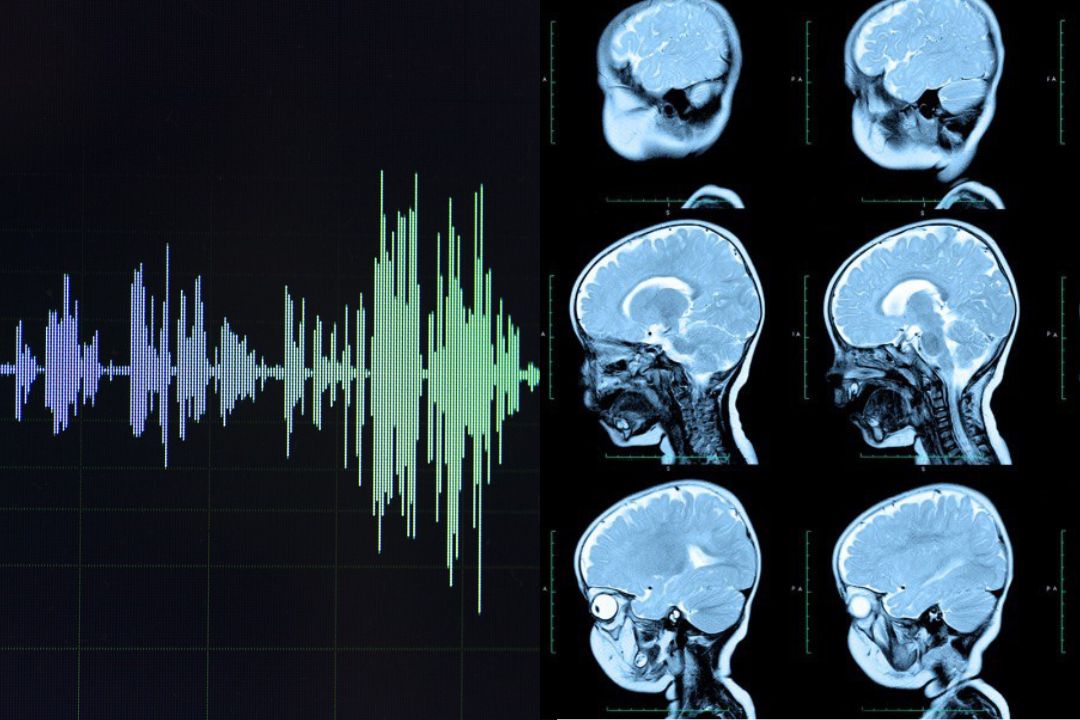
As part of the experiment, five subjects were made to listen to 500 tracks across 10 different musical styles while in a functional magnetic resonance imaging (fMRI) scanner. Their brain waves were then captured and fed into MusicLM.
Interestingly, the music reverse-engineer by the software sounded similar to the tunes the volunteers were initially listening to “with respect to semantic properties like genre, instrumentation, and mood.”
This could be due to the fact that brain regions responsible for processing information derived from text and music do overlap, so that when a human and MusicLM listen to the same songs, the “internal representations” within the generator correlate with actual brain activity.
Taking it one step further, the researchers posited that by feeding brain scans into the program, they’d be able to “predict and reconstruct the kinds of music which the human subject was exposed to.”
Could this mean that in the future, a tune thought up on the fly can be translated into an actual musical piece in this manner? Perhaps, though the study did caution that building a universal model for this purpose would be difficult, considering brain activity differs greatly in each person.
Head here to learn more about the study and listen to the music generated my MusicLM from the subjects’ brain waves.
[via Mixmag Asia and MusicTech, cover image via Edward Olive | Dreamstime.com and VadiFuoco | Dreamstime.com]


