
Webb Telescope Captures Images Of Ring Nebula In More Detail Than Ever Before
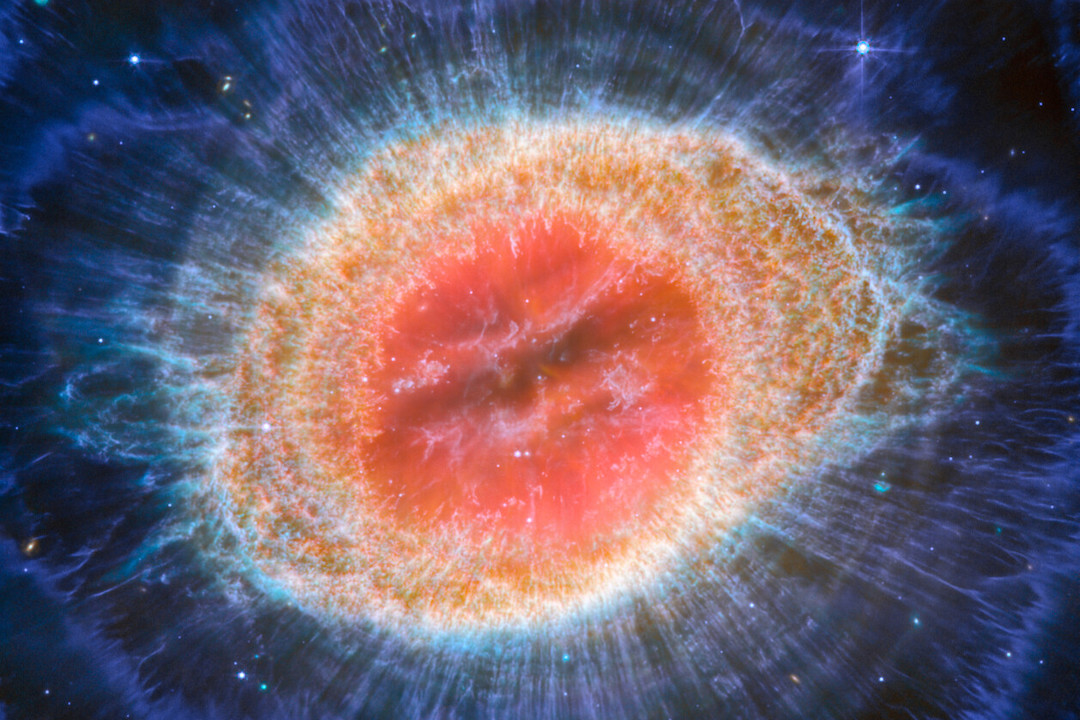
Recently, NASA’s James Webb Space Telescope (JWST) unveiled an image of the most distant star ever detected in the early universe, revealing that the celestial entity was over a million times brighter than the sun.
Now, the impressive tool has made yet another discovery, this time in the form of highly-detailed pictures of the famed Ring Nebula, providing astronomers and enthusiasts with a new perspective of the cosmic halo.
For the unfamiliar, the Ring Nebula, known as M57 and NGC 6720 among experts, is a well-studied planetary nebula formed when a dying star expels its outer layers.
It’s situated relatively close to Earth at approximately 2,500 light-years away and has captured the curiosity of astronomers for centuries.
The latest images captured by the JWST offer a never-before-seen level of spatial resolution and spectral sensitivity, granting researchers a deeper understanding of the nebula’s inner workings.
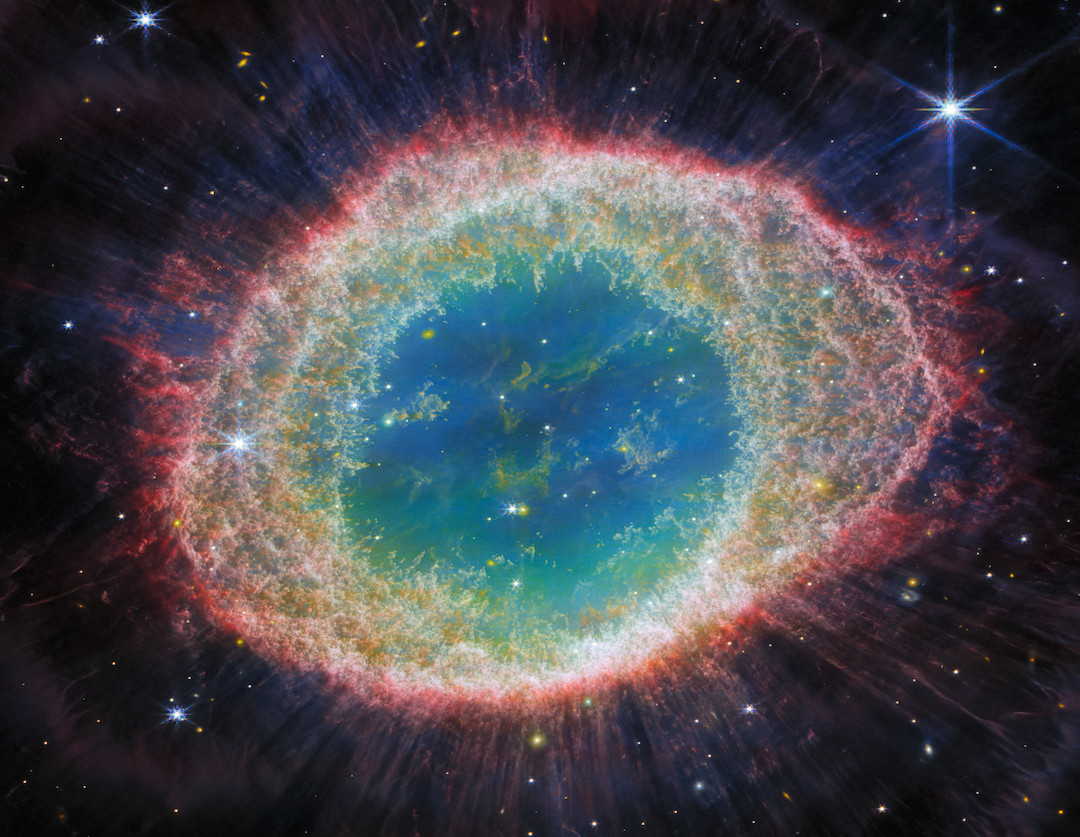
Using the telescope’s Near-InfraRed Camera (NIRCam), astronomers were able to look into the fine filament structure within the inner ring of the nebula, while the Mid-InfraRed Instrument (MIRI) has brought to light intricate details in the concentric features of the outer regions of the ring.
Within the celestial body, approximately 20,000 dense globules, rich in molecular hydrogen, coexist alongside an inner region filled with exceedingly hot gas.
The primary shell of the halo showcases a delicate ring of enhanced emission featuring carbon-based molecules known as polycyclic aromatic hydrocarbons (PAHs).
🆕📷 The NASA/ESA/CSA James #Webb Space Telescope has imaged the well-known Ring Nebula in unprecedented detail using its #MIRI and #NIRcam instruments👉https://t.co/syahNPRgp3 pic.twitter.com/wvMo95aYQU
— ESA (@esa) August 21, 2023
Furthermore, around 10 concentric arcs are visible just beyond the main ring’s outer edge. These arcs are thought to originate from the interaction between the central star and a low-mass companion orbiting at a distance akin to that between Earth and Pluto.
Through the observation of nebulae like the Ring Nebula, astronomers engage in a form of celestial archaeology, uncovering the past by studying the remnants left behind by stars.
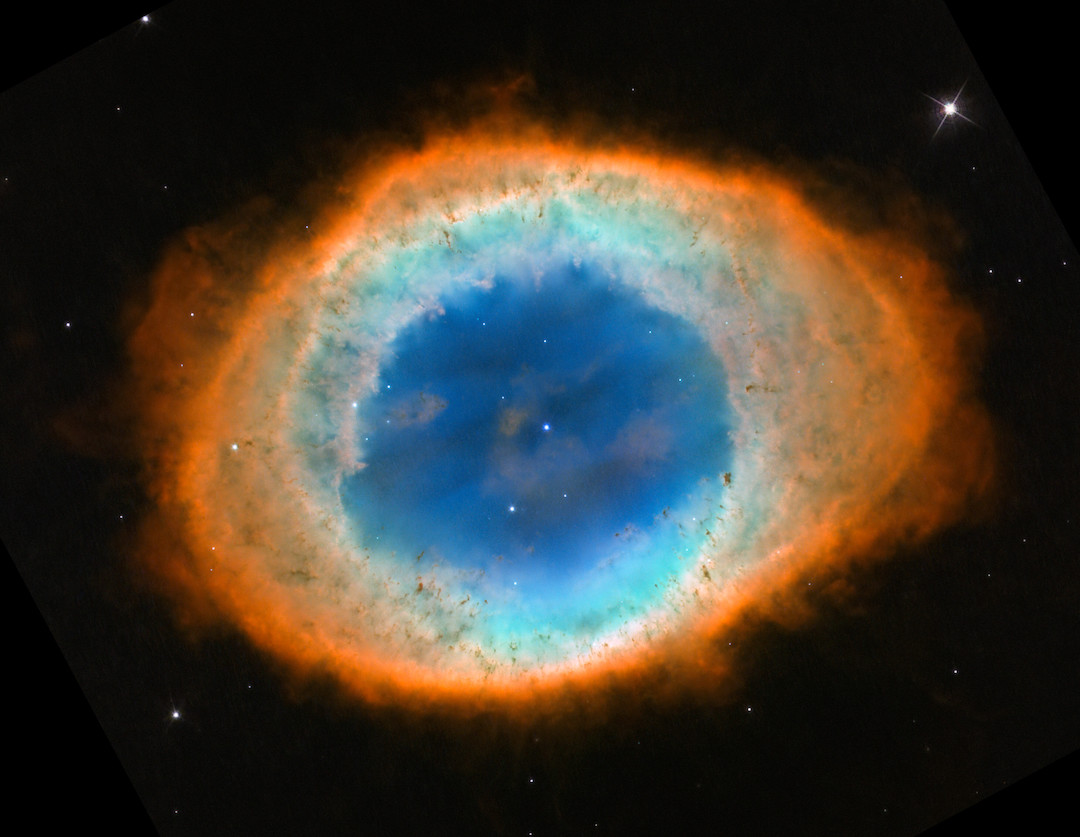
Intriguingly, experts have uncovered that the phenomenon appears to take on a distinct shape reminiscent of a distorted doughnut.
When viewed from the Earth’s vantage point, one peers almost directly down at its pole, gazing at a vibrant barrel of material extending away.
See a comparison with the image from the NASA/ESA @HUBBLE_space Telescope of the Ring Nebula from 2013 👇https://t.co/cmuDSuOei4 pic.twitter.com/8RVkKPOAgv
— ESA (@esa) August 21, 2023
Although the central portion appears to be empty, it’s actually occupied by lower-density material that stretches both towards and away from our planet, giving rise to a shape resembling a rugby ball inserted within the central void of the doughnut.
At the heart of the captivating main ring lies a dying star in the process of becoming a white dwarf—a small, dense, and intensely hot celestial body that represents the final stage of evolution for stars akin to the Sun.
[via Space.com and European Space Agency, images via various sources]
This article was crafted with assistance from an AI engine, and has been manually reviewed & edited.


