
Elon Musk’s Neuralink Implants Chip Into Its First Human To Tackle Paralysis
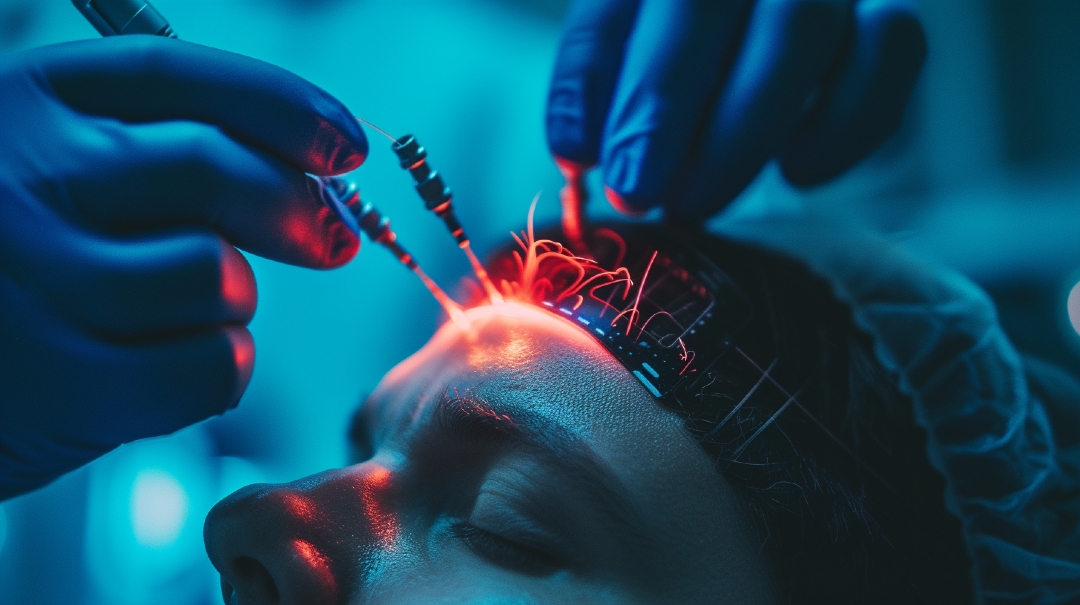
Image generated on AI
Elon Musk’s neurotechnology company Neuralink has purportedly made a synaptic leap with the successful implantation of its first brain chip in a human patient, following approval from the US Food and Drug Administration last year over the pursuit of bridging minds and machines.
The implant is part of an ambitious project aimed at assisting individuals with severe paralysis, such as quadriplegia, to operate devices through thought alone. The recipient, now in the process of recovery, is the first person to experience what could be the dawn of a new era in medical technology.
Musk announced that the inaugural human Neuralink implantation went smoothly, with the patient showing encouraging signs of neuron spike detection. This operation is part of the Precise Robotically Implanted Brain-Computer Interface (PRIME) study, aimed at evaluating the safety and functionality of Neuralink’s brain-computer interface (BCI) in humans, especially those with severe paralysis.
The first human received an implant from @Neuralink yesterday and is recovering well.
— Elon Musk (@elonmusk) January 29, 2024
Initial results show promising neuron spike detection.
In an X/Twitter thread on Monday stating that the volunteer was “recovering well,” Musk said Neuralink’s first product, named ‘Telepathy’, will enable users to control their phones or computers by thinking.
Initially, the technology will cater to individuals who have lost limb functionality, aiming to significantly enhance their communication abilities.
“Imagine if Stephen Hawking could communicate faster than a speed typist or auctioneer. That is the goal,” Musk commented.
Enables control of your phone or computer, and through them almost any device, just by thinking.
— Elon Musk (@elonmusk) January 30, 2024
Initial users will be those who have lost the use of their limbs.
Imagine if Stephen Hawking could communicate faster than a speed typist or auctioneer. That is the goal.
Straight out of a playbook from the future, Neuralink’s tech involves inserting a device connected to ultra-thin threads into the brain, which can then read and stimulate brain cells. This could help restore independence to individuals with quadriplegia, offering hope where traditional medicine has reached its limits by enabling them to operate digital devices using their minds.

Illustration 190437526 © Vrx1234 | Dreamstime.com
Addressing paralysis could be just the beginning, with Musk hinting at broader applications, including potential treatments for Parkinson's disease, epilepsy, and mental health issues.
Yet, as Neuralink chips away at the barriers between humans and machines, it navigates a minefield of ethical and safety concerns—not to mention, skepticism from professionals in the medical sector. The company has faced its share of controversies, from fines for regulatory violations to ethical debates over its use of animals in research. As this technology marches from the drawing board to the real world, balancing advancement with ethical considerations will be crucial.
[via Digital Trends and The Guardian, images via various sources]


