
IKEA Study Finds The Ideal Nap Time—And Other Surprising Global Sleep Facts
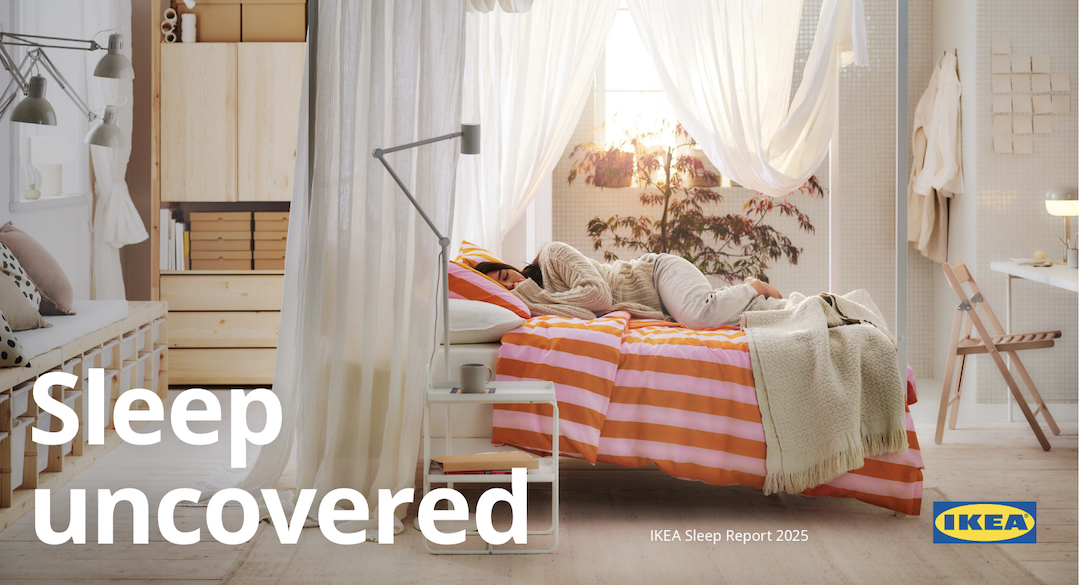
Image courtesy of IKEA
Getting a good night’s sleep is pretty much a dream for many. In a worldwide study, IKEA tucked in over 55,000 participants across 57 markets, and at the end of the day (or night), it put together a surprising Sleep Uncovered report where it pulls back the covers on how the world rests… or struggles to.
As it seems, we’re collectively tossing and turning our way through some serious sleep debt.
If you’re a night owl, chronic napper, or someone who barely catches enough rest, here are some eye-opening insights on what is keeping the world awake at night.
1. The US has some of the worst sleep scores
According to IKEA’s Sleep Score, which evaluates sleep based on factors like duration, quality, and wake-up state, the United States ranks near the bottom. Out of 57 countries, Americans reported some of the most disrupted sleep, second only to Norway. High stress, inconsistent routines, and excessive screen time were major culprits.
2. China sleeps best
Mainland China topped the charts for sleep quality, with residents consistently averaging over seven hours per night. Meanwhile, in Egypt, 64% of people rated their sleep as good—the highest satisfaction level globally.
3. People sleep nearly 1.5 hours less than they want
On average, people get about six hours and 40 minutes of sleep, but they wish they were getting closer to eight. Over a year, that adds up to more than 20 full days of lost rest.
4. Phones in bed are still a bad habit
Despite knowing that screens disrupt sleep, 72% of people use their phones in bed. That number jumps to 86% among 18- to 24-year-olds, who also happen to worry the most about their sleep quality.
5. Sleep positions matter—especially for couples
Turns out, cuddling up has benefits beyond warmth. People who sleep face-to-face with their partners report higher Sleep Scores than those who sleep apart.
6. Naps have an optimal length
Short naps can be great for recharging, but there’s a sweet spot: 33 minutes. Those who nap too long risk grogginess, while those who nap just right feel more refreshed.
7. 6% of babies have been conceived on an IKEA bed
It turns out that IKEA beds play a bigger role in people’s lives than just providing a cushy slumber. According to the study, 6% of babies globally were conceived on an IKEA bed or mattress. While the company is best known for its affordable furniture, its impact on life at home—quite literally—extends to pillow talk.
8. Women take longer to fall asleep than men
When it comes to drifting off, women typically take longer than men. On average, women need about 26 minutes to fall asleep, compared to 23 minutes for men. Factors like stress, hormonal differences, and caregiving responsibilities could contribute to this gap, highlighting how sleep experiences vary based on gender.
9. Climate control helps people sleep faster
Air conditioning or fans ranked as the most popular tools for falling asleep faster, helping regulate body temperature for better rest.
10. Sleep medication use is widespread
Globally, 19% of people use medication to fall asleep, with 5% relying on it daily. Insomnia affects nearly 8% of those surveyed, making it one of the most common sleep issues.
11. Financial stress is keeping people up
Over a third (36%) of respondents said they need more money to improve their sleep. The connection between financial stability and sleep quality was particularly strong among those with lower Sleep Scores.
IKEA’s formula for better sleep
Partnering with mathematician Dr Tom Crawford from the University of Oxford, IKEA developed a Sleep Formula combining comfort, stress, well-being, habits, and schedules to create a personalized blueprint for better rest. Small changes—like reducing noise, using cozy bedding, and maintaining a consistent routine—can boost sleep quality by up to 75 points on IKEA’s scale.
Whether it’s adjusting your routine, decluttering your sleep space, or simply putting down your phone before bed, you can rest assured there are practical ways to improve rest. You can find the full detailed report right here.
[via IKEA]


