
Amsterdam’s ‘Water District’ Is Made Up Of Floating Homes To Combat Flooding
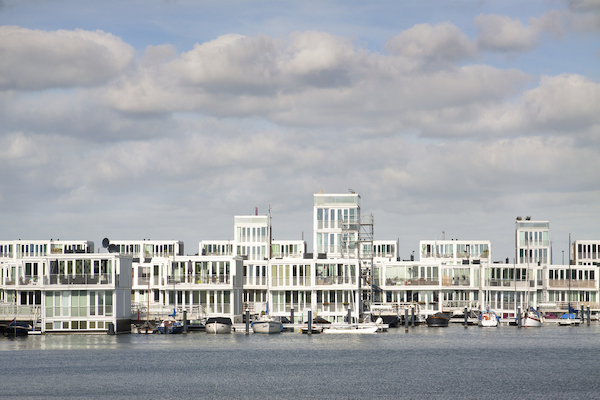
Image via Fortgens Photography / Shutterstock.com
The Netherlands, which means “low-lying country,” faces an inherent problem of flooding due to its close levels and proximity to water, and this tendency is aggravated by the rising sea levels.
So, developers thought, if you can’t beat them, join them. Thus came the arrival of Waterbuurt, Amsterdam’s newest floating neighborhood and Europe’s largest.
Waterbuurt, which translates to mean Water District, is located along Lake Eimer and is just 15 minutes away from the city center of Amsterdam. The floating village was designed by Dutch architect Marlies Rohmer to pull the plug on a visibly rising problem in modern Dutch housing: its sea levels.
Not to be mistaken for houseboats, which are commonly docked along Amsterdam’s canals, the floating homes are permanently secured to steel pylon moorings and anchored to the lake floor, only moving vertically to adjust to the tide.
You’ll also notice that the houses resemble land structures, as they are built with the convenience of land-living in mind. The wooden dwellings all sit on a water-tight concrete caisson so they don’t feel like they’re floating. They are attached with cables and pipes for electricity, gas, water, cable, and a sewage draining system, Yanko Design reports.
Since the colony aims to counter a troubling effect of climate change, Rohmer makes better on its promise by constructing the houses to protect Lake Eimer, ensuring that the buildings’ materials do not pollute the water. Residents can sustainably grow their own food or plants on the roofs, which additionally collect rainwater for the eco-friendly flushing of toilets.
The homes are also fitted as a network, so neighbors can exchange energy should any of the households require more.
At present, some 100 houses float on the jetties, but the district will see 18,000 of these structures upon its completion.
[via Yanko Design and Luxury Launches, images via various sources]
Also check out these recent news


