
Behind The Design: Who Knew The Louvre’s Glass Pyramid Was Once Controversial?
Behind The Design is a segment by DesignTAXI where we wind back to the pioneering products and icons that steered the design world forward and transformed consumer perceptions forever.
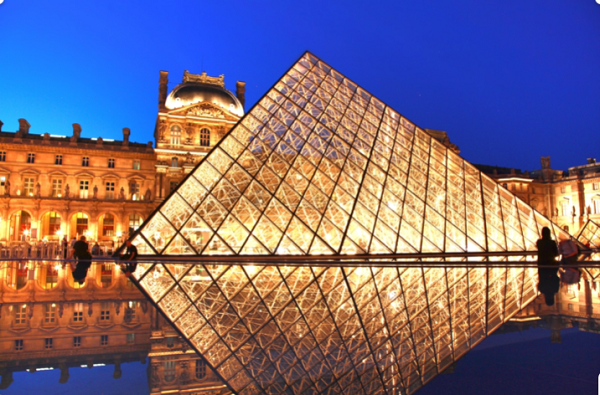
Image via toiletroom / Shutterstock.com
The Louvre is the world’s largest museum and houses one of the most impressive art collections in history.
The baroque-style palace, which sits along the banks of the Seine River in Paris, is deemed to be the city’s biggest tourist attraction.
The Louvre was built as a fortress back in 1190 and was reconstructed in the 16th century to serve as a royal palace. According to History.com, every monarch expanded the Louvre and its grounds during its time as a royal residence. In 1682, Louis XIV moved the royal residence to Versailles, and it became home to various art academies.
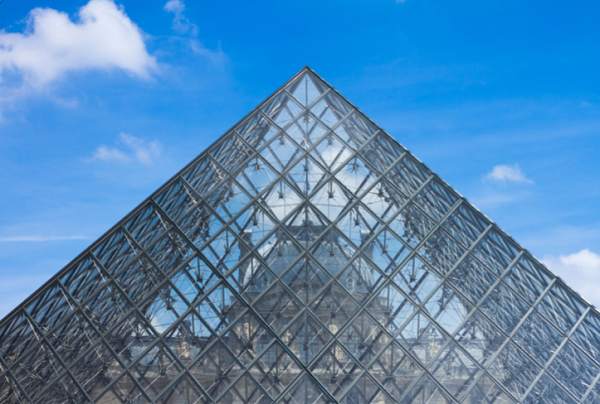
Image via Nimai / Shutterstock.com
In 1983, French president François Mitterand called on I.M. Pei to revive the ailing building, and the architect took some time to work on his design.
Pei’s plans included a new entrance, a network of rooms to make the visiting experience more pleasant, and, famously, the glass pyramid.
Parisians at the time were scandalized when the design was unveiled. Pei’s pyramid was a “gigantic, ruinous gadget,” as one New York Times critic wrote in 1985. The overwhelming sentiment at the time was that Pei’s pyramid was an eyesore jutting starkly against its baroque surroundings.
Today, the pyramid is celebrated, and according to Arch Daily, “the juxtaposition of the modern structure and the French Renaissance architectural style of the museum creates a complimentary effect that enhances each of the design’s details and beauty.”
The Louvre’s collection includes Egyptian antiques, ancient Greek and Roman sculptures, and other artifacts from French nobles. More than 35,000 works are on display at any given time.
The displays are divided into eight departments: Near Eastern Antiquities; Egyptian Antiquities; Greek, Etruscan and Roman Antiquities; Islamic Art; Sculptures; Decorative Arts; Paintings; and Prints and Drawings.
The Louvre’s most famous work is Leonardo da Vinci’s Mona Lisa, who enchants visitors with her enigmatic smile. This small, iconic painting is only 21 by 30 inches is covered with bullet-proof glass and flanked by guards.
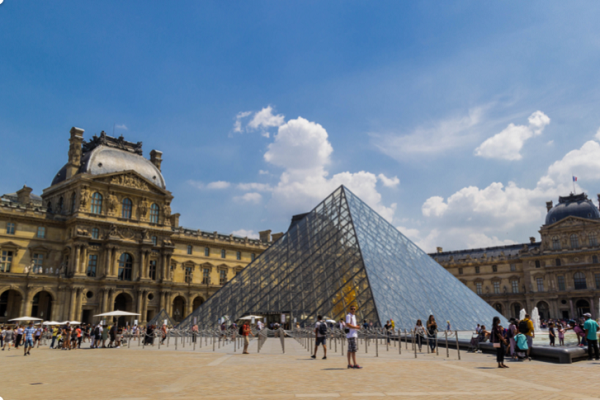
Image via Immigrant92 / Shutterstock.com
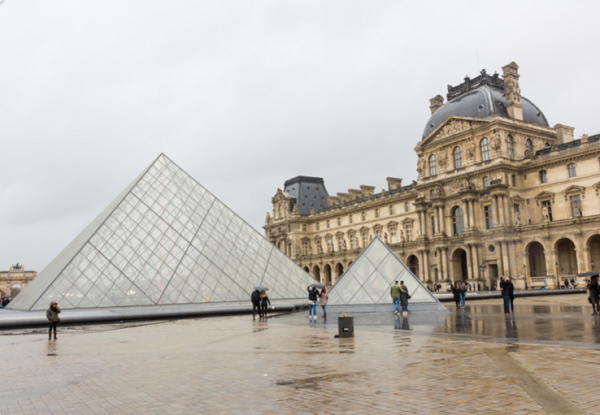
Image via sarapuk / Shutterstock.com
[via How Stuff Works, cover image via toiletroom / Shutterstock.com]
Image via toiletroom / Shutterstock.com
The Louvre is the world’s largest museum and houses one of the most impressive art collections in history.
The baroque-style palace, which sits along the banks of the Seine River in Paris, is deemed to be the city’s biggest tourist attraction.
The Louvre was built as a fortress back in 1190 and was reconstructed in the 16th century to serve as a royal palace. According to History.com, every monarch expanded the Louvre and its grounds during its time as a royal residence. In 1682, Louis XIV moved the royal residence to Versailles, and it became home to various art academies.
Image via Nimai / Shutterstock.com
In 1983, French president François Mitterand called on I.M. Pei to revive the ailing building, and the architect took some time to work on his design.
Pei’s plans included a new entrance, a network of rooms to make the visiting experience more pleasant, and, famously, the glass pyramid.
Parisians at the time were scandalized when the design was unveiled. Pei’s pyramid was a “gigantic, ruinous gadget,” as one New York Times critic wrote in 1985. The overwhelming sentiment at the time was that Pei’s pyramid was an eyesore jutting starkly against its baroque surroundings.
Today, the pyramid is celebrated, and according to Arch Daily, “the juxtaposition of the modern structure and the French Renaissance architectural style of the museum creates a complimentary effect that enhances each of the design’s details and beauty.”
The Louvre’s collection includes Egyptian antiques, ancient Greek and Roman sculptures, and other artifacts from French nobles. More than 35,000 works are on display at any given time.
The displays are divided into eight departments: Near Eastern Antiquities; Egyptian Antiquities; Greek, Etruscan and Roman Antiquities; Islamic Art; Sculptures; Decorative Arts; Paintings; and Prints and Drawings.
The Louvre’s most famous work is Leonardo da Vinci’s Mona Lisa, who enchants visitors with her enigmatic smile. This small, iconic painting is only 21 by 30 inches is covered with bullet-proof glass and flanked by guards.
Image via Immigrant92 / Shutterstock.com
Image via sarapuk / Shutterstock.com
[via How Stuff Works, cover image via toiletroom / Shutterstock.com]
Also check out these recent news


