
World’s Largest Wildlife Camera Trap Study Is Now Playable As A Free Game
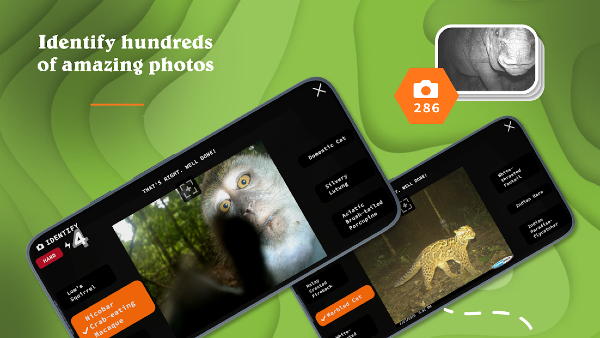
Image via Unseen Empire
Never has there been a time when people could seriously step in the shoes of scientists and try their hand at what experts do for just a day. Behind their computer screens—without getting their boots muddy—they can help discover new coral reefs, come face to face with mysterious creatures of the deep sea, and now dip their toes in a simulation of the largest camera trap effort in the world.
Rooted in the extensive makings of a biodiversity study spanning 10 years, Unseen Empire is a free mobile game that lets the general public reenact hiding cameras in the forests of eight countries to collect and identify imagery of elusive, endangered species, among other aspects of the research process. Admittedly, it’s vaguely like Pokémon GO.
It’s a snapshot of the project led by Oxford professor David Macdonald, who had looked to study the impact of deforestation on the homes of the rare clouded leopard. The research saw 160 automatically-triggered cameras tucked within a 50,000-acre space in Myanmar’s forests. There, they spotted the “practically unstudied clouded leopard,” along with other endangered species.
With support from private donors, the team ventured out to 66 other sites where clouded leopards of two species (the Neofelis nebulosa and Sunda) were believed to roam, including Bhutan, Borneo, Cambodia, India, Laos, Malaysia, and Sumatra, and Thailand. In time, they’d also snap pictures of the first yellow-bellied spotted weasel in Cambodia and the last-known tiger in Laos.
The project and Unseen Empire—which is available for iOS and Android devices—were created with backing from the National Geographic Society, the Internet of Elephants, WildCRU, the Zoology Department at Oxford University, and Clever Franke, who designed the game’s user interface.
[via PetaPixel, cover image via Unseen Empire]
Also check out these recent news


