
NASA Hubble Telescope’s Successor Finally Has A Launch Date, Waited Since 2007
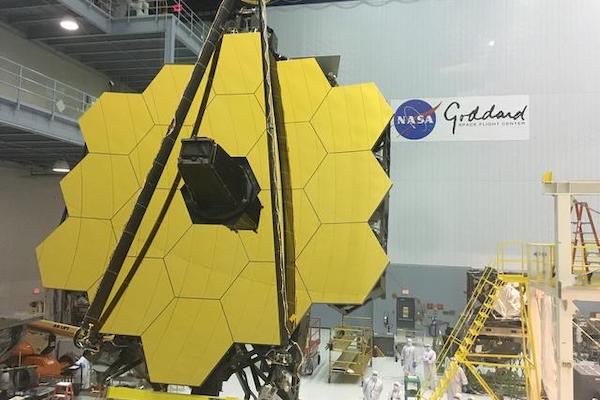
Image via NASA Goddard
After encountering almost a decade’s worth of obstacles along the way, NASA has announced that its brand-new James Webb Space Telescope will finally be ready for launch on December 18, 2021. It was originally scheduled for liftoff in 2007.
This date was finally set after the telescope successfully completed its testing and training regimen in order to prepare it for next-generation space observation. It will be replacing the Hubble Space Telescope, which has served us well for the last three decades.
“Every phase of cosmic history” will be explored, NASA declares in the press release. “Webb will reveal new and unexpected discoveries, and help humankind understand the origins of the universe and our place in it.”
NASA shares that Webb, the new international program led alongside the European Space Agency (ESA) and the Canadian Space Agency, will launch on an Ariane 5 provided by the ESA. This will take off from Europe's Spaceport in French Guiana, South America.
Major elements for the Ariane 5 have already arrived at the site, while the telescope is currently undergoing its final configuration at Northrop Grumman’s facilities in California.
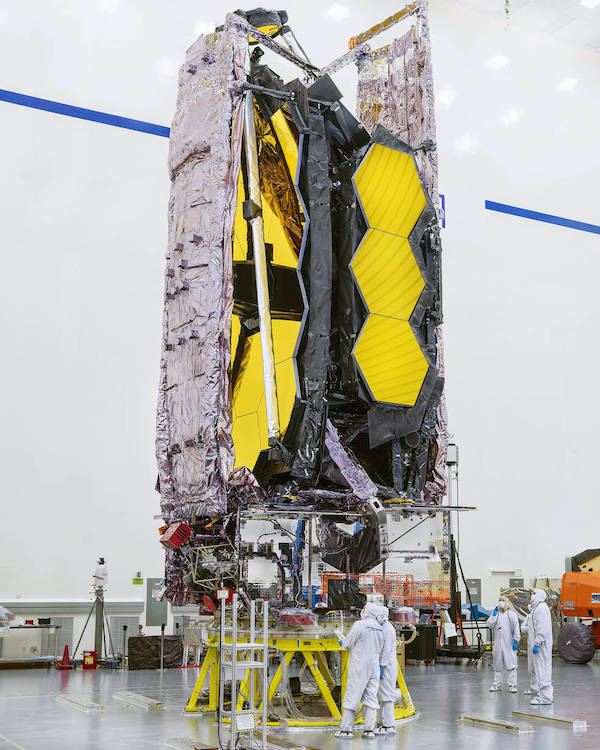
Image via NASA / Chris Gunn
It’s expected that the James Webb telescope will be able to detect and capture wonders of space that we still don’t know of, thanks to its design. For example, a larger mirror that focuses on lower-frequency—especially mid-infrared—observations will allow early galaxies to be seen, which is something Hubble hasn’t been able to do.
It may also be able to provide answers to conundrums that require further observation, like this not-quite star named ‘The Accident’.
“Together, we’ve overcome technical obstacles along the way as well as challenges during the coronavirus pandemic,” states Gregory L. Robinson, Webb’s program director. “Now that we have an observatory and a rocket ready for launch, I am looking forward to the big day and the amazing science to come.”
From its launch in December, Webb will undoubtedly provide us with valuable new information about the far reaches of the galaxy; and who knows what will come from these discoveries yet to be made?
LAUNCH UPDATE: Together with @ESA and @Arianespace, we’re targeting Dec. 18, 2021 for launch of the world’s premier deep space observatory – our @NASAWebb Space Telescope.
— NASA (@NASA) September 8, 2021
🚀 Save the date for liftoff from Europe’s Spaceport in French Guiana: https://t.co/YLfgJFPRYW pic.twitter.com/15xuNbNkYj
[via Engadget, images via NASA]
Also check out these recent news


