
‘World’s Largest’ 3D-Printed Neighborhood May Help Solve Housing Shortage Crisis
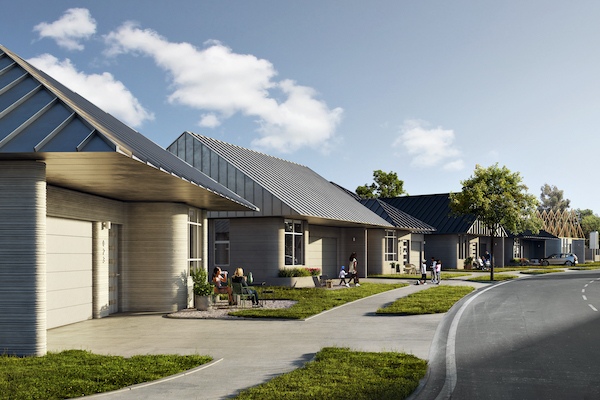
Image via Icon
Those familiar with the 3D-printed infrastructure scene might know of Icon, a construction technologies company which saw the completion of some stunning projects like a whole village of houses in Mexico being built with just one printer.
That was last month. Now, Icon has returned, its newest collaboration with home-building firm Lennar Group planning for a full neighborhood of 3D-printed homes in Austin, Texas.
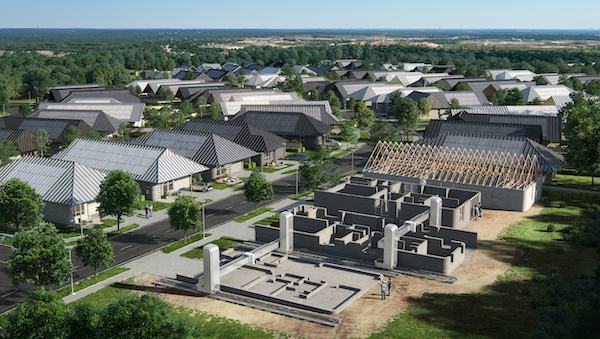
Image via Icon
Additionally, architecture firm Bjarke Ingels Group (BIG) will be co-designing some 100 homes planned for construction. The companies claim that this will be the largest neighborhood of printed homes to date.
“Icon exists as a response to the global housing crisis and to put our technology in service to the world,” company co-founder and CEO, Jason Ballard, stated in the news release. “Construction-scale 3D printing not only delivers higher-quality homes faster and more affordably, but fleets of printers can change the way that entire communities are built for the better.”
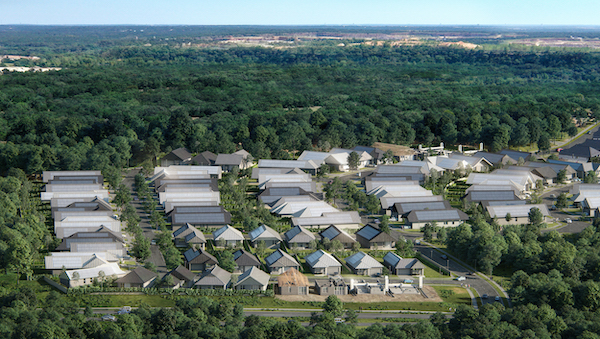
Image via Icon
According to Icon, there is a shortage of around five million new homes in the US. This problem could be lessened with the speed and technology with which the company manufactures and builds these houses, Ballard reiterates.
The houses in this new neighborhood will use the same signature building material as many of its previous projects, which is ‘Lavacrete’—think concrete, but leveled up.
Icon’s Vulcan system will be making a comeback, the robotic system boasting its ability to print structures structures up to 3,000 square feet at the speed of 10 inches per second. Plus, it’ll also be able to create curved walls with greater ease, allowing for “freedom of form.”
Lavacrete will also make the houses, which comply with the International Building Code (IBC), stronger than conventional concrete masonry, Icon claims. They’ll be safer, more resilient, and able to stand the tests of natural disasters and extreme weather should they befall the residents. Less waste is also generated during the construction process—it’s a win all around.
Construction will begin in 2022. Given the speed the Vulcan is capable of operating at, it’s quite safe to guess that it will be completed within the year.
[via Interesting Engineering, images via Icon]
Also check out these recent news


