
Google Is Training AI To Multitask—Which, Surprisingly, It’s Kind Of Bad At
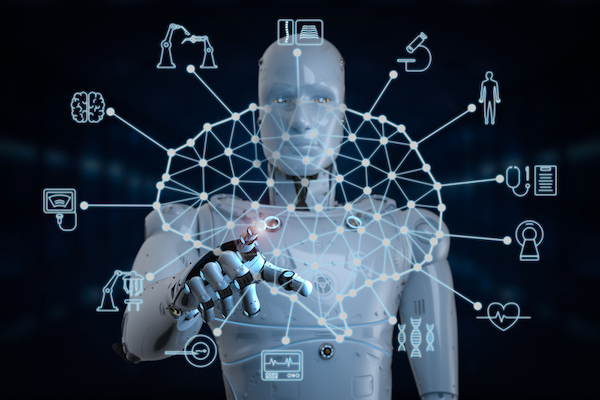
Image ID 121373512 © Kittipong Jirasukhanont | Dreamstime.com
Artificial intelligence is seeing some pretty impressive developments, from being able to remind you to sit up straight to operating an entire fleet of non-stop river taxis.
But it does have one large drawback, and that lies in its strength: the fact that while it can be trained to do highly specific things, it can only handle one at a time. Google is looking to combat this with a new approach called ‘Pathways’.
This, as described by Jeff Dean, Google Senior Fellow and SVP of Google Research, is a “next-generation AI architecture” that “will enable us to train a single model to do thousands or millions of things.” Rather than responding to just one “sense,” the new generation of model will be able to respond to multiple simultaneously.
“Pathways could enable multimodal models that encompass vision, auditory, and language understanding simultaneously,” Dean explains in the company’s blog post.
He gives the example of a leopard. The model could be processing the word “leopard,” someone saying “leopard,” or a video of a leopard—that doesn’t really matter, because, at the end of the day, the same response will be activated: the concept of a leopard. This, Dean says, is a model that’s “more insightful and less prone to mistakes and biases.”
While it could work with “familiar” senses like audio, visuals, or text, more abstract data can be handled as well, ultimately helping to “find useful patterns that have eluded human scientists in complex systems such as climate dynamics.”
Another problem that Google is tackling with Pathways is the “density” of existing models, which require a large network to activate. It’s aiming to, instead, build something that can be “sparsely” activated: only small pathways through the network are triggered when they’re needed.
In turn, the model will also learn to associate parts of the network that are good at particular tasks. Sort of like how humans try to leverage their individual learning styles in order to do well at school.
Pathways will, Dean concludes, take us “from the era of single-purpose models that merely recognize patterns to one in which more general-purpose intelligent systems reflect a deeper understanding of our world and can adapt to new needs.” This will, presumably, also allow it to learn reasoning skills to navigate different situations.
It looks like artificial intelligence is about to get even more intelligent.
[via ZDNet, cover image ID 121373512 © Kittipong Jirasukhanont | Dreamstime.com]
Also check out these recent news


