
Kenya Adopts Solar Panels That Generate Energy By ‘Harvesting The Sun Twice’
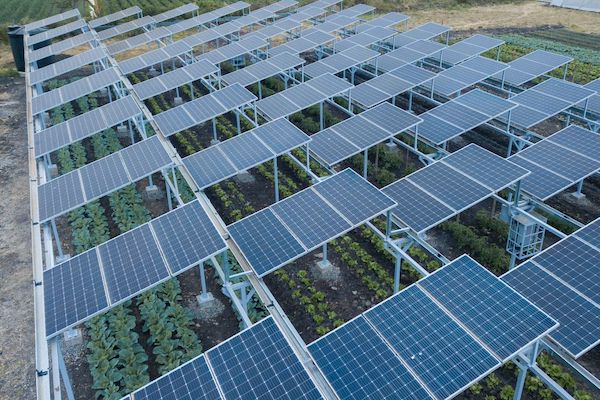
Solar panels aren’t a novel technology anymore, and there have been numerous tweaks to the invention. But research by the University of Sheffield, England, and Latia Agripreneurship Institute, Kajiado, has uncovered a new way to use them.
Agrivoltaics is a technique that involves harnessing energy from the sun twice. The first is through capturing the sun’s rays, which is what most panels do. The other way is through providing shade for crops planted beneath them, which retains the soil’s moisture, reduces heat stress, and helps them to grow.
Instead of being mounted near ground level like they usually are, these solar panels are built elevated completely off the ground, which leaves room for plants and people to duck under and tend to the crops.
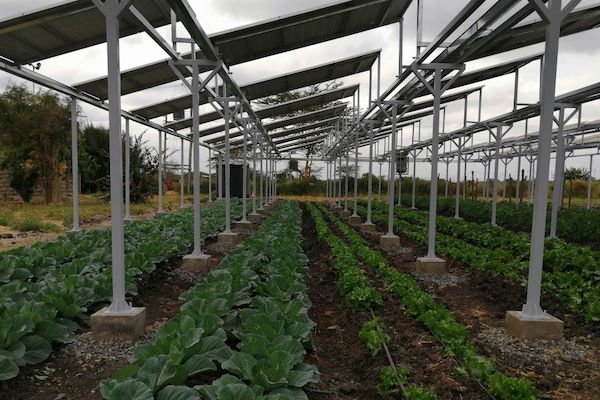
In this way, agrivoltaics isn’t just a way of generating solar power but also helps to improve food and water security in the area at the same time. The Guardian reports that cabbages grown under the panels ended up a third bigger and healthier than those grown in control plots under regular conditions.
Household income is another factor that could benefit from this system, allowing users to easily grow their own food despite the challenges of limited land resources.
“Women here can spend up to 300 Kenyan shillings (US$2.62) on a bodaboda (motorcycle taxi) fare to the market just to buy vegetables worth 100 Kenyan shillings (US$0.87),” explains Anne Macharia, head of training at Latia Agripreneurship Institute, to the news outlet. Growing the crops close to home would ease this burden on many families.
A test run of the ‘Harvesting the Sun Twice’ project saw solar panels and crops being implemented in Kajiado county, a 90-minute drive from Nairobi, Kenya’s capital. A full-scale project is being launched this week, The Guardian reports.
[via The Guardian and the University of Sheffield, image via Chloride Exide Ltd. and C. Lamanna (ICRAF)]


