
Dictionary.com Adds New Words To Explain Today’s World Much More Clearly
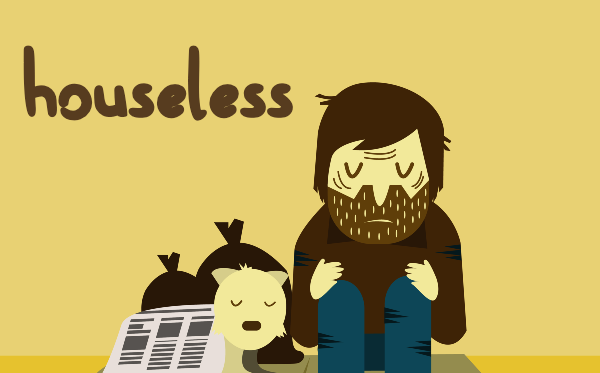
Composite illustration 44998376 © Mangsaab | Dreamstime.com
With all that’s happening in the world, you might have stumbled upon new and unfamiliar situations you don’t have the right words for. Dictionary.com has thus added new words and definitions in hopes to help people make sense of the ever-expanding and revolving cultural landscape.
On March 29, dictionary workers edited more than 2,400 entries—consisting of 235 fresh entries, 72 new definitions for existing words, and 1,024 updated definitions—to its site. These aim to capture the current climate surrounding culture, the housing crisis, accessibility, disability, social issues, the environment, and the ongoing pandemic. Here are some of them.
“unsheltered,” “unhoused,” “houseless”
Lexicographers—that is, people who update dictionaries—are acknowledging that there are multiple layers to the problem of homelessness. As such, Dictionary.com has introduced terms like “unsheltered,” “unhoused,” and “houseless” to reflect the vocabulary used by advocates “who view those expressions as better able to convey the range of experiences that the single term homeless does not,” the online dictionary explains in a press release.
All three officially describe being without a house or lacking permanent housing.
“alt text,” “auto caption,” “live caption”
To recognize the rise in assistive reading tools, the platform has also included terms like “alt text,” “auto caption,” and “live caption,” which it notes have overlapping features that sometimes slightly differ.
“disability”
In a similar vein, Dictionary.com has expanded its recommendation for the usage of “disability” so as to refer to the community more respectfully. It describes the term as “a general term” whose application has “changed over time, and older words and phrases like cripple, handicapped, or special needs are no longer recommended and often cause offense.”
“In many cases there is no reason to mention someone’s disability at all; however, when you do introduce disability as a part of an individual’s whole self, it is usually preferable to be specific: ‘a woman with cerebral palsy’ rather than generically ‘a woman with a disability,’” it furthers.
“metaverse,” “memeify,” “Generation A,” “throuple,” “verklempt”
The cultural zeitgeist has seen the introduction of new words like “metaverse” and “memeify.” It’s also accepting polygamy as the secret to some successful relationships. And, news flash, we now have Generation Alpha, or “Generation A,” the demographic cohort born in the early-to-mid 2010s.
“nontaster,” “hypogeusia,” “vax,” “vaxxer,” “antivax,” “antivaxxer,” “anti-mask,” “anti-masker”
Aside from obvious terms like “antivaxxer” and “anti-masker,” the pandemic has introduced indirect phenomena like “nontaster” and “hypogeusia,” words describing the loss of taste and smell.
On the other end of the spectrum, there are the antonyms “supertaster” and “hypergeusia”—“which are not associated with COVID, but nevertheless made sense to add in tandem,” says Dictionary.com.
“megadrought,” “mesovortex,” “EV,” “HEV,” “PHEV,” “BEV”
Expanding the vocabulary for some of the extreme changes the environment has had to face are terms like “megadrought” and “mesovortex,” with the latter referring to a “violent swirl of wind, or cyclonic circulation.”
Mitigating some of those effects? The inception of “EV” (electric vehicle), “HEV” (hybrid electric vehicle), “PHEV” (plug-in hybrid electric vehicle), “BEV” (battery electric vehicle), “charging station,” “e-bike,” and “micromobility.”
“code-switching,” “decolonize”
As the world works to become more understanding of other cultures, we’re seeing more mentions of words like “code-switching” and “decolonize.” The first refers to the alternating or combination of two or more languages in sentences, and the second expresses the withdrawal of a state from a colony.
“Because our world is constantly changing, our language is constantly changing,” explains John Kelly, Senior Director of Editorial at Dictionary.com. “From Generation A to zeitgeisty, our latest update to the dictionary shows just how wide, varied, and complex these changes can be. Our work at Dictionary.com isn’t just to capture these changes in language—it’s to help our users make sense of them and why they matter for their lives.”
[via Mashable SEA and PR Newswire, cover illustration 44998376 © Mangsaab | Dreamstime.com]


