
Scientists Want To Grow Embryo Versions Of You To Harvest Future Organs
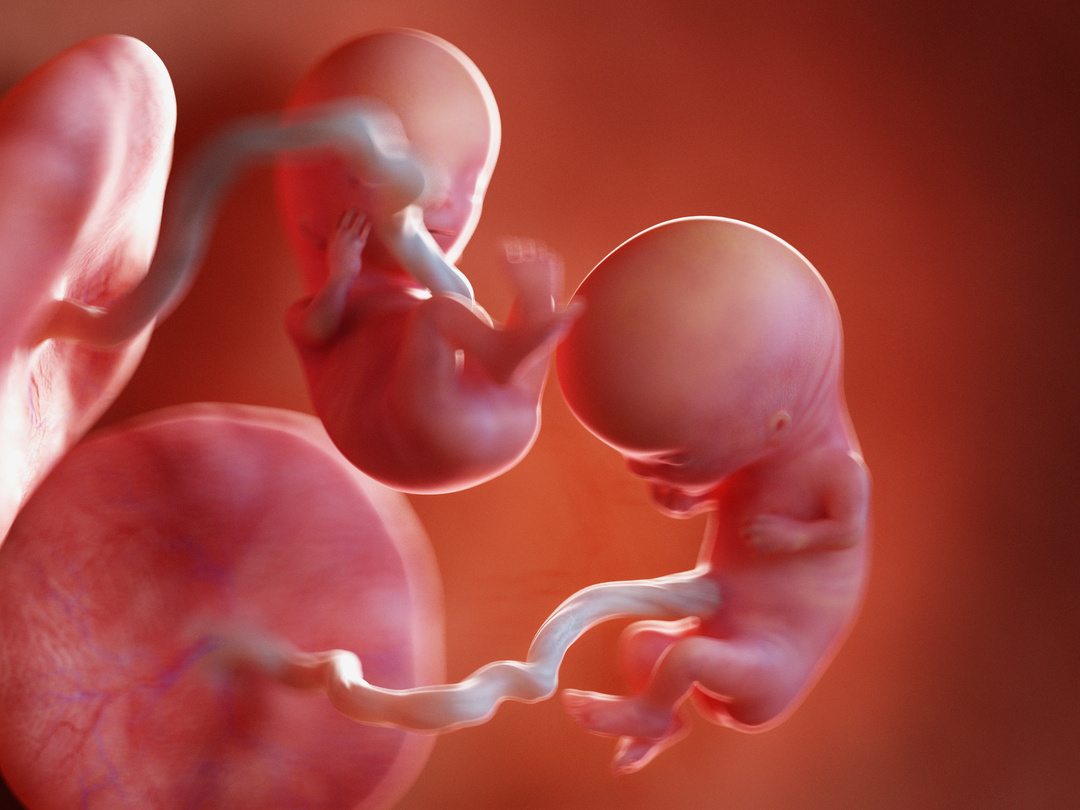
Can the world handle another you? Thinking of it in a medical sense, scientists say yes. Israeli researchers at biotech firm Renewal Bio are looking to take human cells and grow them to the embryonic stage in hopes to increase supply for transplantable organs.
This is the next step for Renewal Bio and its partners at the Weizmann Institute of Science in Rehovot, the latter of which most recently had the scientific world talking for successfully producing synthetic embryos out of mouse stem cells inside a mechanical womb.
The embryos developed far enough to the point where they had beating hearts, flowing blood, and even the beginnings of brains and tails.
Notably, this was the first time an advanced, lab-made version of an embryo had been created without sperm, eggs, or a uterus. It rings in more possibilities for solutions surrounding organ availability and infertility.
The artificial embryos were found to be 95% similar to the shapes of the internal structures and gene expression patterns of natural mouse embryos. “They are really, really similar,” Jacob Hanna, a Weizmann Institute of Science biologist and Renewal Bio’s founder, remarks to MIT Technology Review. Hanna has published his research on the project in the Cell scientific journal.
Up next will be the replication of the technology on human cells to grow synthetic human embryos, specifically to the 40 to 50-day-old pregnancy stage, when the basic organs have developed.
At present, simple tissues like bone and cartilage can be 3D-printed, but vital organs are trickier to simulate. Embryos, on the other hand, grow these naturally, MIT Technology Review explains. Hanna thus calls them “the best 3D bioprinter.”
The implications, as you would have guessed by now, are immense. If it all pans out, women who are past their biological clocks for giving birth could produce healthy eggs again, and an elderly person could have their immunity boosted with the help of embryonic blood cells.
Unsurprisingly, though, this technology remains a risky business. The chances of successfully producing a synthetic mouse embryo are lower than one in 100. Artificial embryos that lived longer also suffered abnormalities later, potentially due to the lack of blood supply.
Hanna is beginning his human embryo tests on none other than himself, extracting his own blood and skin cells to hopefully grow human stem-cell embryos. As the replicas would only develop to a certain stage, he doesn’t believe they should be deemed as mini-mes, AKA human beings.
But if push comes to shove and ethical issues arise, the lab may consider genetically engineering the cells so that the emerging embryo models would never have heads.
[via MIT Technology Review and ABC News, cover image via SciePro / Adobe Stock]


