
James Webb Telescope Captures A Dying Star Just As It Is About To Burst
The James Webb Telescope has captured many stunning images, including one of the Pillars of Creation.
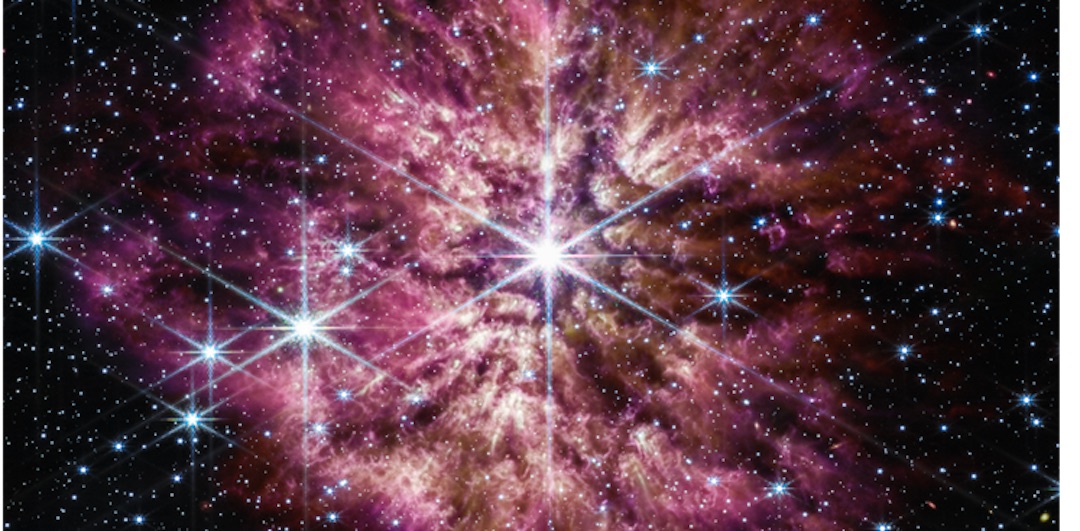
In one of its latest findings, it has taken pictures of a star or a Wolf-Rayet called WR 124 just as the terminal cosmic entity is about to explode and turn into a supernova.
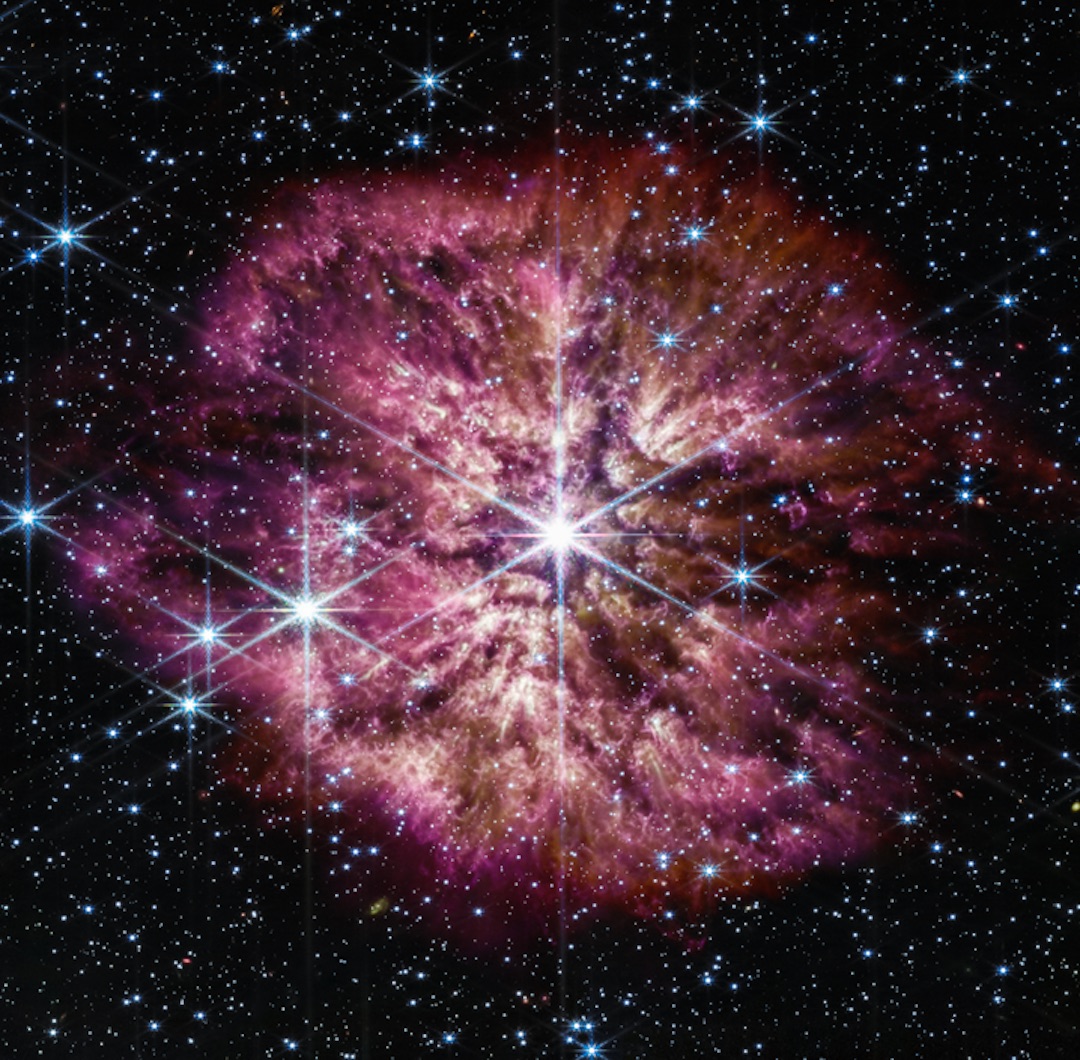
The images don’t depict a ball of gas turning into a firey mass, as one might think. Instead, they capture it in an ethereal light, moments before it meets its fate. The result is a stunning pink and purple web of stardust emerging out of the Wolf-Rayet.
In a tweet from NASA, the team likened the imagery to that of celestial cherry blossoms exploding against the sky.
There is beauty in transience. 🌸
— NASA Webb Telescope (@NASAWebb) March 14, 2023
Webb’s stunning image of a super bright, massive Wolf-Rayet star calls forth the ephemeral nature of cherry blossoms. The Wolf-Rayet phase is a fleeting stage that only some stars go through, soon before they explode: https://t.co/ZOAmKgtshI pic.twitter.com/fC0tL24iUe
The WR 124 belongs to the Sagittarius constellation and has around 30 times more mass than our Sun. It’s one of the few stars that go through this metamorphosis before bursting. And due to its mass, it is constantly shedding off mass, engulfing the area around it in wonderous displays of dust and gas. The intensity of a Wolf-Rayet also renders it rare as it can only last for a few hundred thousand years at a time.
Scientists are eager to learn all they can through the James Webb telescope, and WR 124 can provide much insight once studied further.
[via Futurism and The Guardian, images via NASA, ESA, CSA, STScI, Webb ERO Production Team]


