
‘Living Ink’ Made From Microbes Can Be Used For Evolving, Self-Repairing Objects
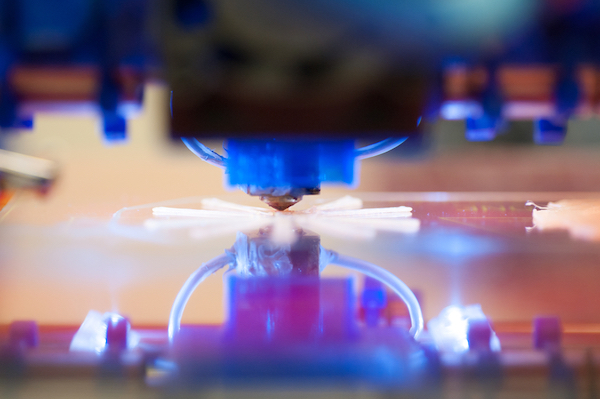
Image ID 46142915 © Ben Bibikov | Dreamstime.com
When we think of 3D printing, it’s more often than not an inanimate object, maybe a small figurine, maybe a house. But it’s not really a technology associated with a living thing, which is what scientists have now set out to do.
A “living ink” has been developed by a team of researchers from Harvard University and Brigham and Women’s Hospital, Harvard Medical School. This has the potential to print living materials, which can be turned into larger living structures. And, it can keep duplicating itself.
It comes from genetically engineered E. Coli cells and a few other microbes to create living nanofibers. These are then bundled together with a few more materials added in ordered to produce an ink that could be used in a standard 3D printer.
The closest thing to a non-inanimate printed object might be something like 3D-printed wagyu beef, but it might also be argued that it’s not quite living, either.
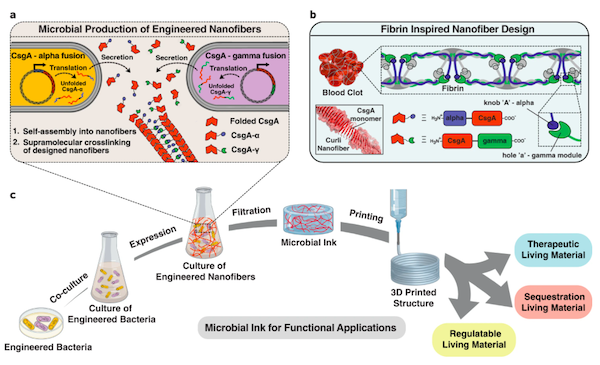
Image via A. Duraj-Thatte et. al (Open Access)
In the paper published by the team in the journal Nature Communications, they describe using the ink to print a material that secreted azurin, an anticancer drug, when stimulated by certain chemicals. Another example was a material that sequestered Bisphenol A, an environmental toxin, without any assistance.
Apart from these, some other potential uses that the ‘bio-ink’ could have include printing construction materials in order to be able to build more sustainable structures here on Earth, or even on the Moon sometime in the distant future.
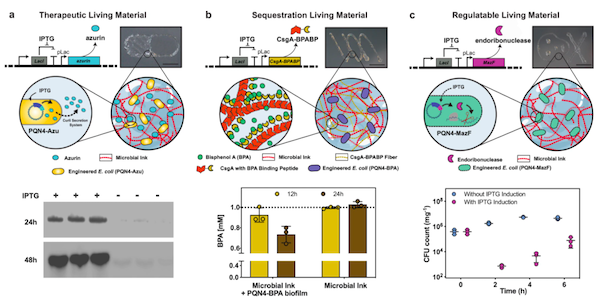
Image via A. Duraj-Thatte et. al (Open Access)
[via Engadget, cover image via Ben Bibikov | Dreamstime.com and figures A. Duraj-Thatte et. al (Open Access)]
Also check out these recent news


