
Nvidia Unveils ‘AI Foundations’ For Companies To Generate Their Own AI Models
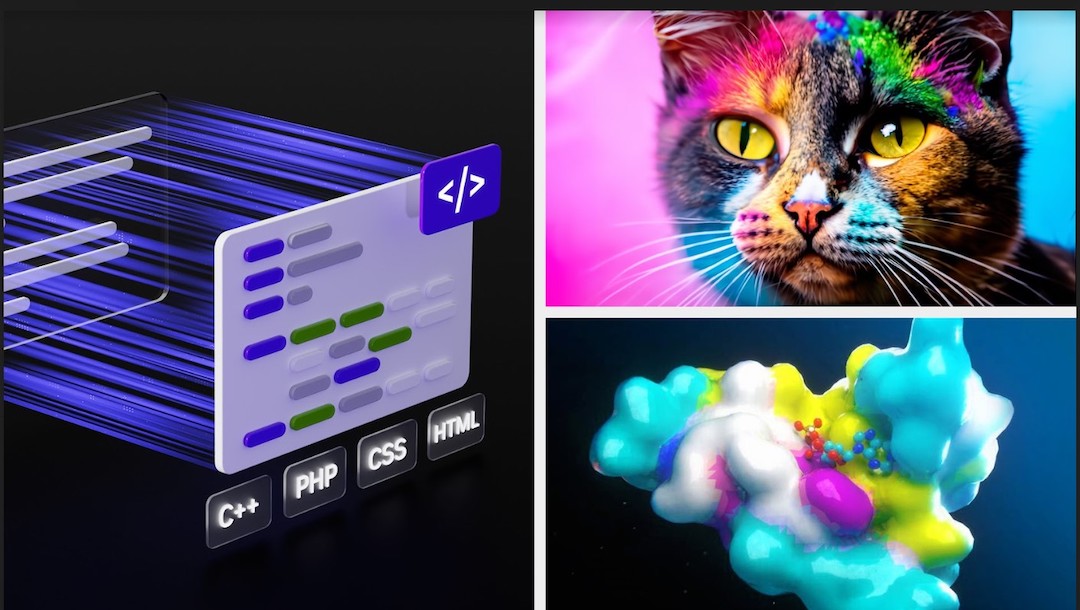
With artificial-intelligent models flying out of the woodwork nowadays, companies that may not have the time and resources to keep up with the changing times risk falling behind.
To that, Nvidia is lending a helping hand to these businesses by creating AI Foundations, its generator that builds, refines, and operates custom-based large language models (LLMS) for enterprises to use.
The new system first consists of Nvidia’s text-to-image NeMo which the company states will be “trained on Getty Images’ Fully Licensed assets.” Getty Images will then provide royalties to the creators.
Next up is BioNeMo, which is a system focused on drug and molecule research. Per the company, BioNeMo “enables researchers to fine-tune generative AI applications on their own proprietary data, and to run AI model inference directly in a web browser or through new cloud APIs that easily integrate into existing applications.”
Six models, including AlphaFold2 and ESM2, will be available at launch. In addition, AI-based predictive machines helped reduce the training time from three months to four weeks using Amgen’s proprietary antibody data.
Lastly is Picasso, which provides images and videos and “3D applications… to supercharge productivity for creativity, design, and digital simulation.” Furthermore, NVIDIA is partnering with Shutterstock to utilize its images and 3D models roster.
Both NeMo’s, however, are only available through early access, and Picasso is still in private preview.
These platforms will serve as a blank canvas where companies can feed their data and train it solely on information related to the business. A more focused solution to ChatGPT or Microsoft’s Bing and Google’s Bard that uses information from all over the internet.
Nvidia has joined forces with Adobe, which has recently released its own AI image generator Firefly, in support of the Content Authenticity Initiative (CAI), which aims to heighten transparency and responsibility in generative training procedures.
Moreover, the two firms have proclaimed intentions to integrate several Picasso features straight into Adobe’s editing tools, such as After Effects, Premiere Pro, and Photoshop.
[via Engadget and VentureBeat, cover image via Nvidia]


