
Midjourney Creator Admits ‘Hundred Million’ Unauthorized Images Were Fed To AI
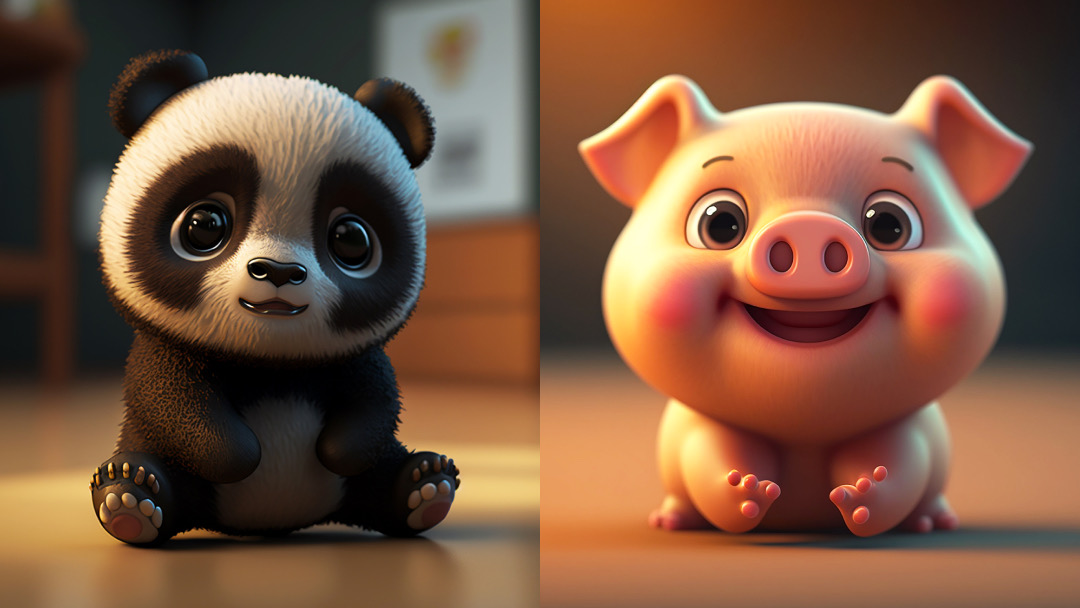
Images generated on Midjourney. Illustrations 264289567, 264289580 © Fernando Fors | Dreamstime.com
The rise of AI art generators like DALL-E has been met with trepidation by the creative community, and for good reason. Those tools are trained on the real, honest work of human artists and photographers, more often without their permission. For many, automation minimizes the years of effort they’ve spent honing a personal style.
It has long been believed that artificial intelligence cannot innately develop the kind of creativity humans have. Engineers have found a way around this: They’ve taught it to generate artwork from scratch by making it study existing paintings. This means, while humans draw from personal experience, robots turn to a database for “inspiration.” David Holz, founder of popular text-to-image AI tool Midjourney, says at least “a hundred million” artworks are given to his machine without the consent of their originators.
This revelation—though, are you really surprised?—comes from a Forbes article published back in September, where Holz openly shared how Midjourney was trained. Although it’s been a couple of months since that interview, the piece is now being circulated on Twitter amid the explosion of AI art makers in the mainstream. Earlier this month, a photo editing app called Lensa topped App Store charts after introducing AI-generated selfie portraits. As of the time of writing, a filter that transforms users into manga-inspired characters is going viral on TikTok.
words of David Holz (midjourney founder), from forbes article (link below): pic.twitter.com/rnWP28rrag
— Maciej Kuciara (@maciej_kuciara) December 20, 2022
Holz explained that Midjourney’s dataset comes from “a big scrape of the internet,” and that it is being trained on “open data sets.” He claims that this is something “100% of people do.”
He also said it would take years to grasp AI’s full potential, and by that time, there could even be machine-learning models that can be trained using “almost nothing.”
Forbes’ Rob Salkowitz asked if the Midjourney team had first sought the permission of living artists or work still protected by copyright law, to which Holz said no. “There isn’t really a way to get a hundred million images and know where they’re coming from,” Holz claimed.
He elaborated that there’s “no way” to find an image online and then immediately trace it back to its owner or do anything to authenticate its ownership (editor’s note: yes, there is—here’s how). The Midjourney founder added that it “would be cool” if artworks were embedded with metadata to identify their creators, “but that’s not a thing.”
As per PetaPixel, readers have fought back at this claim by reminding others that Photoshop files retain the identity, contact details, and copyright information of their creators in the metadata.
Holz added that images generated on Midjourney can be used for commercial purposes, but larger corporations should purchase a business license to share those images.
He also noted that creators cannot opt out of their work being included in a training set. It’s worth reiterating that the interview was published in September. Since then, a search engine called Have I Been Trained? has been set up for artists and photographers to locate nuances of their work in AI-generated images, as well as opt out of having their work added to the training sets of Stable Diffusion and Google’s Imagen.
DeviantArt, which now has its own AI art generator, has also included the ability to remove one’s content from the app’s training database.
Holz also addressed how livelihoods might be threatened by the existence of AI tools such as Midjourney, deducing that some people might try to “cut artists out” to cut costs, but “they will fail.”
He defended that the inception of AI tools will nurture a demand and a “deeper appreciation and literacy” for organic art, which is “higher quality, more [creative], and vastly more sophisticated.” In fact, he said the surge of AI generators might even drive up the salaries of real artists. Hmm.
[via PetaPixel, DIY Photography, Forbes, cover illustrations via 264289567, 264289580 © Fernando Fors | Dreamstime.com]


